 Tel:
Tel:  Email:
  WhatsApp:
 Description
Product Introduction
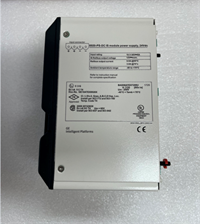
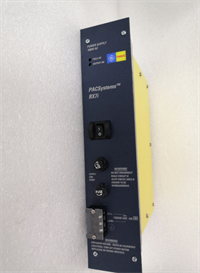
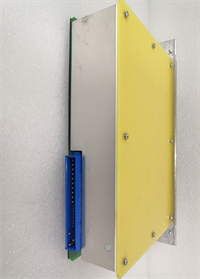
When an entire RX7i rack goes dark without a single fault LED blinking on the CPU, the first suspect is almost always the power supply. The GE IC698PSA100D serves as the heart of the PACSystems RX7i chassis, converting fluctuating line voltage into the stable 24VDC required for logic solvers and high-speed I/O. It isn’t just a converter; it manages the power budget across all slots, ensuring that high-current modules don’t starve the CPU during peak scan cycles.Unlike older linear supplies that bulge and overheat, this unit uses switch-mode technology to maintain efficiency even when input voltage drops to 85 VAC. We’ve seen these units keep critical water treatment plants running through brownouts that tripped lesser systems. The “D” revision specifically addresses component longevity issues found in early “A” or “B” models, making it the preferred swap for aging infrastructure. To be frank, if you are still running an original 2005-era power supply in a safety loop, the risk of capacitor failure outweighs the cost of a proactive replacement.
Key Technical Specifications
| Parameter | Value |
|---|---|
| Input Voltage Range | 85 – 264 VAC (47–63 Hz) or 100–300 VDC |
| Output Voltage | 24 VDC (nominal), adjustable ±10% |
| Total Power Output | 100 Watts |
| Maximum Current | 4.0 A @ 24 VDC (continuous) |
| Peak Current | 6.0 A (for <100ms startup) |
| Backplane Compatibility | Universal (RX7i & RX3i) |
| Slot Requirement | Occupies 1 universal slot |
| Efficiency | >85% at full load |
| Operating Temperature | 0 °C to +60 °C (derate above 45°C) |
| Protection | Over-voltage, over-current, thermal shutdown |
| Cooling | Convection cooled (no fan) |
| MTBF | >100,000 hours (typical) |
Application Scenarios & Pain Points
Imagine a steel mill rolling line stopping abruptly because a voltage sag caused the power supply to hiccup, resetting the entire CPU. The operator sees “System Fault” but has no clue which card failed. The IC698PSA100D prevents this with its wide input range and hold-up time, riding through sags that would crash standard industrial PCs. Its role is silent until the grid gets dirty, at which point it becomes the most valuable component in the rack.
- Automotive Stamping Presses: Why risk a die crash due to a 200ms power dip? This module’s energy storage keeps the logic alive long enough to complete a safe stop sequence, saving tooling worth millions.
- Municipal Water Pump Stations: In remote lift stations, line voltage often swings wildly. The 85–264 VAC input range handles these fluctuations without needing external stabilizers, reducing cabinet clutter.
- Pharmaceutical Batch Processing: If power flickers during a mixing cycle, the whole batch is scrapped. The redundant capability (using two PSAs in parallel) ensures zero interruption, a requirement for FDA validation.
- Food & Beverage Packaging: High inrush currents from servo drives can trip weak supplies. The 6A peak current rating of the 100D handles these transients without shutting down the line.
- Oil & Gas Compression: What happens when lightning strikes nearby? The robust isolation and surge protection in this design prevent transient spikes from frying the backplane electronics.
Case Study:
A paper mill in Wisconsin experienced weekly unexplained resets on their coating line controller. The plant engineer, Tom, suspected noise on the signal lines. After installing current loggers, he discovered the facility’s old transformer was dipping to 90 VAC during motor startups. Swapping the legacy 50W supply for the GE IC698PSA100D eliminated the resets immediately. The wider input range absorbed the dips, and the line has run uninterrupted for two years. Tom noted, “I wasted months tuning filters when I just needed more headroom on the DC bus.”
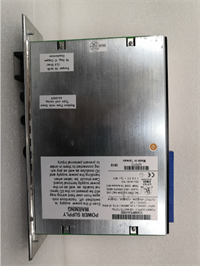
IC698PSA100D GE
Quality Control Process (SOP Transparency)
We don’t trust factory seals alone; we verify performance. When an IC698PSA100D arrives, we first inspect the date code and revision sticker to ensure it matches the “D” spec. Visually, we check for bulging capacitors or burnt resistor smells—common signs of previous overload or age. We also inspect the backplane connector pins for straightness; bent pins cause intermittent power loss that mimics CPU failures.Our live test involves loading the module into a verified RX7i universal backplane with a dummy load bank. We ramp the input voltage from 85 VAC up to 264 VAC while monitoring the 24VDC output for ripple and stability using a Fluke oscilloscope. The output must stay within 23.5–24.5 VDC under full 4A load. We then simulate a brownout by dropping input voltage instantly to verify the hold-up time meets spec (>10ms). Finally, we trigger a thermal test by running the unit at 50°C ambient for 4 hours, ensuring the thermal shutdown trips correctly if overheated. Only units passing all electrical and thermal checks get the QC Passed label and anti-static packaging.
Installation Pitfalls Guide (“Lessons Learned” Voice)
Power supplies seem plug-and-play, but I’ve seen plenty of racks smoked by simple oversights. Don’t let your new module become a statistic.
- Input voltage selection — Some older GE supplies had jumpers for 120/240V; this one is auto-ranging, but don’t assume your wiring is correct. Measure the incoming line voltage before connecting. If someone wired 480VAC to the terminals, you’ll see fireworks instantly.
- Backplane seating – The universal backplane connectors are sensitive. If the module isn’t seated perfectly flat, one pin might make contact while others arc. Push firmly until you hear the locking tab click. Wiggle it gently; if it moves, reseat it.
- Overloading the wattage budget — Just because it fits doesn’t mean it powers everything. Calculate the total current draw of all installed modules. If your sum exceeds 4A, this 100W unit will shut down under load. Leave 20% headroom for safety.
- Ignoring derating curves — Installing this in a cabinet hitting 70°C? It won’t deliver 100W there. The output capacity drops significantly above 45°C. Check your cabinet fan operation; heat is the enemy of switch-mode supplies.
- Grounding the negative — The 24VDC negative is often floating by default. If your system requires a grounded common (or vice versa), verify the configuration matches your I/O wiring scheme. Mixing grounded and ungrounded commons can create ground loops that corrupt analog signals.