 Tel:
Tel:  Email:
  WhatsApp:
 Description
Product Introduction
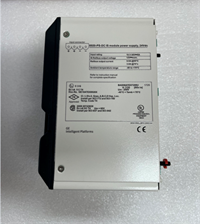
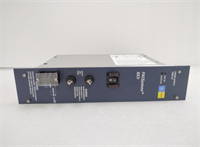
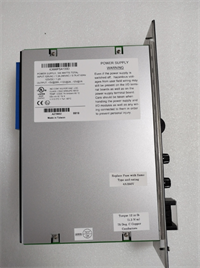
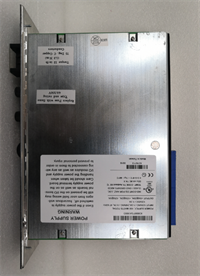
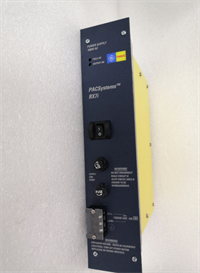
The GE IC698PSA100 is the efficient power solution for scalable PACSystems RX7i architectures. Not every control application requires the massive 35A output of the PSA350; many remote I/O drops, pump skids, or conveyor control stations only host a CPU and a handful of I/O modules. Using an oversized power supply in these scenarios wastes panel space and capital. The PSA100 delivers a precise 10 Amps, perfectly matching the needs of these mid-sized configurations while maintaining the industrial-grade reliability GE is known for.We recently assisted a water treatment facility upgrading their remote lift stations. Each station required a small RX7i rack with a CPU, an Ethernet module, and about 16 digital I/O points. The original specification called for the PSA350, which was overkill and caused procurement delays. We recommended switching to the IC698PSA100. This not only reduced the hardware cost per station by nearly 40% but also freed up valuable space in the compact NEMA 4X enclosures. To be frank, right-sizing your power supply is a hallmark of good system design; the PSA100 offers the exact same redundancy features and voltage stability as the big brother, just scaled for appropriate loads.
Key Technical Specifications
| Parameter | Value |
|---|---|
| Part Number | IC698PSA100 |
| System Compatibility | GE PACSystems RX7i (Universal Backplane) |
| Input Voltage | 120 / 240 VAC (Auto-ranging, 47-63 Hz) |
| Output Voltage | 5.0 VDC (Logic), 3.3 VDC (CPU/Comms) |
| Total Current Capacity | 10 Amps (Combined 5V/3.3V load) |
| Efficiency | > 85% (Typical) |
| Power Factor Correction | Active PFC (Complies with EN61000-3-2) |
| Mounting | RX7i Universal Backplane Slot (Left-most slot recommended) |
| Cooling | Convection / Forced Air (Dependent on rack fan unit) |
| Indicators | PWR OK (Green), FAULT (Red), OVERLOAD (Yellow) |
| Redundancy | Supported (Requires two units and specific configuration) |
| Operating Temperature | 0 °C to 60 °C (Derating applies above 50°C) |
| Certifications | UL, CE, CSA, ATEX (System level) |
| Status | Active / Legacy Support (Standard Spare for Distributed I/O) |
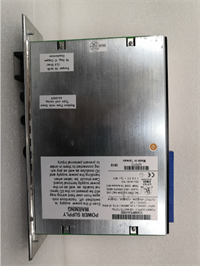
IC698PSA100 GE
Application Scenarios & Pain Points
A food and beverage packaging line utilized dozens of small RX7i racks to control individual filling heads. When one of the primary power supplies failed, the lack of a redundant pair caused a localized stoppage, spoiling a batch of product. The fix involved installing dual IC698PSA100 units in each rack. Since the load per rack was only about 4A, the redundant pair provided ample headroom, ensuring that even if one unit failed, the other could easily carry the full load without stress. This module is vital because it brings enterprise-level redundancy to small, distributed control points where it was previously deemed too expensive.
- Remote Pump Stations: Often located in harsh environments with limited space. The compact footprint of the PSA100 fits easily into small enclosures while providing reliable power for telemetry and control.
- Conveyor Sorting Systems: Each sortation zone may have its own PLC rack. The 10A capacity is perfect for driving the local sensors and diverter solenoids without needing a central large power distribution system.
- HVAC Control Panels: Large building management systems use distributed RX7i racks for air handling units. The PSA100 handles the analog inputs and damper actuators efficiently.
- Skid-Mounted Machinery: OEMs building modular process skids (e.g., chemical injection, filtration) prefer the PSA100 for its balance of cost, size, and performance, making the skid easier to ship and install.
Case Study:
An automotive tier-1 supplier was expanding their assembly line to include a new testing station. The engineering team initially designed the control cabinet using the IC698PSA350 to “be safe,” assuming more power was always better. However, during the panel build, they realized the 35A supply was physically too deep for their shallow enclosure and generated unnecessary heat, requiring extra cooling fans. They swapped to the IC698PSA100. The new supply fit perfectly, ran cooler, and cost significantly less. During commissioning, the load calculation showed the rack drew only 3.5A. The PSA100 operated at roughly 35% load, which is the “sweet spot” for maximum efficiency and longevity. This simple component swap saved the project $800 in hardware costs and avoided a mechanical redesign of the enclosure.Lessons Learned: Installation Pitfalls
- Accurate Load Summation — While 10A seems generous for small racks, modern communication modules and specialty I/O can draw more than expected. ❗ Always sum the maximum current draw of every module in the rack (found in their respective manuals). If your total exceeds 8A, you are dangerously close to the limit once temperature derating is applied. In such cases, step up to the PSA350 or split the I/O across two racks.
- Redundancy “Idle” Risk — In a redundant pair of PSA100s, if the load is very light (e.g., 2A), one supply might dominate while the other stays nearly idle. ❗ While generally safe, it’s good practice to periodically check the load sharing status (via LEDs or diagnostics) to ensure both units are healthy. If one unit has been idle for years, its capacitors might degrade faster. Some configurations allow for “load balancing” modes; check the specific firmware settings.
- Thermal Derating in Small Enclosures — Small panels often have poor airflow. ❗ The 10A rating is valid up to 60°C, but if your small box heats up to 50°C+, the available current drops. Ensure small enclosures have ventilation or that the PSA100 isn’t mounted directly next to heat-generating devices like VFDs or transformers.
- Input Wiring Gauge — Even though the output is only 10A, the input wiring must still meet local electrical codes for the branch circuit protection. ❗ Don’t use undersized wire just because the load is small; the upstream breaker might be 15A or 20A, requiring appropriate wire gauge (e.g., 14 AWG or 12 AWG) to prevent fire hazards.
- Slot Positioning for Voltage Drop — Just like with larger supplies, placement matters. ❗ In a long rack (even with low current), placing the PSA100 in the far right slot can cause a slight voltage drop at the far left CPU. Always aim for the left-most slot (Slot 1) to ensure the CPU gets the cleanest power first.