 Tel:
Tel:  Email:
  WhatsApp:
 Description
Product Introduction
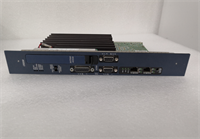
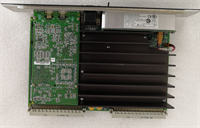
The GE IC698CRE030 represents the sweet spot of the classic RX7i CPU lineup. With its 400 MHz Pentium III core, it delivers scan times fast enough for most high-speed discrete manufacturing and complex process control applications without the higher cost or heat generation of the 700MHz+ CPE040 models. It is particularly renowned for its redundancy capabilities; paired with the IC698RMX016 redundancy module, two CRE030 CPUs can operate in a hot-standby configuration, ensuring that if the primary unit fails, the secondary takes over in milliseconds with no process interruption.We recently assisted a large petrochemical refinery in Texas where a critical compressor control rack suffered a CPU failure. The plant was running on a legacy RX7i system designed a decade ago with IC698CRE030 units. Finding a direct replacement was urgent to avoid a prolonged shutdown. We supplied a refurbished but rigorously tested CRE030. Upon installation and synchronization with the standby unit, the system returned to full redundancy immediately. To be frank, the CRE030 is often the most cost-effective upgrade path for older Series 90-70 systems; migrating to the RX7i backplane and using a CRE030 allows plants to keep their existing I/O wiring while gaining modern Ethernet connectivity and faster processing.
Key Technical Specifications
| Parameter | Value |
|---|---|
| Part Number | IC698CRE030 |
| System Compatibility | GE PACSystems RX7i (Universal Backplane) |
| Processor Type | Embedded Intel Pentium III (400 MHz) |
| User Memory | 14 MB Total (Configurable split between Logic, Data, and Config) |
| Scan Time | Typical 0.5 ms (small logic); ~5-10 ms for very large complex logic |
| Communication Ports | 2x 10/100 Mbps Ethernet (RJ45), 1x USB (Type B), 1x Serial (RS-232/485 switchable) |
| Protocols Supported | SRTP, Modbus TCP/IP, Modbus RTU, EGD, Genius (via adapter), OPC Server capability |
| Redundancy Support | Yes (Requires IC698RMX016 Redundancy Module and second CPU) |
| Real-Time Clock | Yes (Battery backed, typically 5+ years) |
| Mounting | RX7i Universal Backplane Slot |
| Power Consumption | Typical 2.5A – 3.0A @ 5VDC |
| Operating Temperature | 0 °C to 60 °C |
| Certifications | UL, CE, CSA, ATEX (System level) |
| Status | Active / Legacy Support (High volume in installed base) |
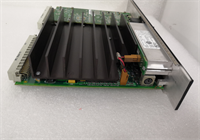
IC698CRE030 GE
Application Scenarios & Pain Points
A municipal water authority managing a vast network of pumping stations found their old Series 90-70 PLCs failing due to age and lack of Ethernet connectivity for their new SCADA system. Instead of rewiring every station, they migrated the logic to RX7i racks equipped with IC698CRE030 CPUs. The dual Ethernet ports allowed simultaneous connection to the corporate network for data logging and the control network for HMI access, while the 400MHz speed easily handled the PID loops for pressure control. This module is vital because it bridges the gap between legacy reliability and modern networking requirements.
- Oil & Gas Pipelines: Used in remote compressor stations where redundancy is mandatory. The CRE030’s ability to sync with a partner CPU ensures that a single hardware failure doesn’t shut down flow across hundreds of miles.
- Automotive Powertrain: Engine testing stands require precise data acquisition and control. The CRE030 handles high-speed counter inputs and analog scaling without missing cycles.
- Food & Beverage Packaging: Manages complex sequencing for fillers and cappers. The ample memory allows for storing multiple product recipes directly in the CPU.
- Power Generation (Balance of Plant): Controls auxiliary systems like cooling towers and water treatment. The robust Ethernet stack facilitates easy integration with plant-wide historians.
Case Study:
A paper mill in the Pacific Northwest experienced a catastrophic failure of their primary digester control CPU. The backup CPU failed to take over due to a corrupted sync link, causing a process upset that threatened safety systems. The root cause was traced to an aging, non-redundant CPU configuration that had been limping along. The mill decided to upgrade the entire control cabinet to a redundant pair of IC698CRE030 modules with a new RMX016 sync module. During the next scheduled maintenance window, the swap was performed. Since the upgrade, the system has undergone three planned power blips and one lightning-induced surge; in each case, the redundancy worked flawlessly, swapping to the healthy CPU in under 20ms with zero impact on the digestion process. The investment in the CRE030 redundant pair saved the mill from potential safety incidents and hundreds of thousands of dollars in lost production.Lessons Learned: Installation Pitfalls
- Redundancy Sync Cable Integrity — The link between two CRE030 CPUs (via the RMX016) is the lifeline of the system. ❗ Use only high-quality, shielded sync cables specified by GE/Emerson. Poor shielding or long, unshielded runs can introduce noise into the sync data, causing “Sync Loss” faults and unnecessary switchovers. Keep sync cables away from VFDs and high-voltage lines.
- Memory Allocation Planning — The 14MB memory is shared between Logic, Data (%R, %I, %Q, etc.), and Configuration. ❗ If you allocate too much to Data registers (e.g., for huge arrays), you might run out of space for Logic or Config, leading to download errors. Always plan your memory map before writing code. Use the “Memory Map” tool in Proficy Machine Edition to visualize usage.
- Firmware Matching in Redundancy — For a redundant pair to work, both CPUs must have the exact same firmware version. ❗ Trying to sync a CRE030 with Firmware Version 5.00 against one with Version 5.10 will fail. Always check the firmware revision on both units before installing them as a pair. Update them to the matching latest stable version if necessary.
- Ethernet IP Conflicts — The CRE030 has two Ethernet ports, often used for separate networks (e.g., Control vs. Information). ❗ Ensure that the IP addresses assigned to Port 1 and Port 2 are on different subnets if they are connected to different physical networks, or properly routed if on the same network. Duplicate IPs or routing loops can freeze the CPU’s communication task.
- Battery Monitoring — Like all CMOS-based CPUs, the CRE030 relies on a battery for the Real-Time Clock and retentive memory during power-off. ❗ In critical applications, do not wait for the “Low Battery” LED to light up before replacing it. Implement a preventive maintenance schedule to replace the battery every 3-5 years, ideally while the unit is powered (if hot-swap capable in the specific rack config) or during a planned outage.