 Tel:
Tel:  Email:
  WhatsApp:
 Description
Product Introduction
The GE IC698CPE040-JP represents the pinnacle of the classic RX7i CPU lineup before the transition to newer architectures. Designed for the rigorous demands of Japanese heavy industry, this module combines the ruggedness of a PLC with the processing power of an industrial PC. The “040” designation signifies a higher clock speed and faster instruction execution compared to the CPE030, making it ideal for applications where scan times must be kept under 2-3ms despite thousands of rungs of logic and complex math instructions.We recently supported a semiconductor fabrication plant in Kyushu, Japan, where a legacy lithography track controller was struggling to keep up with new recipe management software. The existing CPE030 CPUs were hitting 95% load during batch changes, causing HMI lag and occasional timeout faults. Replacing them with the IC698CPE040-JP units dropped the CPU load to 40% and halved the scan time. The -JP suffix ensured seamless integration with their local maintenance team’s Japanese-language engineering software and met their internal procurement standards for domestic compliance. To be frank, in high-speed discrete manufacturing, the difference between a 400MHz and a 1GHz CPU isn’t just about speed; it’s about the ability to add future functionality without replacing the entire control architecture.
Key Technical Specifications
| Parameter | Value |
|---|---|
| Part Number | IC698CPE040 (Revision -JP) |
| System Compatibility | GE PACSystems RX7i (Universal Backplane) |
| Processor Type | Embedded Intel Pentium III (Approx. 700 MHz – 1 GHz) |
| User Memory | Typically 32 MB – 64 MB (Logic + Data + Config) |
| Scan Time | < 0.5 ms for small logic; ~2-4 ms for very large complex logic |
| Communication Ports | 2x 10/100 Mbps Ethernet (RJ45), 1x USB (Type B), 1x Serial (RS-232/485) |
| Protocols Supported | SRTP, Modbus TCP/IP, Modbus RTU, EGD, Genius (via adapter), OPC Server capability |
| Redundancy Support | Yes (Requires IC698RMX016 Redundancy Module) |
| Real-Time Clock | Yes (Battery backed, typically 5+ years) |
| Mounting | RX7i Universal Backplane Slot |
| Power Consumption | Typical 3.0A – 3.5A @ 5VDC (Higher than CPE030 due to faster CPU) |
| Operating Temperature | 0 °C to 60 °C |
| Regional Specifics (-JP) | Japanese Firmware/Documentation options, PSE/TELEC compliance markers |
| Status | Active / Legacy Support (High demand in Asian markets) |
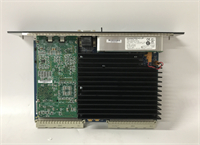
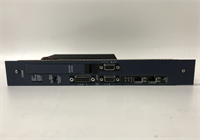
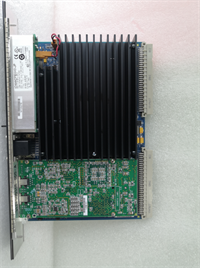
IC698CPE040-JP GE
Application Scenarios & Pain Points
A major automotive engine plant in Toyota City faced a bottleneck in their machining line. As they added vision system integration and detailed traceability logging directly into the PLC, the older CPUs couldn’t handle the string manipulation and database communication without slowing down the machine cycle time. Upgrading to the IC698CPE040-JP allowed them to run these advanced functions in the background without impacting the real-time motion control loops. This module is vital because it extends the life of expensive machinery by providing the compute headroom needed for Industry 4.0 upgrades.
- Electronics Manufacturing: High-speed pick-and-place machines require sub-millisecond synchronization. The CPE040’s fast scan ensures precise coordination between conveyors and robots.
- Steel Rolling Mills: Complex thickness and flatness control algorithms (AGC/AFC) require heavy floating-point math. The Pentium III architecture handles these loops deterministically.
- Chemical Batch Processing: Managing hundreds of simultaneous recipes and safety interlocks requires large memory and fast task switching, which the CPE040 provides.
- Power Generation (Turbine Control): Fast trip logic and redundant synchronization are critical. The CPE040 supports robust hot standby configurations with minimal switchover time.
Case Study:
A leading Japanese paper mill experienced intermittent “communications lost” alarms between their RX7i control system and the distributed drive network. The issue worsened as they added more variable frequency drives (VFDs) to the line. Investigation showed the original CPU was spending 80% of its scan time just managing the Modbus TCP queue, starving the logic solver. The maintenance team replaced the controller with an IC698CPE040-JP. The increased processing power allowed the CPU to handle the communication overhead effortlessly, reducing the comms task load to 30%. The alarms disappeared, and the mill was able to add even more smart sensors to the network without further hardware upgrades. This proactive upgrade saved an estimated $150,000 in potential downtime during their peak production season.Lessons Learned: Installation Pitfalls
- Heat Management & Airflow — The Pentium III processor in the CPE040 generates significantly more heat than earlier models. ❗ In tightly packed RX7i racks, especially in warm Japanese summers or uncooled cabinets, this CPU can overheat. Always ensure the rack has a functioning fan unit (IC698ACCxxx) and that airflow paths are not blocked by cables. Overheating will cause the CPU to throttle (slow down) or fault out.
- Software Version Compatibility — The -JP version may ship with specific regional firmware. ❗ Ensure your programming workstation (running Proficy Machine Edition) has the correct support files and firmware updates to communicate with the -JP variant. Sometimes, region-specific firmware requires a specific patch level of the engineering software to avoid “Unsupported Device” errors during online connection.
- Memory Utilization Monitoring — With great power comes the temptation to write bloated code. ❗ Even with 64MB, poorly optimized logic (e.g., excessive use of indirect addressing in high-speed tasks) can degrade performance. Use the “Task Monitor” in the programming software to verify that no single task is consuming excessive scan time. Balance your logic across multiple tasks if necessary.
- Redundancy Sync Load — If using the CPE040 in a redundant pair, remember that the sync link (via RMX016) must mirror all memory changes. ❗ A faster CPU means more data changes per millisecond. Ensure your redundancy link is configured correctly and that you aren’t toggling massive arrays of data unnecessarily, which could saturate the sync bandwidth and cause “Sync Loss” faults.
- Battery Replacement Protocol — The RTC battery is critical for timestamping events and retaining retentive data. ❗ In long-running Japanese facilities, batteries often go unchecked for a decade. Replace the battery while the unit is powered up if the design allows, or have a full backup ready to reload immediately after replacement to prevent clock resets and data loss.