 Tel:
Tel:  Email:
  WhatsApp:
 Description
Product Introduction
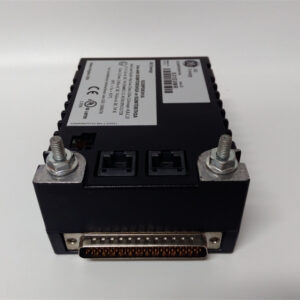
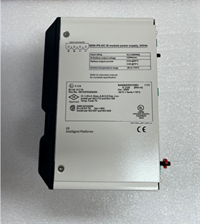
When a Series 90-30 rack loses power, the entire cell stops, making the GE IC693PWR321 the single most critical component in the chassis. This unit converts standard 120/240VAC line voltage into the stable 24VDC required by the CPU and specialty modules. We keep these in stock because finding a reliable source for this discontinued part often takes weeks otherwise.Most failures we see stem from aging electrolytic capacitors in older units, leading to voltage ripple that causes random CPU faults. The IC693PWR321 handles up to 30W of load, which is sufficient for most mid-sized configurations but leaves little headroom for high-density analog setups. Honestly, if your rack is fully populated with high-current modules, you might need to offload some I/O to a second rack. Don’t guess on the wattage; calculate it first.
 Key Technical Specifications
 Key Technical Specifications
| Parameter | Value | Notes |
|---|---|---|
| Input Voltage | 85–264 VAC | Auto-ranging 47–63 Hz |
| Output Voltage | +24 VDC | Regulated |
| Output Power | 30 Watts | Max continuous |
| Output Current | 1.25 Amps | At 24VDC |
| Hold-up Time | 20 ms | Typical at full load |
| Isolation | 1500 VAC | Input to Output |
| Cooling | Convection | No internal fan |
| Mounting | Backplane | Series 90-30 Slot 1 |
| LED Indicators | PWR, OK | Green status lights |
| Operating Temp | 0 to 60 °C | Derate above 45°C |
| Dimensions | 10.8 x 3.8 x 12.7 cm | Standard 90-30 form factor |
| Weight | 0.45 kg | Approximate |
Application Scenarios & Pain Points
The call came in at 2 a.m. from a water treatment plant in Ohio: the entire SCADA system was dark, and the backup generator hadn’t kicked the PLC back online. The culprit wasn’t the generator; it was a failed IC693PWR321 that had succumbed to a voltage spike during the transfer switch operation. Without a spare, the plant operator had to manually control valves for six hours until a technician arrived with a replacement. This module earns its price tag the moment the grid flickers.
- Petrochemical facilities rely on these units for burner management systems where a power dip means a safety shutdown. Can your process afford a 4-hour restart cycle?
- In automotive stamping lines, we often see these supplies overloaded when engineers add extra communication modules without recalculating the backplane load.
- Food and beverage packaging machines use them for their wide input range, handling dirty power from variable frequency drives nearby.
- Older power generation substations still depend on the Series 90-30 architecture for bay control, making this specific 30W model a critical spares item.
- If you are running a rack with more than 16 digital output modules, verify your total current draw immediately.
Case Study: A mid-sized paper mill in Georgia faced recurring “CPU Fault” errors every time a large pump motor started. The maintenance team replaced the CPU twice before calling us. We measured the backplane voltage during motor startup and found a dip to 19VDC—the IC693PWR321 was aging and couldn’t hold the rail. Swapping it with a new surplus unit stabilized the voltage at 23.8VDC under load. The fix cost 400 and twenty minutes; the downtime had already cost 12,000.
Quality Control Process (SOP Transparency)
 Quality Control Process (SOP Transparency)
We don’t just box these up; we verify they work before they leave our bench. Every IC693PWR321 undergoes a strict inbound inspection where we trace the serial number against OEM records and check the hologram for authenticity. Visually, we look for any signs of capacitor leakage, burnt pin connectors, or yellowing of the plastic housing—common issues with units stored in hot warehouses.For functional testing, we mount the unit into a verified Series 90-30 rack with a known-good CPU. Using a Fluke 87V multimeter, we apply 120VAC and then 240VAC to ensure the auto-ranging circuit works. We measure the 24VDC output under a 1.2A resistive load for 4 hours, logging temperature rise to ensure it stays below 50°C. We also perform a 500V megger test on the input terminals to confirm isolation integrity. Finally, we photograph the firmware label and internal jumpers, seal the unit in an anti-static bag, and apply a QC passed sticker with the test date. We can share these test logs and photos upon request.
Installation Pitfalls Guide (“Lessons Learned”)
I’ve seen too many good racks fried because someone skipped the basics. Here is what usually goes wrong when swapping this power supply.
- Backplane Load Miscalculation: The
IC693PWR321is only rated for 30W. If you added modules over the years, you might now be pulling 35W. ❗ Calculate the sum of all module currents before installing. If you exceed 1.25A, the supply will shut down or fail prematurely. - Input Wiring Errors: Some older installations have 240VAC wired to terminals expecting 120VAC due to legacy jumper settings on the terminal block. Take a photo of the incoming wiring before disconnecting anything. Verify voltage with a meter before connecting the new unit.
- Loose Backplane Connections: The connector pins on the back of the PSU can bend if forced. In a recent job, a bent pin caused intermittent power loss that took three days to diagnose. Inspect the male pins on the rack and female socket on the module visually before insertion.
- Ignoring Heat Dissipation: These units rely on convection cooling. If you install them in a cabinet with no airflow or blocked vents, they will overheat. Ensure there is at least 3 inches of clearance above the unit.
- ESD Damage: It’s easy to forget static when working on power components, but the internal regulation circuitry is sensitive. Wear a wrist strap. I once saw a tech zap a brand-new unit just by touching the edge connector after walking across a carpeted floor.