 Tel:
Tel:  Email:
  WhatsApp:
 Description
Key Technical Specifications (For Spare Parts Verification)
- Product Model: IC660ELB912G
- Manufacturer: General Electric (GE Fanuc Automation)
- System Family: Series 90-30 PLC with Genius I/O bus
- Module Type: Electromechanical relay output
- Number of Outputs: 12 points
- Contact Rating: 2 A @ 240 VAC / 28 VDC (resistive load)
- Electrical Isolation: Between logic and field sides (typically 1500 V RMS)
- Communication Interface: Genius bus (serial, token-passing protocol)
- Mounting: Snap-on to standard Series 90 terminal blocks (e.g., IC693TBBxxx)
- Diagnostic Features: LED indicators per channel; no built-in self-test or remote diagnostics
System Role and Downtime Impact
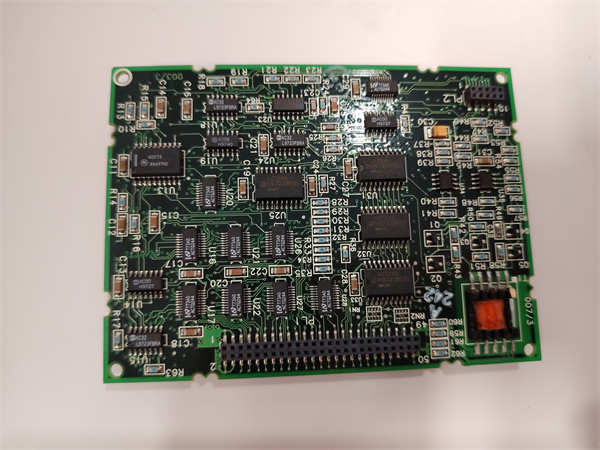
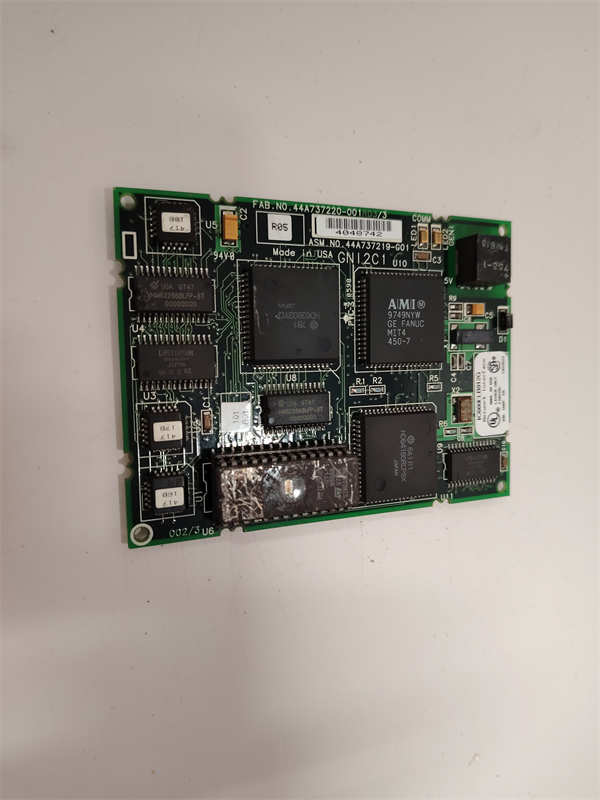
The IC660ELB912G is a distributed I/O block used in GE Fanuc Series 90-30 control architectures, typically deployed in manufacturing, power generation, and process automation. It connects directly to the Genius I/O bus and provides isolated relay contacts capable of switching AC or DC loads up to 240 V. This module commonly controls motor starters, solenoid valves, indicator lamps, and other discrete actuators.
Because it operates as a critical interface between the PLC logic and physical equipment, a failure—such as welded contacts, coil burnout, or communication loss—can disable multiple field devices simultaneously. In batch processes or safety-related circuits, this may trigger partial or full line stoppages. Unlike modern solid-state modules, relay-based outputs cannot be easily bypassed, making spare availability essential for rapid recovery.
Reliability Analysis and Common Failure Modes
The IC660ELB912G employs mechanical relays, which are inherently subject to wear from switching cycles. The primary failure mode is contact degradation: arcing during load interruption causes pitting, oxidation, or welding, especially when switching inductive loads without proper suppression (e.g., snubbers or flyback diodes). Over time, this leads to either failure-to-open or intermittent connectivity.
Secondary issues include relay coil burnout due to sustained overvoltage or thermal stress, and Genius bus communication faults caused by aging connectors, cable degradation, or ground loops on the field network. The module itself contains no active electronics for error reporting—only local LEDs—so communication failures often require troubleshooting at the bus level.
Design weaknesses include:
- No hot-swappable capability
- Limited surge immunity on output lines
- Dependence on external terminal blocks prone to corrosion or loosening
Recommended preventive actions:
- Inspect output LEDs for unexpected states during operation
- Periodically verify contact resistance with a milliohm meter
- Ensure all inductive loads are properly suppressed
- Clean and reseat Genius bus connectors annually
- Maintain spare modules in static-safe, dry storage with verified firmware compatibility
GE IC660ELB912G
Lifecycle Status and Migration Strategy
The IC660ELB912G was officially discontinued following GE’s exit from the industrial automation business and the subsequent transfer of legacy product lines to Emerson (via acquisition of GE Intelligent Platforms). No new units are manufactured, and original technical documentation is archived. Continued use carries significant risk: genuine spares are scarce, often sourced from decommissioned plants, and may exhibit latent wear.
Short-term mitigation includes:
- Purchasing and testing multiple spares while inventory exists
- Engaging third-party repair services for relay replacement or board refurbishment
- Implementing redundant control paths for critical outputs where feasible
For long-term sustainability, migration to a supported platform is advised. Options include:
- Emerson PACSystems RSTi-EP I/O: official successor ecosystem; requires backplane and controller upgrade
- Allen-Bradley FLEX I/O or Siemens ET 200SP: modern distributed I/O with comparable relay modules, though full system redesign is needed
- Retrofit gateways: some vendors offer Genius-to-EtherNet/IP or PROFINET converters that allow retention of existing IC660 modules temporarily, but this adds complexity and single points of failure
A full migration typically involves replacing the Series 90-30 CPU, updating programming software (from Logicmaster or VersaPro to PACMachine or equivalent), and rewiring field devices to new I/O terminals. While capital-intensive, this eliminates obsolescence exposure and enables integration with contemporary asset management and predictive maintenance tools.