 Tel:
Tel:  Email:
  WhatsApp:
 Description
Technical Specifications (For Spare Part Verification)
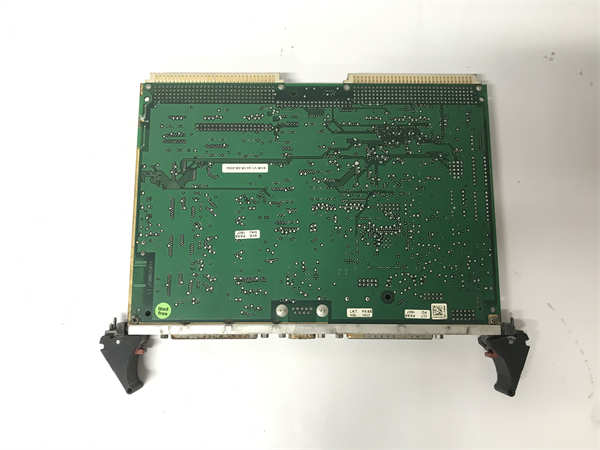
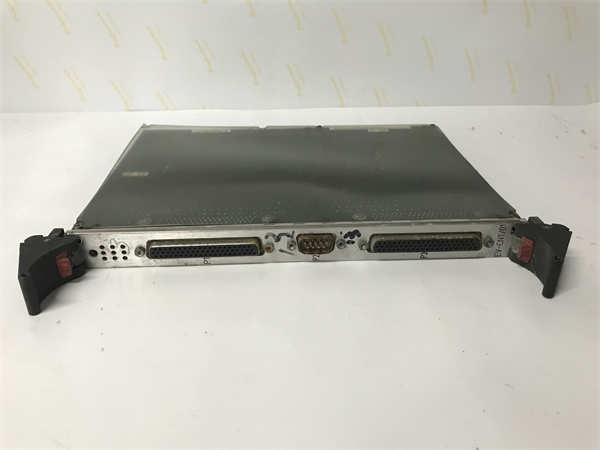
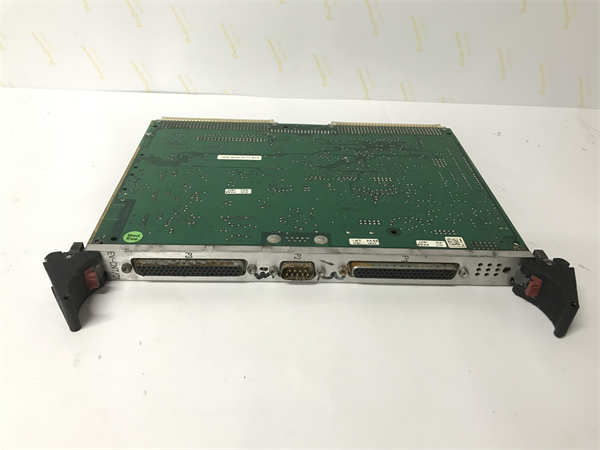
- Product Model: EVMECNTM13
- Manufacturer: GE Intelligent Platforms
- System Platform: 6U VME64/VME64x chassis with compatible CPU boards (e.g., SBC618, PP618)
- Form Factor: 6U VME (233.35 mm × 160 mm), single-slot
- Timing Inputs: IRIG-B (AM or DC), 1 PPS (TTL), optional GPS (via external receiver)
- Timing Outputs: IRIG-B (re-generated), 1 PPS, 10 MHz reference clock
- Network Timing: Supports IEEE 1588-2008 (Precision Time Protocol) over 10/100 Mbps Ethernet
- Connector Types: BNC (1 PPS, 10 MHz), ST fiber or BNC (IRIG-B), RJ-45 (Ethernet)
- Operating Temperature: 0°C to +60°C (commercial grade)
- Software Interface: Configurable via VxWorks or Linux drivers; requires GE-provided API library
- Firmware Dependency: Specific firmware version required for IEEE 1588 profile compatibility
System Role and Downtime Impact
The GE EVMECNTM13 is a specialized timing module deployed in VME-based systems where precise time-stamping of events across multiple I/O or processor boards is essential. It is commonly found in power utility substation automation (for fault recorders), aerospace test facilities (for synchronized sensor capture), and research instrumentation.
This module ensures all VME boards in a chassis—or across multiple chassis—share a common time base. Without it, event logs, oscillography data, or control actions cannot be accurately correlated. If the EVMECNTM13 fails or loses its time reference, the entire system may continue operating but with degraded time accuracy. In protection relay testing or sequence-of-event analysis, this renders collected data legally and technically unusable. In some applications, loss of valid time may trigger a “time invalid” alarm that disables time-critical functions, leading to partial or full system derating.
Reliability Analysis and Common Failure Modes
Despite its robust design, the EVMECNTM13 is now well beyond its intended service life, with most units manufactured in the mid-to-late 2000s. Common failure mechanisms include:
- Oscillator drift or failure: The internal TCXO (temperature-compensated crystal oscillator) degrades over time, causing holdover instability when the external time reference (e.g., IRIG-B) is lost. This results in increasing time skew during outages.
- Ethernet PHY degradation: The on-board Ethernet transceiver used for IEEE 1588 can suffer from latch-up or signal integrity loss due to ESD exposure, breaking PTP communication even if link LEDs appear active.
- BNC and fiber connector wear: Repeated mating cycles or vibration loosen BNC connectors, introducing impedance mismatches that distort IRIG-B AM signals; fiber ports may accumulate dust, attenuating optical sync pulses.
A key vulnerability is the module’s dependency on external time sources—if the upstream IRIG-B generator fails and the local oscillator is aged, the system has no fallback. As preventive maintenance, users should:
- Periodically validate time accuracy against a portable GPS reference during operation.
- Monitor IEEE 1588 offset and path delay metrics via diagnostic software.
- Clean and inspect all timing input/output connectors annually, ensuring proper torque on BNC fittings.
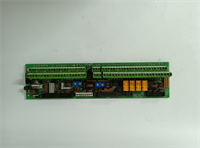
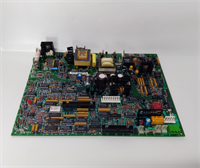
GE EVMECNTM13
Lifecycle Status and Migration Strategy
GE Intelligent Platforms discontinued the EVMECNTM13 years ago, with no direct replacement offered in current product portfolios. No firmware updates, calibration services, or technical documentation support are available from the manufacturer. Remaining units exist only in the secondary market, often without verification of oscillator health or IEEE 1588 conformance.
Short-term mitigation includes:
- Acquiring a tested spare with documented time accuracy and holdover performance under load.
- Implementing redundant time inputs (e.g., dual IRIG-B sources) to reduce dependency on a single reference.
For long-term sustainability, migration to modern timing architectures is necessary. Options include:
- Replacing the VME system with a CompactPCI Serial or industrial PC platform using PCIe-based timing cards (e.g., Spectracom or Meinberg modules) that support PTP, NTP, and IRIG-B natively.
- Deploying an external grandmaster clock (e.g., IEEE 1588 grandmaster with IRIG-B output) that serves both legacy VME systems (via discrete inputs) and new infrastructure, acting as a timing bridge during transition.
Any migration must ensure backward compatibility with existing time-consuming applications and revalidate all time-sensitive logic, especially in regulatory-compliant environments such as NERC CIP or IEC 61850 substations.