 Tel:
Tel:  Email:
  WhatsApp:
 Description
Technical Specifications (For Spare Verification)
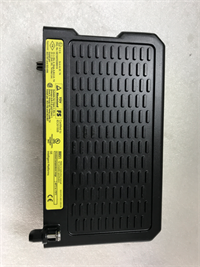
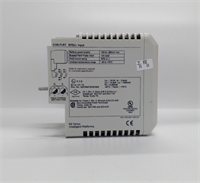
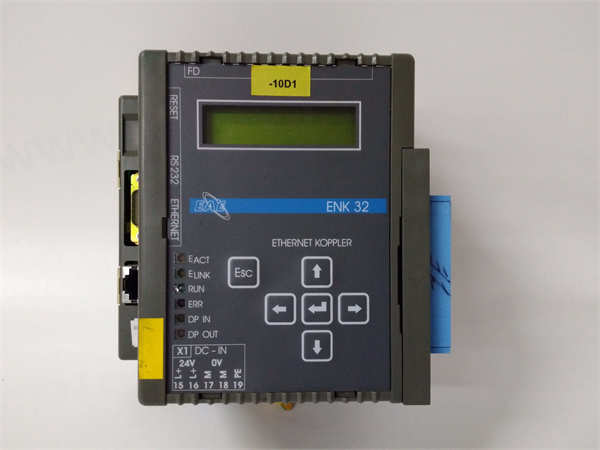
- Product Model: ENK32
- Manufacturer: GE Fanuc (General Electric)
- System Compatibility: Series 90-30 PLC (rack-based I/O system)
- Input Type: 2 isolated high-speed counter channels (TTL/CMOS compatible)
- Maximum Input Frequency: 100 kHz per channel
- Input Voltage Range: 5–30 VDC (sink/source configurable)
- Counting Modes: Up/down, quadrature (A/B phase), pulse + direction
- Isolation: 500 VDC between field and logic circuits
- Diagnostic Indicators: Per-channel LED status (power, input active)
- Form Factor: Single-slot module for 90-30 I/O base
- Firmware/Configuration: Set via DIP switches; no software configuration required
-

GE ENK32
System Role and Downtime Impact
The ENK32 resides in the I/O chassis of a GE Series 90-30 PLC system, typically deployed in legacy water treatment plants, packaging lines, or small-scale manufacturing. It directly interfaces with field devices such as turbine flow meters, rotary encoders, or proximity sensors that generate high-frequency pulses. These counts are used by the PLC logic to calculate flow rates, batch totals, or machine speed—often feeding into safety or quality control functions. While not a safety-rated module per IEC 61508, its failure can cause significant operational disruption: under-counting may lead to product giveaway or incomplete cleaning cycles, while over-counting can trigger false alarms or unnecessary shutdowns. A complete module fault typically results in loss of critical process visibility, forcing manual operation or temporary bypass—both of which increase operational risk and may violate audit requirements. Replacement requires physical installation, DIP switch reconfiguration, and functional validation of the counting logic.
Reliability Analysis and Common Failure Modes
Despite its simple design, the ENK32 is vulnerable to several age-related and environmental stressors:
- Input optocoupler degradation: The isolation components on the input channels lose sensitivity over time, especially when exposed to sustained high-frequency switching, leading to missed pulses or erratic counts.
- DIP switch contact oxidation: Infrequently adjusted but critical configuration switches can develop high resistance due to corrosion, causing incorrect counting mode selection (e.g., interpreting quadrature as single-phase).
- Backplane connector fatigue: Thermal cycling induces micro-cracks in edge connectors, resulting in intermittent communication with the CPU or partial channel dropout.
- Power supply ripple sensitivity: As internal filtering capacitors age, the module becomes more susceptible to noise on the 5V logic rail, causing spurious resets or count corruption.
A key limitation is the absence of self-diagnostics—there is no way for the PLC to detect if the module is missing pulses unless external validation is implemented.
Recommended preventive actions include:
- Periodically verifying count accuracy against a known reference (e.g., handheld tachometer or calibrated flow standard).
- Inspecting and cleaning DIP switches during outages; applying contact enhancer if oxidation is observed.
- Ensuring stable, low-noise 5V power from the base unit; replacing aging power supplies proactively.
- Maintaining at least one verified spare with matching DIP settings in ESD-safe, climate-controlled storage.
-
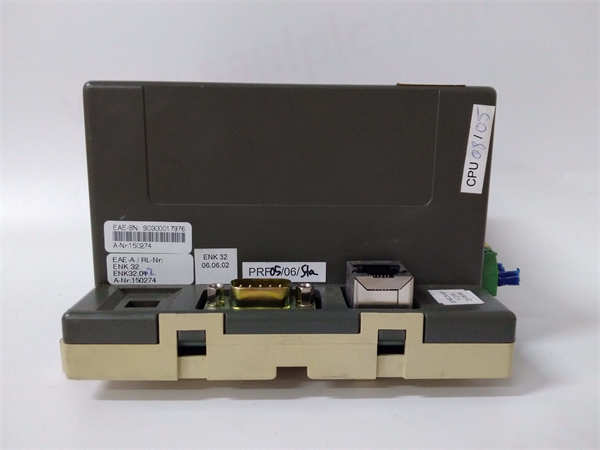
GE ENK32
Lifecycle Status and Migration Strategy
General Electric (now part of Emerson through acquisition of GE Intelligent Platforms) has formally discontinued the ENK32 as part of the end-of-life plan for the Series 90-30 platform. No new units have been available for over a decade. Remaining inventory consists of used modules with unknown operational history, posing significant reliability risks. Continued use exposes facilities to unplanned downtime, data integrity issues, and increasing difficulty in meeting operational excellence standards.
Short-term mitigation strategies include:
- Securing two fully tested spares with documented functional verification.
- Engaging specialized industrial repair vendors capable of board-level component replacement (e.g., optocouplers, capacitors) and post-repair burn-in testing.
- Implementing external validation logic (e.g., using a redundant counter or software sanity checks) to detect counting anomalies.
For long-term sustainability, migration to a modern PLC platform is essential. Recommended paths include:
- Emerson PACSystems RX3i: Offers high-speed counter modules (e.g., IC695HSC304) with 1 MHz capability, software-configurable modes, and integrated diagnostics. Migration requires rack replacement, logic conversion (from Logicmaster 90 to Proficy Machine Edition), and I/O rewiring.
- Allen-Bradley CompactLogix 5380: With 1769-HSC or 5069-HSC modules, it provides superior performance, EtherNet/IP integration, and seamless connectivity to PlantPAx or Ignition SCADA.
Facilities relying on the ENK32 should initiate a formal obsolescence risk assessment immediately. Proactive migration not only restores reliability but also enables digital transformation through modern data connectivity and cybersecurity features absent in legacy GE systems.