 Tel:
Tel:  Email:
  WhatsApp:
 Description
Key Technical Specifications
| Parameter | Specification |
|---|---|
| Part Number | DS3800HFXA1D18 |
| Series | GE Mark V |
| Function | Analog I/O Signal Conditioning |
| Input Signals | Thermocouple (Type J, K, etc.), 4-20mA, LVDT, Vibration |
| Output Signals | Servo Valve Drivers, Relay Drivers, 4-20mA |
| Connectors | 2PL (Power), 3PL (Data Bus), JE, JF, JG, JAR/S/T |
| Configuration | Hardware Jumpers (J1, J2, J5, J6, J7, J8) |
| Voltage | +/- 10 VDC (Analog I/O range) |
| Application | Gas Turbine Control (Speedtronic) |
| Weight | Approx. 1.5 kg |
Product Introduction
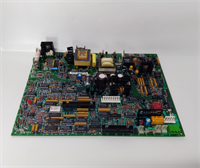
If you are keeping a GE Mark V turbine running, you know the struggle. These systems are the backbone of power generation, but finding parts for them is getting harder every year. The GE DS3800HFXA1D18 is one of those “lifeline” boards. It is an Analog I/O board that lives inside the I/O Core (R1, R2, R3). Its job is to take the messy real-world signals—like the heat from a thermocouple or the position of a fuel valve—and clean them up so the processor can understand them.From a technical standpoint, this board is a beast. It handles signal scaling and conditioning for a massive variety of inputs. We are talking LVDT position feedback, 4-20mA process loops (like compressor stall detection), and even vibration inputs. What makes this specific board tricky—and valuable—is the hardware configurability. It’s not just plug-and-play; you have to set the jumpers (J1, J2 for mA output, J5/J6 for current range) to match your specific turbine application. If you are replacing a fried board, you need to copy those jumper settings exactly, or the turbine won’t start.
Quality SOP & Tech Pitfalls (The Reality Check)
The Lab Report (SOP)
We don’t just ship these in a box. Mark V boards are sensitive.
- Visual Inspection: We check the “pigtails” and connectors (2PL, 3PL) for corrosion. These boards often sit in hot cabinets for 20 years; oxidation is the enemy.
- Connector Check: We verify the pins on the JE, JF, and JG connectors. Bent pins here mean the board won’t communicate with the terminal boards (TBQA, TBQC).
- Live Test (Simulated): We power up the board on a test rack to ensure the oscillator starts (J8 function) and that the analog scaling circuits are responsive.
- Packaging: It goes into an anti-static bag with conductive foam. No exceptions.
The Engineer’s Warning (Pitfalls)
Here is the trap: Jumper Settings.
The DS3800HFXA1D18 (and its sibling the D1B) relies on physical jumpers to define its operation. For example, J5 and J6 configure the milliamp output current range (20 mA vs 200 mA). If you install a replacement board and leave the factory default jumpers in place, your fuel flow signal might be 10x off. Always photograph the jumper block on your old, failed board before you pull it out. I’ve seen startups delayed by days because a technician swapped the board but forgot to move J1 and J2.
Installation & Configuration Guide
Swapping this board requires precision. It’s not a generic PLC card.
- Pre-Installation:
- ⚠️ CRITICAL: Ensure the Mark V control system is in “Stop” or “Off” mode.
- Document Everything: Take high-res photos of the jumper settings (J1, J2, J5, J6, J7, J8) on the old board.
- Label Cables: The 3PL data bus and 2PL power cables must go back exactly where they came from.
- Removal:
- Disconnect the 2PL and 3PL cables from the core.
- Unbolt the board from the chassis.
- Carefully disconnect the analog signal cables (JE, JF, JG) if they are accessible without removing the whole core.
- Installation:
- Mount the DS3800HFXA1D18 into the slot.
- Transfer Jumpers: Move the jumpers from the old board to the new one to match your documentation.
- Reconnect the 3PL data bus. This is critical for communication with the STCA and TCQA boards.
- Power-On & Testing:
- Power up the system.
- Check the LED indicators on the board.
- Go into the Operator Interface (HMI). Check for “I/O Faults.”
- Verify analog readings. If you have a 4-20mA loop, force a signal and ensure the HMI reads the correct value.
Compatible Replacement Models
The Mark V series has many revisions. Compatibility is strict.
- ✅ Drop-in Replacement:
- DS3800HFXA1D1B: This is the most common equivalent. The D18 and D1B are functionally very similar, often used interchangeably in the field for analog I/O tasks.
- ⚠️ Software/Firmware Compatible:
- DS3800HFXA1D1A: An earlier revision. It will physically fit, but you must ensure the firmware (EPROM) version matches your turbine’s control logic requirements.
- ❌ Hardware Incompatible:
- Mark VI / Mark VIe Boards: Do not try to force newer generation boards into a Mark V core. The form factors and communication protocols (I/O NET vs 3PL bus) are completely different.
Frequently Asked Questions (FAQ)
Q: Is the DS3800HFXA1D18 the same as the D1B?
A: They are extremely similar. In the field, they are often treated as direct replacements for one another in the Mark V system, but always check your specific turbine specification sheet to be sure.Q: What does the “3PL” connector do?
A: The 3PL connector is the data highway. It connects the board to the STCA and TCQA boards in the core, allowing analog data to be transmitted to the processor. If this isn’t seated tight, you get communication faults.Q: Can I use this for thermocouples?
A: Yes. The board handles thermocouple inputs (via the TBQA terminal board connectors JAR/S/T). It also handles the cold junction compensation required for accurate temperature readings.Q: My board has a jumper on J7. What is that for?
A: J7 is typically used for RS232 port testing. Unless you are doing specific card diagnostics on a bench, this should usually be set according to the standard operating configuration for your turbine.Q: Why is this board so expensive?
A: Supply and demand. GE Mark V systems are aging out, but they are still running in many power plants. New manufacturing has stopped, so we are trading from remaining stock and pull-outs. You are paying for the availability.