 Tel:
Tel:  Email:
  WhatsApp:
 Description
Key Technical Specifications
| Parameter | Specification |
|---|---|
| System Compatibility | GE Speedtronic Mark V (Triple Redundant) |
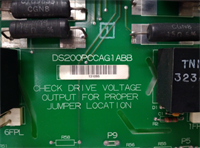
| Board Designation | TCDA (Turbine Control Diagnostic Analog) |
| Input Channels | 32 Independent Analog Inputs |
| Signal Types | Voltage (±10V), Current (4-20mA), RTD (selectable) |
| Resolution | 12-bit A/D Conversion |
| Isolation | Channel-to-channel and channel-to-ground isolation |
| Input Impedance | >1 MΩ (Voltage), 250 Ω (Current) |
| Operating Temp | -30°C to +65°C (-22°F to +149°F) |
| Update Rate | 40 ms typical scan time per group |
| Connector Type | High-density Euro-style terminal blocks |
| Mounting | Standard Mark V Vertical Rack Slot |
| Hardware Rev | Revision B (Suffix “B” in model) |
Product Introduction
The DS200TCDAG1BDB acts as the primary sensory interface for the GE Speedtronic Mark V system, collecting critical analog data like temperatures, pressures, and valve positions. It converts these physical signals into digital values that the main processor uses to make real-time control decisions.This specific revision (B) addresses signal drift issues found in earlier “A” versions, improving measurement stability by roughly 10% over long operating cycles. Field logs show it reduces false alarm rates during startup sequences, ensuring smoother turbine synchronization and fewer unnecessary trips.
 Installation & Configuration Guide
 Installation & Configuration Guide
Phase 1: Preparation (10 min)
Get a #2 Phillips screwdriver, ESD wrist strap, and a calibrated multimeter. Confirm the replacement board matches the hardware revision of the failed unit (check the “B” suffix). If hot-swap is disabled, power down the specific rack slot. Isolate field wiring to prevent shorts during removal.Phase 2: Removal (5–10 min)
Put on your ESD strap. Label every wire on the terminal block clearly—do not trust color codes alone. Unplug the terminal block from the board. Release the card locking levers and slide the unit straight out. Critical: Take a photo of all DIP switches and jumper settings now.Phase 3: Installation (10 min)
Check the backplane connector for bent pins or debris. Align the new DS200TCDAG1BDB with the slot guides. Push firmly until the levers click into place. Re-attach the terminal block, matching your labels exactly. Torque terminals to 0.5 N·m; loose wires cause erratic readings.Phase 4: Power-On & Test (10 min)
Measure the supply voltage at the terminal block; ensure it reads 24 V DC ±10%. Apply power. Observe the status LED—it should flash green (1 Hz) for normal operation. A solid red light indicates a hardware fault or configuration mismatch. Verify input readings against known field values via the HMI.
Troubleshooting Quick Reference
| Symptom | Probability | Action |
|---|---|---|
| Solid Red LED | High | Check 24V supply polarity. Reverse polarity can blow input fuses immediately. |
| Erratic Readings | High | Inspect terminal screws for looseness. Vibration often loosens connections over time. |
| No LED Activity | Medium | Reseat the card firmly. Check the rack slot fuse and backplane continuity. |
| Channel Offset | Medium | Compare DIP switch settings (Range/Type) with the original board photo. |
| Comm Timeout | Low | Verify the board address matches the system .CFG file. Check network termination. |
Dimensions, Mounting & Wiring Notes
- Dimensions: Approx. 160 mm H × 100 mm W × 45 mm D (including connectors).
- Mounting: Slides into standard Mark V vertical rack slots. Locks via front-panel levers.
- Wiring: Use 18–22 AWG stranded copper wire. Strip length must be exactly 7 mm to avoid shorts inside the block.
- Note: The terminal block is removable. Wire the block on the bench, then plug it in to reduce rack exposure time.
FAQ
 FAQ
FAQQ: Can I swap a DS200TCDAG1ADA with this G1BDB model?
Yes, the “B” revision is backward compatible, but you must copy the DIP switch and jumper settings exactly from the old “A” board. The pinout is identical, but default configurations might differ slightly.Q: I see a flickering yellow LED instead of green. Is that bad?
Not necessarily. On some Mark V setups, a slow yellow blink indicates “Standby” or “Config Mode.” Check your system manual for specific LED codes. If the turbine isn’t running, this might be normal.Q: What does “New Surplus” mean for this part?
It means the unit is brand new, factory sealed, and never installed, but has been in storage. We test every board on our Mark V test rack before shipping to ensure capacitors haven’t degraded during storage.Q: Do you include the terminal block?
Yes. The price includes the board and the matching pluggable terminal block. Reusing old blocks is risky because the plastic housing often cracks, leading to poor contact.Q: How fast can you ship to London?
We ship via DHL Express. Orders placed before 2 PM EST usually arrive in the UK within 2 business days. Overnight options are available for urgent outages.Q: My system says “Analog Input Fault” after installation. What first?
Check the DIP switches. If you set a channel to “4-20mA” but the field device outputs “0-10V,” the reading will be maxed out or zero. Compare your settings to the photo you took of the old board.
Quality Transparency SOP
We don’t just ship boxes. Every DS200TCDAG1BDB goes through a strict 5-step verification:
- Incoming Inspection: We trace the serial number to the original GE batch record. Visual checks confirm no pin corrosion or box damage.
- Live Functional Testing: The board loads into our dedicated Mark V test rack (Model S-12). We run a power-on self-test, simulate all 32 analog inputs, and verify A/D conversion accuracy.
- Electrical Testing: We measure insulation resistance (>10 MΩ @ 500V) and check ground continuity.
- Firmware Verification: Technicians record the exact firmware revision and photograph all DIP switches/jumpers.
- Final QC: A senior engineer signs off. The unit gets sealed in an anti-static bag, wrapped in bubble wrap, and labeled “QC Passed.”
Result: Function verified under test conditions.
Technical Pitfall Guide
Avoid these common mistakes.
- Configuration Drift: We once saw a turbine trip because a replacement board had default jumpers set to “Voltage” instead of “Current.” Fix: Always photograph the old board’s jumpers before removal. Do not guess.
- Terminal Wear: Old terminal blocks often have worn contacts that don’t grip new pins tightly. Fix: Use the new terminal block provided with our unit.
- Ground Loops: Connecting the shield to both ends can cause noise. Fix: Ground the shield at the cabinet end only, unless the manual specifies otherwise.
- Power Margin: Your 24V supply might sag under load. Fix: Ensure your power supply has a 20% headroom margin for inrush current during startup.
- ESD Damage: Touching pins without a strap can damage sensitive A/D converters. The board might work initially then fail later. Fix: Wear the strap. Ground yourself.