 Tel:
Tel:  Email:
  WhatsApp:
 Description
Key Technical Specifications
| Parameter | Specification |
|---|---|
| System Compatibility | GE Speedtronic Mark V (LM6000, Frame 5/6/7/9) |
| Board Function | Analog Terminal Board (TBQG) |
| Signal Types | TC (Thermocouple), RTD, 4-20 mA, 0-10 V DC |
| Channel Count | 16 isolated channels (configuration dependent) |
| Input Voltage Range | ±10 V DC max (logic side); Field voltage varies by sensor |
| Isolation Voltage | 500 V AC (Channel to Logic) |
| Operating Temperature | -30 °C to +65 °C |
| Storage Temperature | -40 °C to +85 °C |
| Relative Humidity | 5% to 95% (Non-condensing) |
| Connector Type | High-density D-sub and screw terminal blocks |
| Mounting Style | DIN-rail or Cabinet Mount (Mark V standard) |
| Certification | UL, CSA (Original build standards) |
Product Introduction
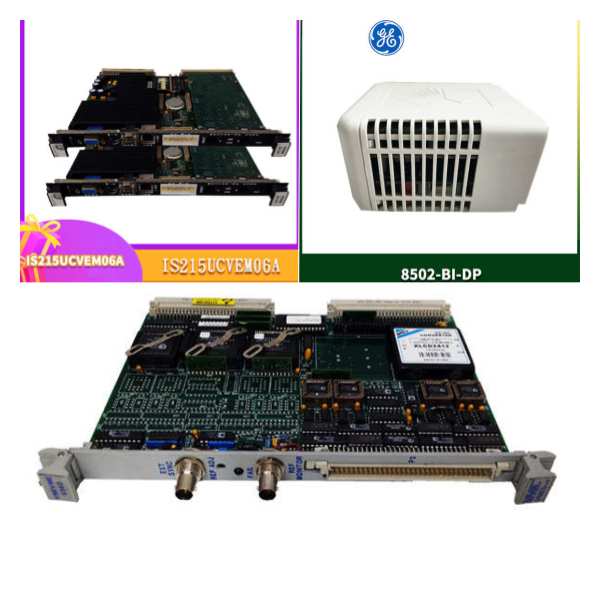
The DS200TBQGG1A acts as the primary interface board for analog sensors in GE Mark V turbine control panels. It conditions and routes signals from thermocouples, pressure transducers, and vibration probes directly to the TMR processor cards.This board eliminates signal noise through dedicated channel isolation, maintaining accuracy within ±0.1% of span under full load. Its ruggedized design handles the high-vibration environment typical of gas turbine enclosures, reducing false trip rates caused by intermittent connections.
Installation & Configuration Guide
Phase 1: Preparation (10 min)
Clear a static-safe bench. Locate the system wiring diagram (Schematic ID usually starts with “200T…”). Verify the replacement board’s revision letter matches the existing hardware. Check the terminal block screws for corrosion; replace if pitted. Have a calibrated multimeter ready.Phase 2: Removal (5–10 min)
Lock out/tag out the control power. Label every wire before disconnecting—use a permanent marker on tape, not just the diagram. Remove the terminal block plug from the board first, then unscrew the board mounting hardware. Pull the board gently; the backplane pins can bend if angled.Phase 3: Installation (10 min)
Slide the new DS200TBQGG1A into the mounting slot. Ensure the backplane connector aligns perfectly before pushing home. Tighten mounting screws to 0.6 Nm. Re-insert the terminal block plug until it clicks. Reconnect wires according to your labels. Double-check tightness (0.5 Nm for signal wires).Phase 4: Power-On & Test (10 min)
Remove lockout tags and apply control power. Do not start the turbine yet. Measure the 24 V DC logic supply at the board test points. Verify presence of the “Heartbeat” LED (usually green, blinking 1 Hz). Use a signal generator to inject a 4 mA signal into one channel; verify the reading in the HMI or toolbox software.
Troubleshooting Quick Reference
| Symptom | Probability | Immediate Action |
|---|---|---|
| No LEDs active | High | Measure 24 V DC at the terminal block. Check the internal fuse on the board (if accessible) or upstream breaker. |
| Erratic Signal Readings | Medium | Check shield grounding. Ensure shields are grounded at one end only. Look for loose terminal screws. |
| Channel Dead (0 value) | Medium | Inspect the specific terminal screw for broken wire strands. Swap the sensor to a known good channel to isolate the fault. |
| Over-Range Alarm | Low | Verify sensor type configuration (TC vs RTD) in the software. Check for short circuits in the field wiring. |
| Backplane Comm Error | Low | Inspect backplane pins for bending. Clean contacts with contact cleaner (non-residue). Reseat the board firmly. |
Dimensions, Mounting & Wiring Notes
- Dimensions: Approx. 200 mm (W) x 150 mm (H) x 40 mm (D). Size varies slightly with terminal block attached.
- Mounting: Secured via four corner standoffs or DIN-rail clip depending on cabinet layout.
- Wiring: Use stranded copper wire (18–22 AWG). Torque terminals to 0.5 Nm. Keep high-voltage AC wiring (e.g., 120 V AC solenoid feeds) at least 50 mm away from these analog signal lines to prevent induced noise.
FAQ
Q: Will this work in a Mark VIe panel?
No. The DS200TBQGG1A is strictly for Mark V systems. Mark VIe uses a completely different backplane architecture and I/O pack design. They are not physically or electrically compatible.Q: I received a board with a different suffix letter. Is it okay?
Maybe, but proceed with caution. Suffix changes often indicate minor component updates or firmware tweaks. Compare the schematic diagram of your old board with the new one. If the pinout and component layout match, it usually works. If unsure, send us the photos for verification.Q: How do you test these before shipping?
We run a full SOP. We inspect for counterfeit marks, test insulation resistance (>10 MΩ), and mount the board on a live Mark V test rack. We simulate all 16 channels with precise signal generators and verify the data reads correctly in the software. A printed report comes with the unit.Q: Can I swap this while the turbine is running?
Technically, Mark V supports some hot-swapping, but not for analog input boards tied to critical protection loops. Swapping this could cause a momentary signal loss and trip the machine. Advice: Only change this during a scheduled outage or when the machine is down.Q: What is the lead time for stock?
If marked “In Stock,” we ship within 24 hours. US domestic delivery is typically 2 days. International orders take 5–7 days depending on customs. We do not hold stock indefinitely, so confirm availability before planning your maintenance window.Q: My old board smells burnt. Will the new one fix the root cause?
Not necessarily. A burnt board often means a short circuit in the field wiring or a power surge. Before installing the new DS200TBQGG1A, you must megger the field cables and check the power supply stability. Otherwise, you might fry the replacement too.Q: Do you offer bulk discounts?
Yes. Orders of 5 or more units qualify for tiered pricing. We also support procurement contracts for long-term spares strategies. Contact our sales team for a formal quote.
Quality Transparency Strategy (SOP)
1. Incoming Inspection
Every DS200TBQGG1A undergoes origin tracing. We check for re-marked chips, inconsistent font on labels, and signs of previous repairs (solder bridges, flux residue). Physical inspection includes checking for cracked PCBs or corroded traces. We verify that all original terminal blocks and mounting hardware are present.2. Live Functional Testing
Units are mounted on a dedicated Mark V simulation rack. We perform a power-on self-test. The system checks communication handshakes with the processor. We use precision calibrators to inject signals across the full range (0%, 50%, 100%) on every channel. The board runs under load for 24 hours to catch intermittent faults. A detailed test report is generated.3. Electrical Testing
We measure insulation resistance between channel grounds and logic ground; pass criteria is >10 MΩ @ 500V. Ground continuity is verified to ensure safe fault paths. Hi-pot testing is performed where applicable to confirm dielectric integrity without stressing components.4. Firmware Verification
While terminal boards are largely passive, some revisions have specific calibration EPROMs. We record the revision level and document any onboard jumper settings. Photos of these settings are taken and included in the shipment documentation to ensure correct configuration upon arrival.5. Final QC & Packaging
A senior technician signs the final QC checklist. The board is placed in an anti-static bag, sealed, and wrapped in heavy-duty bubble wrap. It is packed in a rigid cardboard box with void fill. A “QC Passed” label with the date and inspector ID is attached. Function is verified under test conditions; field performance depends on overall system health.
Technical Pitfall Guide
- Field Wiring Shorts: A common issue in Texas refineries involved a chafed cable rubbing against the conduit, sending 120 V AC into the analog input. This fried the terminal board instantly. Fix: Megger all field cables before connecting them to the new board. Never assume the wiring is clean.
- Ground Loops: Improper shielding causes noisy readings. If you ground the shield at both the sensor and the panel, you create a ground loop. Rule: Ground shields at the cabinet entry point only. Cut the shield at the sensor end.
- Terminal Block Mismatch: Older terminal blocks sometimes have worn springs that don’t grip new wires well. Check: Inspect the plastic housing of the terminal block. If it looks brittle or discolored, replace the block, not just the board.
- Power Supply Sag: Adding new cards to an old power supply can drop the voltage below 20 V DC during startup transients. Requirement: Measure the 24 V DC line under load. Ensure you have at least 20% capacity margin on the power supply unit.
- ESD Sensitivity: These boards contain sensitive analog conditioning circuits. Static discharge can drift calibration values without causing immediate failure. Protocol: Always wear a grounded wrist strap. Handle the board by the edges only. Avoid touching the connector pins.