 Tel:
Tel:  Email:
  WhatsApp:
 Description
Key Technical Specifications
| Parameter | Specification |
|---|---|
| Channel Count | 24 Discrete Inputs/Outputs (configurable) |
| Nominal Voltage | 24 V DC (Operating Range: 18–30 V DC) |
| Logic Threshold | High: >14 V DC; Low: <6 V DC |
| Response Time | 3–8 ms (depends on controller scan rate) |
| Isolation | Optical isolation (groups of 8 channels) |
| Dielectric Strength | 500 V AC for 1 minute (channel to ground) |
| Power Draw | 2.5 W typical (no load) |
| Operating Temp | -20°C to +60°C (-4°F to +140°F) |
| Humidity | 5% to 90% non-condensing |
| Connector Type | Pluggable 3-row terminal block (Phoenix compatible) |
| Mounting | Backplane slot (Mark V core control cabinet) |
| Revision Suffix | ABB (indicates specific hardware/firmware rev) |
Product Introduction
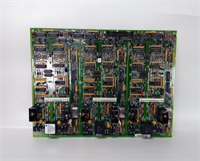
The GE DS200TBQBG1ABB acts as the critical bridge between field devices and the Mark V turbine controller. It handles discrete signals from pressure switches, limit switches, and solenoid valves, converting them into logic levels the TCQA processor can execute.This specific “ABB” revision includes updated protection circuitry to handle voltage transients common in older power plants. Field records show these boards typically last 12–15 years before component aging affects signal integrity. The optical isolation blocks electrical noise from corrupting the trip logic.
 Installation & Configuration Guide
 Installation & Configuration Guide
Preparation (10 min)
Collect a #2 Phillips screwdriver, anti-static wrist strap, and a digital multimeter. Check the label on the existing board. The suffix must match exactly (DS200TBQBG1ABB). Using an “AA” or “A” revision might work physically but can cause timing errors in the control algorithm.
Removal (5–10 min)
Shut down the control panel if safety protocols allow. If performing a hot-swap (risky on Mark V without redundancy), ensure the controller is in “Maintenance Mode.” Loosen the two screws holding the terminal block. Pull the block straight out. Release the card ejector levers at the top and bottom. Slide the board out smoothly—do not wiggle it, as this bends backplane pins.
Installation (10 min)
Insert the new DS200TBQBG1ABB into the slot, aligning the guides. Push firmly until the backplane connector seats. Lock the ejector levers. Reinstall the terminal block. Tighten screws to 0.4–0.5 Nm. Over-tightening cracks the terminal housing. Verify wire strain relief is secure.
Power-On & Test (10 min)
Apply power. Observe the LED indicators on the board edge. A steady green “OK” light should appear within 10 seconds. If the LED flashes red, the board failed self-test or has a firmware mismatch. Use the Mark V diagnostic tool to toggle an output on channel 1 and measure 24V DC at the corresponding terminal.
Troubleshooting Quick Reference
| Symptom | Probable Cause | Action |
|---|---|---|
| Flashing Red LED | Firmware mismatch or bad backplane contact | Reseat board; verify suffix “ABB” matches system config. |
| Channel Dead | Blown internal fuse or open field wire | Measure 24V DC at terminal; check field loop continuity. |
| Erratic Signals | Loose terminal screw or ground loop | Retorque terminals; ensure shield is grounded at one end only. |
| Comm Fault | Dip switch misconfiguration | Check dip switches against the original board photo (take one before removal!). |
| Board Overheating | Shorted output driver | Disconnect field wiring; measure resistance on output pins. |
Dimensions, Mounting & Wiring Notes
- Dimensions: Approx. 150 mm (H) × 90 mm (D) × 20 mm (W).
- Mounting: Slides into standard Mark V backplane slots. Secured by ejector levers.
- Terminal Notes: Uses removable 3-row terminal blocks. Accepts 14–18 AWG stranded wire. Solid core wire is prohibited; it breaks under turbine vibration.
- Critical Detail: The shield drain wire must connect to the cabinet ground bar, not the signal common terminal. Connecting shield to common causes ground loops and false trips.

FAQ (5–7 questions)
Q: Can I use a DS200TBQBG1A (no suffix) instead of the ABB version?
A: Not recommended. The “ABB” suffix indicates specific hardware changes in the input filtering circuit. Swapping to an earlier revision might cause the controller to read noisy signals as valid trips. Always match the suffix exactly.Q: I noticed the LED is amber instead of green. Is the board bad?
A: An amber LED usually means the board is in “Local” or “Test” mode, or it hasn’t received a heartbeat from the main processor yet. Check the controller status first. If it stays amber after 2 minutes, the firmware might be corrupted.Q: How fast can you ship a tested unit?
A: We keep tested DS200TBQBG1ABB boards in stock. Orders before 3 PM EST ship same-day. Domestic US delivery is typically next-day via FedEx Priority.Q: My system is Mark VIe. Will this board work?
A: No. This board is strictly for Mark V systems. Mark VIe uses entirely different form factors and communication protocols (UCIO/VCMI). Trying to force fit this will damage the backplane.Q: What does your testing process actually cover?
A: We don’t just power it on. We run a full I/O simulation on all 24 channels, checking rise/fall times and isolation resistance (>10 MΩ). We also verify the firmware checksum. You get a printed test report with serial numbers matching your unit.Q: I’m worried about ESD damage during installation. Any tips?
A: Absolutely valid concern. Mark V boards are sensitive. Wear a grounded wrist strap connected to the cabinet chassis. Never touch the connector pins directly. If the air is dry (winter), touch the metal cabinet frame for 5 seconds before handling the board to discharge static.Q: Do you offer a warranty on legacy parts like this?
A: Yes. We provide a 12-month warranty covering functional failures. If the board fails under normal operation, we replace it free of charge. This excludes damage from wiring errors or power surges.