 Tel:
Tel:  Email:
  WhatsApp:
 Description
Key Technical Specifications
| Parameter | Specification |
|---|---|
| Manufacturer | General Electric (GE) |
| Board Type | TCQA (Analog I/O Board) |
| System Series | Mark V Gas Turbine Control |
| Operating Voltage | 28V DC (0.62A) |
| Input Signals | LVDT, Thermocouple, 4-20mA, Vibration |
| Output Signals | Servo Valve, Relay Driver, 4-20mA |
| Connector Types | 2PL (Power), 3PL (Data Bus), JE/JF/JG |
| Signal Conditioning | Scaling for Compressor Stall & Fuel Flow |
| Hardware Config | Jumpers J1, J2, J5, J6, J7, J8 |
| Origin | USA (Virginia) |
Product Introduction
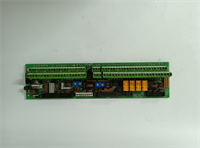
Let’s be real—keeping a GE Mark V turbine running often feels like archaeology. You aren’t dealing with modern Ethernet/IP gadgets; you’re working with heavy-duty, late-90s industrial logic that refuses to die. The DS200PCCAG5ACB is the heartbeat of that system. It’s the TCQA board, responsible for taking the messy real-world analog signals—like the position of a fuel valve or the vibration of a shaft—and cleaning them up so the processor can actually understand them.Why do we still use it? Because it works. It handles the critical 4-20mA loops and LVDT inputs that determine if a multi-million dollar turbine spins or trips. This specific board manages the scaling for things like compressor stall detection. If this board drifts or fails, your turbine logic sees “zero” fuel flow and shuts down the plant. It’s not “cutting-edge,” but it is bulletproof—if you keep the connections clean and the voltage stable.
Quality SOP & Tech Pitfalls
The Lab Report (SOP):
We don’t just pull these off a dusty shelf and ship them.
- Visual Inspection: We check the PCB traces for heat discoloration and verify the “New Surplus” status. No burnt smell, no corroded pins.
- Live Test: We rack it in a Mark V simulator to verify the 3PL data bus communication. If it can’t talk to the STCA board, it’s scrap.
- Signal Verification: We inject a simulated 4-20mA signal and verify the board scales it correctly. We also check the 28V DC power input draw to ensure it matches the spec (approx 0.62A).
- Packaging: It goes into an anti-static bag with proper foam. This board is sensitive to static discharge on the connector pins.
The Engineer’s Warning (Pitfalls):
- The Jumper Trap: This is where 90% of techs mess up. The board has hardware jumpers (J1, J2, J5, J6) that configure the current range (20mA vs 200mA). Do not assume the default factory setting matches your turbine. If you swap the board without copying the jumper positions from the old card, your servo valves won’t move, or worse, they’ll move too much.
- Connector J8: This is for the oscillator. I’ve seen techs force connectors where they don’t belong. Check the manual before you plug anything in.
- Field Disaster: A plant in Texas swapped this card, ignored the jumpers, and spent 6 hours troubleshooting a “Servo Fault” alarm. It turned out the new card was set to a different current range than the old one. Take a photo of the jumpers before you pull the old card.
Installation & Configuration Guide
1. Pre-Installation (Safety First):
- ️ Trip the Turbine: Ensure the control system is in a safe state.
- ️ Power Down: Remove the 28V DC power supply. Wait for capacitors to discharge.
- ️ The Golden Rule: Take a high-resolution photo of the jumper settings (J1-J8) on the OLD board. Compare them with the new one. Adjust the new board’s jumpers to match exactly.
2. Removal:
- Disconnect the 2PL (power) and 3PL (data bus) cables.
- Unscrew the mounting hardware. Slide the card out of the rack carefully. Don’t scratch the backplane connectors.
3. Installation:
- Slide the DS200PCCAG5ACB into the slot. Ensure it seats firmly against the backplane.
- Reconnect the JE (generator/line signals) and JF (LVDT) cables if they were disconnected.
- Tighten the mounting screws to ensure good grounding.
4. Power-On & Testing:
- Restore 28V DC power.
- Check the LED indicators (if equipped) or monitor the State LEDs on the operator interface.
- Verify the “Card Health” in the diagnostic menu. It should report “OK.”
- Perform a static test of the LVDT feedback to ensure the position matches the physical valve position.
Compatible Replacement Models
| Compatibility | Model Number | Notes |
|---|---|---|
| Drop-in Replacement | DS200PCCAG5ACB | Exact match. Ensure the revision suffix (ACB) matches for full compatibility. |
| ️ Software Compatible | DS200PCCAG5A | Earlier revision. Hardware is similar, but firmware/toolkit version might need adjustment. |
| Not Compatible | DS200TCQAG1A | Different board type (TCQA vs PCCA). Do not mix these up; pinouts differ. |
Frequently Asked Questions (FAQ)
Q: Can I hot-swap this while the turbine is running?
A: Absolutely not. This is part of the triple-redundant core. Pulling it live will cause a mismatch between the R1, R2, and R3 cores, likely tripping the turbine instantly. Plan for a shutdown.Q: My old board is DS200PCCAG5A (no CB). Will this work?
A: It’s risky. The “ACB” suffix usually indicates a specific hardware revision or component change. While it might physically fit, the internal scaling resistors or firmware might differ. Stick to the exact suffix if possible.Q: What does the “TCQA” acronym mean?
A: It stands for “Turbine Control Quadrant Analog.” It identifies the board’s role in the Mark V architecture as an analog signal processor.Q: The board arrived, but the jumpers are in different spots than my old one. What do I do?
A: Move them. The jumpers (J1, J2, J5, J6) set the hardware current range. They must match your system configuration (I/O Configurator settings).Q: Is this refurbished or new?
A: We supply “New Surplus.” It’s original GE stock that was never installed, or removed from a decommissioned system before ever being powered up. It is not a “repair” of a burnt board.