 Tel:
Tel:  Email:
  WhatsApp:
 Description
Key Technical Specifications
| Parameter | Specification | Notes |
|---|---|---|
| Board Type | TCQA (Analog I/O) | RST (Redundant Simplex Triplex) |
| Input Signals | LVDT, Thermocouple, 4-20mA | Multi-signal conditioning |
| Output Signals | Servo Valve, Relay Drivers | Analog & Discrete |
| Voltage Input | +/- 10 VDC | Via TBQB端子板 |
| Current Range | 4-20 mA / 0-20 mA | Configurable via Jumpers |
| Connectors | 2PL, 3PL, JE, JF, JG | Core bus & Terminal interfaces |
| Logic Level | TTL / CMOS | Digital interface |
| Operating Temp | -30°C to 65°C | Industrial Turbine Environment |
| Mounting | Eurocard / Backplane | I/O Core R1, R2, R3 |
| Revision | ACB | Hardware Revision C |
Product Introduction
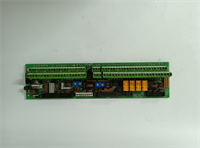
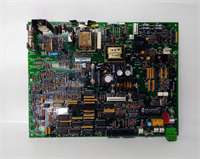
If you work with GE Mark V turbine controls, you know the system is a beast, but keeping it fed with accurate data is the hard part. The DS200PCCAG1ACB isn’t just a passive circuit board; it is the “sensory nervous system” for the turbine. It sits in the I/O Core (R1, R2, R3) and does the heavy lifting of scaling and conditioning raw signals before the CPU ever sees them.Why do we care about this specific board? Because it handles the critical stuff—LVDT position feedback for the fuel valves and thermocouple data for exhaust temperature. If this board drifts or fails, the turbine doesn’t just trip; it flies blind. The “ACB” revision is generally stable, but you have to watch the jumper settings. I’ve seen these boards pulled for “failure” when it was just a misplaced J5 jumper setting the wrong current range.
Quality SOP & Tech Pitfalls (The Reality Check)
The Lab Report (SOP)
We don’t trust visual inspections on turbine boards. Here is the drill:
- Connector Integrity: We inspect the 3PL and JE connectors under magnification. These backplane pins are notorious for bending if the board was yanked out at an angle.
- Jumper Verification: We verify J1, J2, J5, and J6 settings against the OEM manual. The board must be configured for the specific application (e.g., 20mA vs 200mA output).
- Signal Injection: We inject a simulated thermocouple signal and check the scaling at the 3PL data bus output. If the scaling is off by even 0.1%, the turbine calibration will fail.
- Cleanliness: Conformal coating is checked for cracks. Turbine halls get hot; cracked coating leads to corrosion.
The Engineer’s Warning (Pitfalls)
- The “JE” Connector Trap: The JE connector handles the servo valve outputs. If you force this connector, you will bend the pins. I once saw a $50k outage delayed because a single pin on the JE connector was pushed back 2mm and lost contact.
- Ground Loops: The 4-20mA inputs (JB/JBR) are sensitive. If your field wiring ground isn’t clean, this board will pick up noise that looks like a “Compressor Stall” signal. That’s a trip you don’t want.
- Field Disaster: A tech swapped a board and didn’t move the J7 “Card Test” jumper. The board worked fine for an hour, then the watchdog timer kicked in because the test mode was still active. The turbine tripped on “Control Fault.” Check your jumpers!
Installation & Configuration Guide
- Pre-Installation:
- ⚠️ SYSTEM LOCKOUT: Mark V systems are redundant (R1, R2, R3). You must isolate the specific core you are working on.
- Photo Documentation: Take a high-res photo of the old board’s jumpers (J1-J8). Do not rely on memory.
- Removal:
- Disconnect the terminal block cables (TBQA, TBQC) first.
- Unscrew the faceplate retention screws.
- Pull the board straight out. Do not wiggle it side-to-side, or you will damage the backplane connector (3PL).
- Installation:
- Jumper Migration: Move the jumpers from the old board to the new DS200PCCAG1ACB exactly as they were. Specifically check J5/J6 for current range.
- Seat the board into the card cage. Ensure the 3PL connector seats flush.
- Tighten the retention screws.
- Power-On & Testing:
- Power up the core.
- Check the “Ready” LED.
- Use the Operator Interface (HMI) to verify the analog inputs (TCQA data) are reading within tolerance of the other two cores (R1/R2/R3 comparison).
Compatible Replacement Models
| Compatibility | Model Number | Notes |
|---|---|---|
| ✅ Drop-in | DS200PCCAG1ACB | Exact hardware match. Verify jumpers. |
| ✅ Drop-in | DS200PCCAG1ABB | Earlier revision. Functionally similar, but check firmware compatibility. |
| ⚠️ Software | DS200PCCAG1A | Base model. Requires extensive jumper config to match “ACB” specs. |
| ❌ Incompatible | DS200TCQAG1 | Different board type (TCQA vs PCCA). Do not mix up. |
Frequently Asked Questions (FAQ)
Q: Can I hot-swap this while the turbine is running?
A: Technically, Mark V is redundant, so R1, R2, or R3 can be serviced online. However, I wouldn’t recommend it unless you are an expert. One slip with the 3PL connector and you short the backplane, tripping the whole unit. Shut it down if you can.Q: What does the “ACB” suffix mean?
A: It indicates the hardware revision and specific component changes. “C” usually implies a later version of the board. You must match the jumpers to your specific application, as the factory defaults might not match your machine.Q: My board reads “0” on the 4-20mA input. Is it broken?
A: Probably not. Check the JB and JBR terminal connections. Also, verify that the input isn’t “sinking” when it should be “sourcing” (or vice versa) via the jumpers.Q: Is this board expensive?
A: It’s not cheap. Turbine parts never are. But it’s cheaper than a false trip on a Frame 9E gas turbine. Expect to pay a premium for “New Surplus” with a traceable certificate.Q: Does it come with the terminal blocks?
A: Usually not. The board is just the PCB. The terminal blocks (TBQA/TBQC) are separate assemblies that plug into it. Make sure you have the cables to connect it.