 Tel:
Tel:  Email:
  WhatsApp:
 Description
Product Introduction
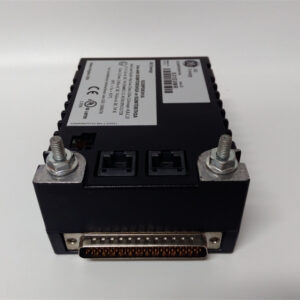
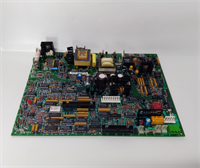
When you are standing in front of a GE Speedtronic Mark V rack, the DS200NATOG2A is the face of the system. This isn’t just a fancy screen; it is the critical local access point for engineers to tweak parameters, acknowledge alarms, and manually override logic during maintenance or emergencies. It bolts directly onto the cabinet door, putting control right at your fingertips.The design philosophy here is rugged simplicity. Unlike modern touchscreens that can fail in dusty environments, this module uses tactile membrane keys and a bright LED display that is readable even under harsh workshop lighting. It handles the translation between human button presses and the internal ARCNET communications of the Mark V system. For facilities still running this legacy hardware, keeping a spare NATOG board on the shelf means never being locked out of your turbine controller when the network goes down.
 Key Technical Specifications
 Key Technical Specifications
| Parameter | Value |
|---|---|
| Part Number | DS200NATOG2A |
| System Compatibility | GE Speedtronic Mark V |
| Input Power | 115 VAC (Nominal) |
| Display Type | 16-Character LED Alphanumeric |
| User Interface | Tactile Membrane Keypad (4×4 Matrix) |
| Operating Temperature | 0°C to 60°C |
| Communication | ARCNET (via Backplane) |
| Dimensions | Panel Cutout specific for Mark V Cabinet |
| Hazardous Area | Non-Incendive (General Purpose) |
| Origin | USA |
Application Scenarios & Pain Points
 Application Scenarios & Pain Points
The “Blind” Turbine
Picture this: A sudden power fluctuation resets the control rack. The turbine is fine mechanically, but the main network link to the DCS (Distributed Control System) is down. The operators upstairs can’t see a thing. Down in the field, the maintenance tech walks up to the Mark V cabinet, but the NATOG keypad is dark. Without this specific board, they cannot force I/O states, cannot reset the logic, and cannot restart the unit. The plant is dead in the water until this $2k interface board arrives—or until they dig out the old spare.Why This Part Matters
In the hierarchy of turbine parts, this board sits at the intersection of human and machine. Here is where it proves its worth:
- Field Commissioning: When installing a new turbine skid, the DCS isn’t online yet. Engineers use this keypad to manually jog valves and test sensors. No keypad means no testing.
- Emergency Bypass: If the main CPU locks up, the only way to initiate a safe cooldown is through the manual controls on this board. It is the mechanical “kill switch” of the digital world.
- Troubleshooting: When a vibration probe fails at 3 a.m., the first place the on-call engineer looks is the LED display on this module to read the specific fault code.
- Legacy System Support: Many plants have upgraded to Mark VI or VIe systems, but their balance-of-plant (BOP) equipment—like old feedwater pumps or compressors—still runs on Mark V. This board keeps that ancillary equipment alive.
Case Study: The Remote Pipeline Station
A natural gas pipeline compression station in Western Canada was running on a decades-old Mark V system. Due to the remote location, the primary comms to the central SCADA system were spotty. One winter, the main fiber link went down due to a rodent chew-through. The station relied entirely on the local DS200NATOG2A keypad for operations. When a pressure sensor failed, the operator had to manually adjust the fuel flow using the keypad’s numeric entry. Because the plant had a strict “last-time-buy” strategy for this specific interface board, they had a replacement ready when the display started flickering. This prevented a station shutdown in -30°C weather, avoiding a costly and dangerous situation.