 Tel:
Tel:  Email:
  WhatsApp:
 Description
Key Technical Specifications
| Parameter | Specification | Notes |
|---|---|---|
| Part Number | DS200LDCCH1AKA | Primary ID |
| Manufacturer | General Electric (GE) | USA |
| System Series | Speedtronic Mark V | Turbine Control |
| Board Type | LDCCH (DC Link Current) | Excitation Control |
| Revision | 1AKA | Verify suffix compatibility |
| Protection | “Five-Prevention” Interlocks | Switchgear safety logic |
| Key Feature | High Current Capacity | Supports heavy load switching |
| Component Quality | High Conductivity Elements | Low resistance path |
| Application | Gas/Steam Turbines | EHC Systems |
| Warranty | 12 Months | Replacement guarantee |
Product Introduction
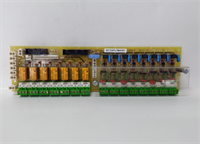
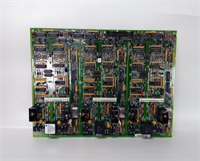
Let’s be honest—keeping a Mark V turbine running often comes down to the health of the excitation system. The DS200LDCCH1AKA isn’t just a generic I/O card; it’s the muscle behind the DC link current regulation. I’ve seen plants trip simply because this board’s interlocks failed to sequence correctly during a startup. This module is designed to handle the heavy lifting in the switchgear, specifically managing the “five-prevention” protection functions that keep your isolation and fuse trucks from causing a catastrophic arc flash.What makes this specific revision (1AKA) stand out is its build quality regarding conductivity. It maintains the high current grade necessary for reliable switching without overheating, a common failure point in older units. While the Mark V platform is legacy, this board remains critical for maintaining the stability of the EHC (Electro-Hydraulic Control) system. If you are running a Mark V setup, you know that finding clean, functional boards for the excitation cabinet is getting harder by the day.
Quality SOP & Tech Pitfalls (The Reality Check)
The Lab Report (SOP):
We don’t just wipe it down and ship it.
- Visual Inspection: We check for “hot spots” or burnt traces on the high-current paths. The LDCCH handles serious amperage, so any discoloration on the PCB is an instant reject.
- Live Test: We rack it into a Mark V test chassis and verify the interlock logic. Does it actually prevent the “illegal” moves? We simulate the inputs to ensure the logic holds.
- Component Check: We test the opto-isolators. If the isolation is weak, the noise from the turbine hall will fry your logic side in a week.
- Packaging: Double-layer anti-static bag with moisture barrier.
The Engineer’s Warning (Pitfalls):
- The “AKA” Suffix Trap: GE boards are notorious for revision sensitivity. The “1AKA” suffix isn’t random. If your system was programmed for an older revision, the timing on the interlocks might be slightly off. Always check the firmware revision in your Mark V configuration files before swapping.
- Interlock Wiring: I once saw a technician force a connection on the interlock harness because the pins were slightly oxidized. He bypassed the safety logic. Two weeks later, a fuse truck was racked into a live bus. Do not bypass the interlocks. If the connector doesn’t fit, clean the pins, don’t force it.
Installation & Configuration Guide
Time estimate: 30 minutes (if you have the manual handy).
- Safety First: ️ Lockout/Tagout (LOTO) the turbine control power. The Mark V uses multiple power rails (125V DC, 24V DC). Verify zero energy with a multimeter.
- Document the Old Board: Before pulling the old DS200LDCCH1AKA, take a high-res photo of the jumper settings and connector orientation. It sounds basic, but in a dimly lit cabinet, it’s easy to force a cable backward.
- Removal: Release the locking levers on the card cage. Pull the board straight out. Do not wiggle it excessively; you might damage the backplane pins.
- Configuration Transfer: If your board has manual jumpers (rare on newer revisions but possible), set them before insertion.
- Installation: Slide the new board into the slot. Ensure the locking levers engage fully. You should hear a solid “click” or feel firm resistance.
- Power-Up: Restore power and watch the LEDs. The Mark V usually flashes a specific pattern during boot. If you get a solid red light immediately, kill power—it’s likely a backplane short.
Compatible Replacement Models
| Compatibility | Model Number | Notes |
|---|---|---|
| Drop-in | DS200LDCCH1AKA | Exact match. Recommended. |
| ️ Potential Match | DS200LDCCH1ALA | Verify firmware compatibility. |
| ️ Potential Match | DS200LDCCH1ANA | Check revision notes. |
| Incompatible | DS200DSPCH1 | Different function (Signal Processor). |
Frequently Asked Questions (FAQ)
Q: Is this board hot-swappable?
A: absolutely not. The Mark V system is sensitive to live insertion on the excitation side. You will arc the backplane and likely kill the controller. Always power down the rack.Q: What does the “LDCCH” stand for?
A: It stands for Link DC Current Handler (or similar variation in GE nomenclature). It’s specifically for the DC link part of the excitation system.Q: Can I use this in a Mark VI system?
A: No. Mark VI uses a completely different architecture (typically Ethernet-based I/O). This is strictly for the legacy Mark V platform.Q: My old board has a different suffix (e.g., 1ALB). Will this work?
A: Maybe, but it’s risky. The hardware might fit, but the firmware timing could be different. You’d need to check the “Hardware Replacement” section of the GE Mark V manual to see if 1AKA supersedes your current version.Q: Does this come with the locking levers?
A: Yes, usually. But always verify the physical condition of the levers upon arrival. If they are bent, the board won’t seat correctly, leading to intermittent faults.