 Tel:
Tel:  Email:
  WhatsApp:
 Description
Key Technical Specifications
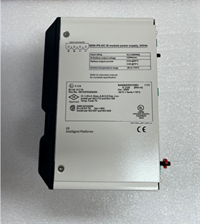
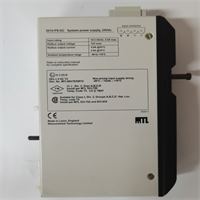
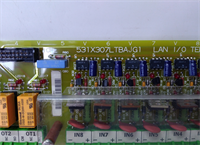
- Product Model: DS200ADMAH1A
- Manufacturer: General Electric (GE Power)
- System Family: Mark V Turbine Control System
- Module Type: Analog/Digital Multiplexer Assembly (ADMA)
- Primary Function: Interfaces thermocouples, RTDs, 4–20 mA transmitters, and discrete I/O to Mark V controllers
- Connector Type: Proprietary edge connector compatible with Mark V R/S/T core racks
- Hardware Revision: H1A (must match system configuration)
- Power Supply: +5 V, ±15 V DC via backplane
- Calibration Dependency: Requires system-level calibration coefficients stored in controller memory
- Environmental Rating: Industrial control room (0°C to 60°C, non-condensing humidity)

System Role and Outage Impact
The DS200ADMAH1A resides in the I/O chassis of the GE Mark V system, acting as a bridge between field instrumentation and the triple-modular redundant (TMR) control processors. It processes signals from critical sensors such as exhaust thermocouples, bearing vibration probes, fuel valve position feedback, and lube oil pressure switches. In many configurations, this module handles non-redundant analog inputs—meaning a single point of failure can compromise the integrity of the entire control loop. If the module fails or delivers corrupted data, the Mark V logic may initiate a protective trip, resulting in an unplanned turbine shutdown. In combined-cycle or grid-supporting plants, such events can incur significant financial penalties, mechanical stress on equipment, and regulatory reporting obligations. The lack of real-time diagnostics further complicates fault isolation, often extending outage duration.
Reliability Analysis and Common Failure Modes
Units in service beyond 15–20 years are increasingly susceptible to component-level degradation. Common failure modes include:
- Drift or complete loss of analog input channels due to aging precision resistors, op-amps, or multiplexer ICs
- Intermittent backplane communication caused by oxidation or fretting corrosion on edge connector pins
- Voltage regulator failure on the ±15 V rails, leading to unstable reference voltages and erratic readings
- Damage to input protection circuits from repeated exposure to electrical noise or ground potential differences
A notable vulnerability is the module’s dependence on accurate system calibration data. Even a fully functional replacement unit may produce incorrect readings if not integrated with the correct configuration file—a challenge when original engineering documentation is incomplete.
Preventive maintenance best practices include:
- Conducting annual channel verification using calibrated signal simulators
- Cleaning and inspecting backplane connectors during planned outages
- Maintaining secure, version-controlled backups of Mark V application and I/O mapping files
- Power-cycling and functionally testing spare modules every 12–18 months to prevent capacitor aging and contact oxidation
 Lifecycle Status and Migration Strategy
 Lifecycle Status and Migration Strategy
GE has formally discontinued the DS200ADMAH1A, and Baker Hughes (current steward of the Mark V platform) provides no new units, factory repairs, or firmware support. The secondary market is fragmented, with many listings lacking proof of functionality or calibration traceability. Continuing to operate with this hardware introduces operational fragility, especially as skilled personnel familiar with Mark V diagnostics retire.
Short-term risk mitigation includes securing multiple tested spares and implementing enhanced condition monitoring (e.g., trend analysis of analog signal drift). Some facilities use third-party repair services capable of component-level rework, though long-term reliability remains uncertain.
The official strategic path is migration to the Mark VIe control system. This modern platform replaces discrete I/O cards like the ADMA with intelligent, Ethernet-connected I/O modules (e.g., PTBA, TCEA) that support OPC UA, IEC 62443 cybersecurity, and remote diagnostics. Migration typically involves:
- Replacing the control core and I/O chassis while reusing existing field wiring via terminal adapters
- Recompiling logic in ToolboxST with enhanced simulation and validation tools
- Integrating with plant-wide asset performance management (APM) systems
Although requiring upfront engineering effort, this transition eliminates obsolescence exposure, improves diagnostic resolution, and aligns legacy turbine assets with digital operations strategies. For plants deferring full migration, a disciplined spare parts and knowledge retention program is essential to sustain safe, reliable operation.