 Tel:
Tel:  Email:
  WhatsApp:
 Description
Technical Specifications (For Spare Parts Verification)
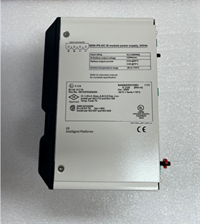
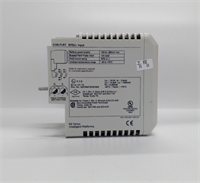
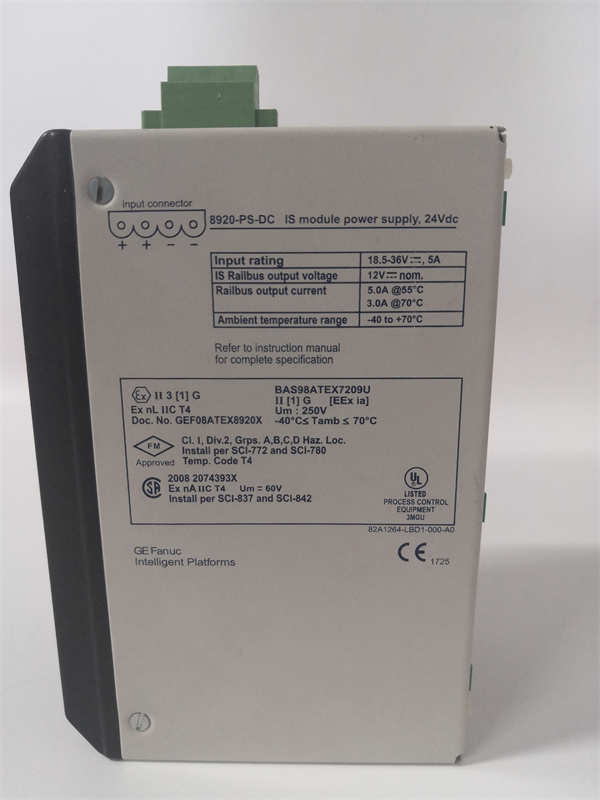
- Product Model: 8920-PS-DC
- Manufacturer: General Electric (GE Energy / GE Power)
- System Family: GE Mark VI Speedtronic turbine control system
- Output Voltage: +24 VDC nominal (regulated)
- Output Current: Typically 10 A continuous per module (system often uses dual redundant units)
- Input Voltage: 120/240 VAC, 50/60 Hz (via system AC distribution)
- Redundancy: Designed for parallel operation with second 8920-PS-DC for N+1 redundancy
- Mounting: Slide-in module for Mark VI I/O core (rack-mounted, rear-pluggable)
- Status Indication: Front-panel LEDs for “AC OK”, “DC OK”, and “Fault”
- Isolation: Reinforced isolation between AC input, DC output, and chassis ground
- Cooling: Convection-cooled; relies on system-level airflow
System Role and Downtime Impact
The 8920-PS-DC is a foundational component of the GE Mark VI control system, which governs critical functions in gas and steam turbines used in power generation and industrial drive applications. It powers the entire I/O subsystem—including analog input cards for thermocouples and pressure transducers, digital output relays for valve actuation, and communication interfaces to the main controllers (VCMI modules). If a single 8920-PS-DC fails in a non-redundant configuration—or if both fail in a redundant setup—the I/O core loses power, causing an immediate loss of sensor feedback and actuator control. This typically triggers a turbine trip, resulting in unplanned outage, revenue loss, and potential grid instability in utility-scale plants. Even in redundant setups, a single failure increases vulnerability and requires urgent intervention.
Reliability Analysis and Common Failure Modes
Although engineered for harsh industrial environments, the 8920-PS-DC is susceptible to age-related degradation due to its high-power switching design and continuous operation. The most frequent failure mode is capacitor aging—particularly electrolytic capacitors on the DC output filter—which leads to voltage ripple, regulation drift, or complete shutdown under load. Secondary issues include fanless thermal stress (despite convection cooling, internal hotspots can degrade solder joints over time) and surge damage from lightning or switching transients on the AC line, especially in sites without adequate upstream protection.
A key design limitation is the lack of hot-swap capability; replacement requires partial system shutdown or careful live-work procedures under redundancy. Additionally, the module’s fault diagnostics are basic—often only indicating “DC OK” or “Fault”—making root-cause analysis difficult without external meters.
Preventive maintenance recommendations include:
- Performing annual infrared thermography to detect abnormal heating
- Measuring output ripple voltage with an oscilloscope during scheduled outages
- Verifying redundancy functionality by simulating a single-unit failure (if operational policy allows)
- Ensuring clean, dry, and unobstructed airflow around the I/O core enclosure
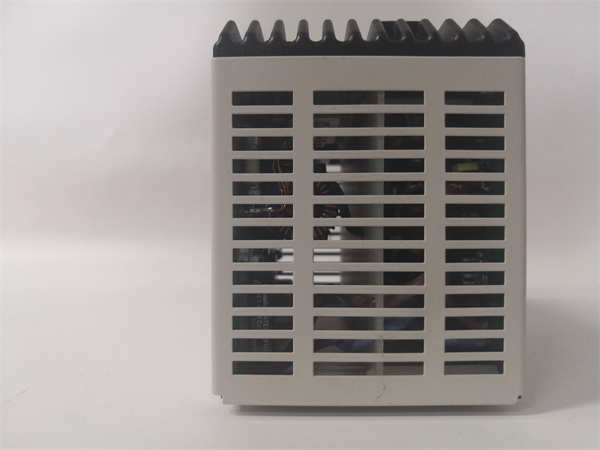
GE 8920-PS-DC
Lifecycle Status and Migration Strategy
GE officially discontinued the Mark VI platform in favor of the Mark VIe (which uses Ethernet-based I/O and modern power architectures). The 8920-PS-DC is no longer manufactured, and GE only supports it through legacy service contracts with limited spare availability. Continuing to operate on this hardware carries escalating risk: failure rates increase with age, and lead times for verified spares can exceed 12 weeks.
As an interim solution, facilities may consider:
- Stockpiling tested, functional spare units from decommissioned systems
- Engaging specialized third-party repair services for capacitor rework and burn-in testing
- Installing external redundant DC power systems as a bypass (requires engineering review for safety compliance)
The definitive long-term strategy is migration to Mark VIe. GE’s official path involves replacing the entire I/O system with Mark VIe Smart Distributed I/O (SDI) or Remote I/O (RIO), which use modern, modular power supplies with better diagnostics, hot-swap support, and cyber security features. While this requires significant capital investment and re-commissioning, it extends asset life, improves reliability, and aligns with current cybersecurity standards (e.g., NERC CIP). For plants not ready for full migration, a phased approach—starting with critical turbine units—is often justified by risk reduction alone.