 Tel:
Tel:  Email:
  WhatsApp:
 Description
Technical Specifications (For Spare Verification)
-
- Product Model: 8521-TC-SA
- Manufacturer: General Electric (GE)
- System Compatibility: GE Mark VIe (and some late Mark VI) turbine control systems
- Input Channels: 8 differential thermocouple inputs (typically Type J, K, T, or E—configurable via software)
- Isolation: Channel-to-channel and field-to-system isolation (≥500 VAC)
- Accuracy: ±0.25% of span (typical), dependent on cold-junction compensation (CJC) integrity
- Cold Junction Compensation: Integrated per-channel CJC sensor
- Communication: Connects to Mark VIe I/ONET via Ethernet-based I/O pack architecture
- Diagnostics: Built-in open-circuit, short-circuit, and sensor health diagnostics reported to controller
- Form Factor: Standard Mark VIe I/O pack (DIN rail mountable, ~120 mm wide)
- Power: Supplied via I/O terminal base (no external power required)
- Operating Temperature: 0°C to +60°C ambient
-

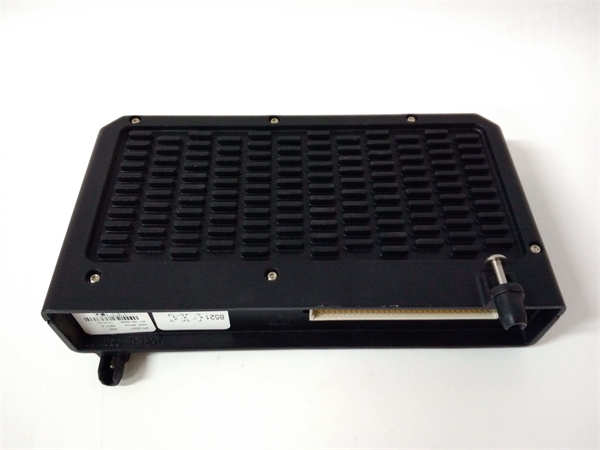
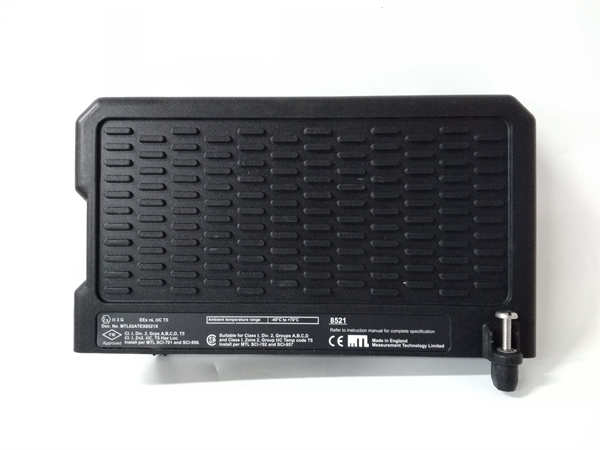
GE 8521-TC-SA
System Role and Downtime Impact
The GE 8521-TC-SA is a key analog input interface in gas and steam turbine control systems, responsible for converting raw thermocouple signals from critical machine points—such as turbine exhaust, thrust bearing, generator windings, and lube oil headers—into high-fidelity digital temperature data. This data feeds directly into:
- Protection logic (e.g., high-exhaust-temperature trip)
- Performance algorithms (e.g., firing temperature correction)
- Condition monitoring dashboards
If the module fails due to internal circuit fault, CJC drift, or connector corrosion, it may report implausible temperatures (e.g., -200°C or +1500°C), triggering nuisance trips or, more dangerously, disabling real overheat protection. In combined-cycle plants, loss of exhaust temperature data can prevent heat recovery steam generator (HRSG) synchronization, leading to multi-hour outages. Replacement requires physical swap and revalidation of loop calibration—there is no hot-swap capability in most legacy configurations.
Reliability Analysis and Common Failure Modes
Despite solid-state design, the 8521-TC-SA is susceptible to several age- and environment-related issues:
- Cold junction sensor drift: The on-board CJC thermistors degrade over time, especially in high-ambient cabinets, causing systematic offset errors across all channels.
- Electrolytic capacitor aging: Internal filtering caps dry out after 10–15 years, increasing noise susceptibility and causing intermittent channel faults.
- Terminal block corrosion: Moisture ingress in coastal or humid plants leads to oxidation at screw terminals, increasing contact resistance and inducing measurement errors.
- EMI coupling: Poor cable routing near VFDs or ignition systems can overwhelm input filtering, particularly in older revisions without enhanced shielding.
A notable limitation is that while the module reports “open TC” faults reliably, it cannot detect gradual sensor degradation or minor ground loops—both common in long thermocouple runs.
Recommended preventive actions:
- Perform annual loop checks with calibrated temperature simulators.
- Verify CJC readings against a known ambient reference during outages.
- Inspect terminal tightness and apply anti-oxidant compound on copper conductors.
- Store spares in climate-controlled, ESD-safe packaging to avoid latent damage.
-
GE 8521-TC-SA
Lifecycle Status and Migration Strategy
GE has phased out the 8521-TC-SA in favor of newer, more integrated I/O solutions in the Mark VIeS platform (e.g., VSVO, VSAO packs with universal analog inputs). While the Mark VIe system remains supported, this specific module is no longer available through GE channels. Existing inventory is limited to used or refurbished units, many of which have undocumented service histories.
Short-term risk mitigation:
- Secure at least one fully tested and calibrated spare per turbine.
- Partner with specialized vendors offering board-level refurbishment (including CJC recalibration and capacitor replacement).
- Implement redundant temperature measurements on critical zones (e.g., dual TCs on same bearing) where feasible.
Long-term migration path:
Upgrade to Mark VIeS-compatible universal analog input modules, which support thermocouples, RTDs, and 4–20 mA on the same hardware. This transition typically involves:
- Replacing the I/O terminal base and pack
- Updating I/O configuration in ToolboxST
- Recalibrating field sensors
Facilities planning extended asset life (>5 years) should initiate migration feasibility studies now, as engineering lead times exceed 12 months. Until then, rigorous validation and sparing of existing 8521-TC-SA modules remain essential to ensure safe, reliable turbine operation.