 Tel:
Tel:  Email:
  WhatsApp:
 Description
Technical Specifications (For Spare Verification)
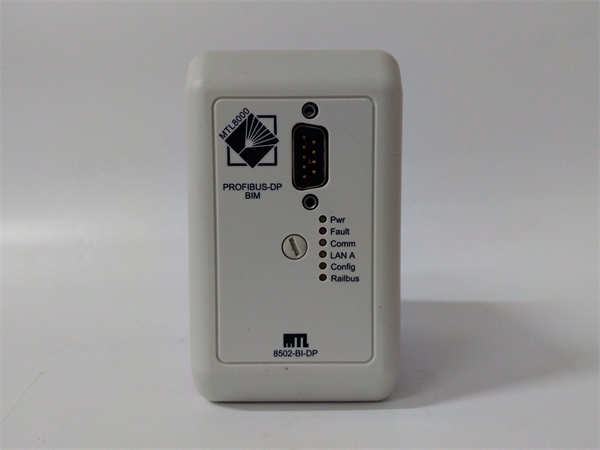
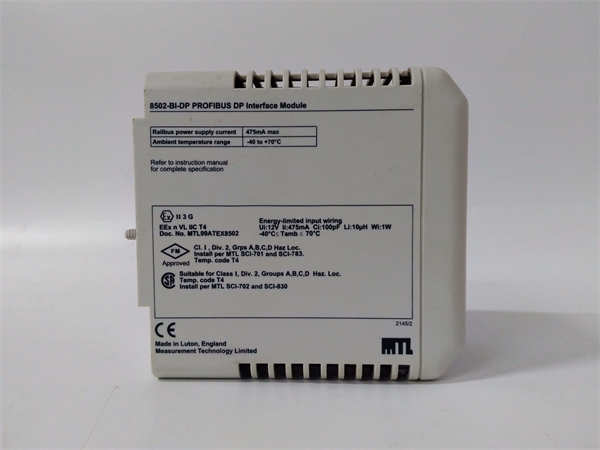
- Product Model: 8502-BI-DP
- Manufacturer: General Electric (GE)
- System Compatibility: GE Mark VIe turbine control platform (used in gas turbines, steam turbines, and compressors)
- Input Channels: 16 isolated digital inputs
- Input Type: 24 VDC sink/source compatible (wetted or dry contact supported via terminal wiring)
- Voltage Range: 18–30 VDC (nominal 24 VDC)
- Isolation: Channel-to-channel and field-to-system isolation (≥500 VAC)
- Response Time: <10 ms typical
- Diagnostics: Built-in open-circuit detection, channel health reporting, and LED status per channel
- Communication: Connects to Mark VIe controller via I/ONET Ethernet-based backplane
- Form Factor: Standard Mark VIe I/O pack (~120 mm wide, DIN rail mountable)
- Power: Supplied through I/O terminal base (no external power required)
- Operating Temperature: 0°C to +60°C
-

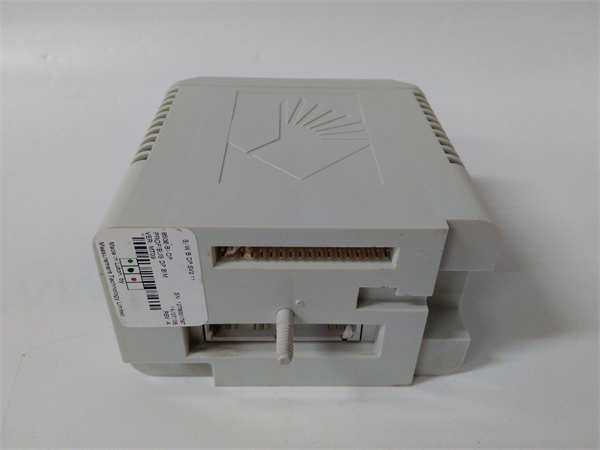
GE 8502-BI-DP
System Role and Downtime Impact
The GE 8502-BI-DP is a foundational component in turbine safety and sequencing logic. It digitizes critical binary field signals such as:
- Emergency shutdown pushbutton status
- Valve limit switch positions (open/closed)
- Circuit breaker auxiliary contacts
- Fire/gas detector alarms
- Lube oil pressure switch states
These inputs directly feed into trip logic, permissive checks, and automatic startup sequences. A failed or degraded module may:
- Report a “valve closed” status when it’s actually open—blocking startup
- Miss a true emergency stop signal—compromising safety
- Generate spurious alarms due to noise-induced toggling
In combined-cycle or peaking plants, loss of discrete input integrity can delay synchronization by hours or trigger an unscheduled trip. Replacement requires physical module swap, I/O revalidation, and often a full logic download—making spare availability mission-critical.
Reliability Analysis and Common Failure Modes
Although solid-state, the 8502-BI-DP is vulnerable to several operational and environmental stressors:
- Input optocoupler degradation: After 10–15 years, aging optoisolators exhibit increased leakage or slow response, causing intermittent signal dropouts.
- Terminal block corrosion: In humid or coastal environments, oxidation at screw terminals increases contact resistance, leading to undervoltage faults misread as “open.”
- EMI susceptibility: Poor cable shielding or routing near high-energy circuits (e.g., ignition transformers) can induce false transitions, especially in early hardware revisions.
- Backplane connector wear: Repeated thermal cycling causes micro-cracks in edge connectors, resulting in communication loss with the controller (“I/O Pack Fault”).
Notably, while the module reports major faults, it cannot detect subtle issues like partial contact welding or slow optocoupler decay—both of which manifest only under specific load or temperature conditions.
Recommended preventive actions:
- Perform annual functional tests using simulated field voltages.
- Inspect and torque terminal screws during outages; apply anti-oxidant compound on copper wires.
- Verify LED indicators match actual field states during routine rounds.
- Store spares in ESD-safe, dry, temperature-controlled environments.
-
GE 8502-BI-DP
Lifecycle Status and Migration Strategy
GE has discontinued the 8502-BI-DP as part of its transition to the Mark VIeS platform, which uses more integrated and cyber-secure I/O packs (e.g., VSVO, VSDO). While Mark VIe systems remain supported, this specific module is no longer available through GE channels. Remaining inventory consists of used or refurbished units with uncertain remaining life.
Short-term mitigation:
- Secure at least one tested, verified spare per critical turbine.
- Partner with specialized vendors offering board-level refurbishment (including optocoupler replacement and connector reconditioning).
- Enable enhanced diagnostics in ToolboxST to monitor input jitter or fault logs as early warning signs.
Long-term migration path:
Upgrade to Mark VIeS-compatible universal discrete I/O modules, which offer:
- Higher channel density
- Improved cybersecurity compliance (IEC 62443)
- Better noise immunity and diagnostic depth
Migration involves replacing the I/O terminal base, updating configuration in ToolboxST, and revalidating all logic dependencies—a process requiring 2–4 weeks of engineering effort per unit.
Facilities planning to operate legacy turbines beyond 2030 should initiate migration planning now. Until then, disciplined sparing, testing, and condition monitoring of existing 8502-BI-DP modules are essential to maintain operational safety and reliability.