 Tel:
Tel:  Email:
  WhatsApp:
 Description
Key Technical Specifications (for Spare Parts Verification)
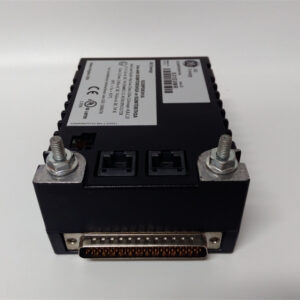
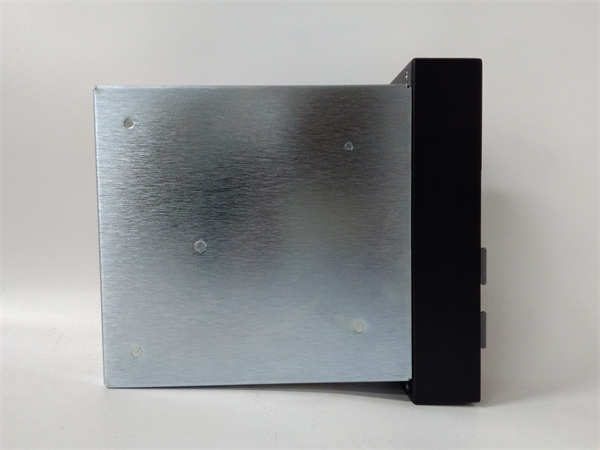
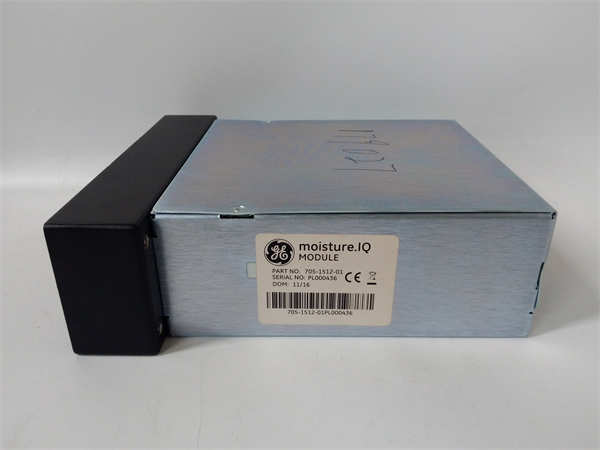
- Product Model: 705-1512-01
- Manufacturer: GE Fanuc Automation
- System Family: Series 90-70 Programmable Logic Controller (PLC)
- Module Type: IC697MDL652 equivalent – 32-point isolated DC input module
- Input Voltage: 24 VDC (nominal), with optical isolation
- Input Configuration: Grouped isolation (4 groups of 8 channels)
- Backplane Compatibility: Requires Series 90-70 baseplate (IC697CHSxxx)
- LED Indicators: One per channel + module status
- Power Consumption: Draws from +5 V and +24 V backplane supplies
- Mounting: DIN rail or rack-mounted within 90-70 chassis
- Firmware/Revision: No user firmware; hardware revision critical for compatibility
-

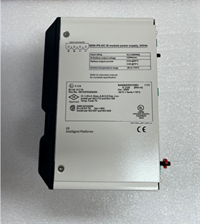
GE 705-1512-01
System Role and Downtime Impact
The 705-1512-01 serves as a primary data acquisition interface in Series 90-70 control systems, commonly deployed in power generation, water treatment, and heavy industrial facilities. It reads binary status signals from field devices—such as limit switches, pressure sensors, and motor starters—and delivers them to the PLC CPU for logic processing. A failure in this module can cause multiple input points to read as “off” or “stuck,” leading to incorrect machine states, safety interlock bypasses, or uncontrolled process behavior. In safety-critical applications, undetected input loss may result in equipment damage or hazardous conditions. Since the Series 90-70 architecture lacks built-in input redundancy at the module level, a single point of failure here can compromise an entire control loop or subsystem, often forcing emergency shutdowns until replacement is installed.
Reliability Analysis and Common Failure Modes
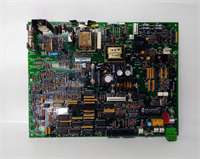
This module, designed in the 1990s, uses discrete optocouplers and RC filtering for input conditioning—components prone to long-term degradation. The most frequent failure mode is optocoupler aging, which increases response time or causes complete signal dropout, especially on channels exposed to frequent switching or voltage transients. Electrolytic capacitors in the local filtering circuitry may dry out over time, leading to noise susceptibility or erratic readings. Additionally, the PCB solder joints—particularly around terminal blocks—are vulnerable to thermal fatigue in high-cycle environments, resulting in intermittent connections. A known weakness is limited surge protection on inputs; without external transient suppression, lightning-induced spikes or inductive kickback from nearby solenoids can permanently damage input channels. For preventive maintenance, technicians should regularly inspect terminal tightness, verify input response with simulated signals, check for abnormal heating, and ensure external surge suppressors are functional. Keeping spare modules powered in a test rack every 6–12 months helps identify latent failures.
-
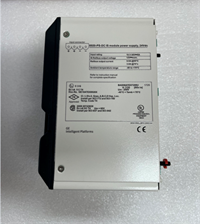
GE 705-1512-01
Lifecycle Status and Migration Strategy
General Electric discontinued the Series 90-70 platform years ago, and the 705-1512-01 is no longer produced. Emerson (which acquired parts of GE Automation) offers no direct replacement, and official support is restricted to legacy service contracts. Spare units are sourced exclusively from decommissioned systems or third-party brokers, often without testing certification. Continuing to operate with this module entails growing risk: diminishing spares inventory, lack of cybersecurity updates, and incompatibility with modern engineering tools. As a short-term measure, facilities may implement external input duplication or use diagnostic software to monitor channel health. However, the strategic path is migration to a current platform. Emerson recommends transitioning to PACSystems™ RX3i or RXi2, which support I/O remapping and retain much of the existing wiring via adapter bases. Alternatively, some users migrate to open platforms like Siemens S7-1500 or Rockwell ControlLogix, though this requires full reprogramming. A phased approach—starting with non-critical racks—minimizes disruption while restoring long-term reliability and vendor support.