 Tel:
Tel:  Email:
  WhatsApp:
 Description
Technical Specifications (For Spare Parts Verification)
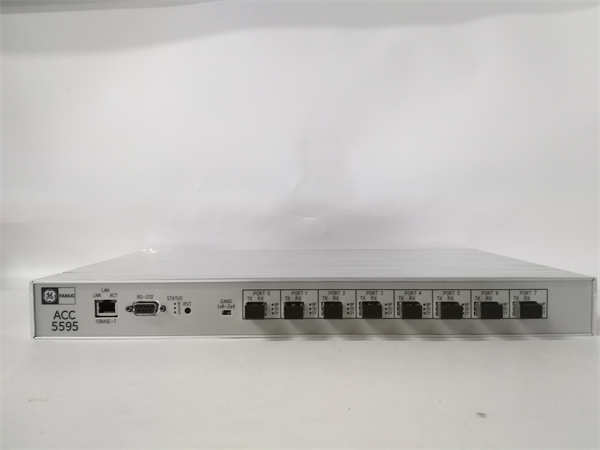
- Model: 350-805595-208
- Alternate Part Number: ACC-5595-208
- Manufacturer: GE Intelligent Platforms
- Form Factor: 6U x 21-slot VME64x backplane
- Bus Architecture: Supports VME64x (2eSST up to 320 MB/s), with P0/P1/P2 connectors
- Power Rails: +5V, ±12V, +3.3V distributed via standard VME pinout
- Cooling Design: Conduction-cooled or forced-air variants (depends on chassis integration)
- Connector Type: DIN 41612 or metric high-reliability edge connectors (per IEC 297-3)
- Compliance: Meets IEEE 1101.1/10 mechanical standards; MIL-STD-810 optional for rugged versions
- Revision Tracking: Hardware revisions (e.g., Rev A/B) may affect power delivery or slot compatibility
System Role and Downtime Impact
The 350-805595-208 (ACC-5595-208) serves as the foundational interconnect platform in GE’s rugged VME-based embedded systems, commonly deployed in defense test stations, aerospace ground support equipment, and industrial control cabinets. It physically and electrically links the CPU (e.g., VMIVME-7750), I/O cards, timing modules, and storage controllers into a single functional unit. Because all modules depend on its power and data pathways, any fault—such as a cracked trace, failed power plane, or corroded connector—will cause partial or total system failure. In mission-critical applications like flight hardware validation or weapons testing, such a failure can halt operations for days or weeks while a verified replacement is sourced, tested, and integrated.
Reliability Analysis and Common Failure Modes
As a passive but complex multilayer PCB assembly, the ACC-5595-208 is generally reliable but vulnerable to environmental and mechanical stress over time. Common failure modes include:
- Trace delamination or micro-cracks – caused by repeated thermal cycling or mechanical shock, especially in field-deployed systems. These often manifest as intermittent communication errors or slot-specific failures.
- Connector oxidation or fretting corrosion – particularly in humid or high-vibration environments, leading to increased contact resistance and signal integrity loss on critical lines (e.g., DSACK*, DTACK*).
- Power plane degradation – aging capacitors or voltage droop on +5V rails due to increased ESR in decoupling networks, causing module brownouts under load.
- Physical damage during maintenance – bent pins, cracked mounting holes, or solder splash contamination from adjacent module replacements.
A key weakness is the lack of built-in diagnostics; backplane faults are typically inferred only after exhaustive module swap testing. For preventive maintenance, technicians should:
- Perform annual visual inspection under magnification for hairline cracks near high-current vias
- Measure continuity and isolation between critical VME signals (e.g., SYSFAIL*, BERR*)
- Clean connectors with non-residue contact cleaner and verify insertion force
- Monitor system logs for unexplained bus timeouts or parity errors that may indicate signal degradation
GE 350-805595-208 ACC-5595-208
Lifecycle Status and Migration Strategy
GE ceased production of the ACC-5595-208 years ago, and Emerson no longer provides official support or spares. New units are unavailable; existing inventory exists only in surplus channels, often without test documentation. Continued reliance on this backplane introduces significant operational risk—especially since failure is catastrophic and non-recoverable in the field.
Short-term mitigation includes:
- Acquiring multiple tested spares from reputable vendors specializing in legacy VME hardware
- Implementing strict handling procedures to avoid mechanical damage during module swaps
- Creating a “golden system” baseline for rapid fault isolation
Long-term, migration away from VME is strongly advised. Options include:
- Chassis-level replacement: Transition to OpenVPX or CompactPCI Serial platforms using modern backplanes with health monitoring and higher bandwidth.
- Hybrid bridging: Use VME-to-PCIe bridge cards in industrial PCs to retain legacy I/O while moving processing off the VME bus.
- Full system modernization: Replace the entire test or control architecture with LXI, PXIe, or embedded PC-based solutions offering better support, performance, and cybersecurity features.