 Tel:
Tel:  Email:
  WhatsApp:
 Description
Key Technical Specifications
| Parameter | Specification |
|---|---|
| Model Number | ZCP270 (P0926CP) |
| Processor Type | 32-bit RISC |
| Clock Speed | 300 MHz |
| Memory (SDRAM) | 128 MB |
| Program Storage | 64 MB Flash |
| Scan Time | 1 ms (per 1000 instructions) |
| I/O Capacity | Up to 4096 Points |
| Communication | 2x Ethernet (100 Mbps), 2x Serial (RS232/485) |
| Power Supply | 24V DC (Nominal) |
| Power Consumption | 15 Watts |
| Operating Temp | 0°C to 60°C |
| Certifications | UL, cUL, CE |
Product Introduction
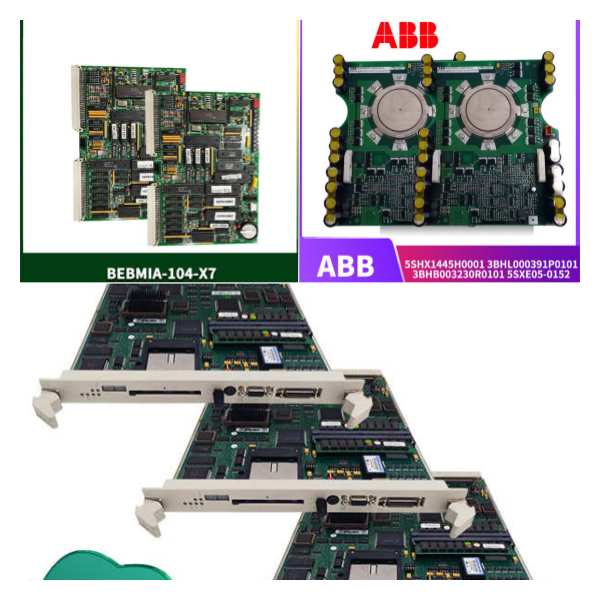
I’ve spent more nights than I care to remember staring at the blinking LEDs on an I/A Series rack, hoping the processor holds the line during a power dip. The FOXBORO ZCP270 is that processor. It’s the workhorse of the I/A Series DCS, designed to sit in a hot cabinet and crunch logic without complaining. It’s not “new” tech in the consumer sense, but in the industrial world, it’s a tank.Why do we still swap these in? Because it handles the heavy lifting. With a 300MHz RISC processor and 128MB of RAM, it executes complex control strategies—like Function Block Diagrams (FBD) or Sequential Function Charts (SFC)—with a scan time as low as 1ms. That speed matters when you’re trying to isolate a fault in a high-pressure steam line before a safety valve pops. It supports full redundancy, meaning if the primary CPU coughs, the secondary takes over in milliseconds. Just make sure your firmware matches the rest of the node, or you’ll be staring at a “Node Fail” light for hours.
Quality SOP & Tech Pitfalls (The Reality Check)
The Lab Report (SOP)
Before we ship a ZCP270, we don’t just look at the box.
- Visual Inspection: We check the DIN rail clips. They get brittle over time. If the clip snaps during install, you’re dead in the water.
- Live Test: We rack it up and force a handshake with a simulated FBM (Field Bus Module). If it can’t talk to the I/O, it’s a paperweight.
- Memory Check: We verify the 64MB Flash integrity. Corrupted flash means the controller won’t hold the application after a power cycle.
- ESD Packaging: We seal it in anti-static foam. This board is sensitive.
The Engineer’s Warning (Pitfalls)
Here is the trap: Firmware Revision Mismatch.
The ZCP270 is hardware-compatible with older I/A Series racks, but the software is picky. I once saw a plant shutdown delayed by six hours because the new ZCP270 had a newer firmware revision than the old one, and the Control Configurator software refused to download the database. Always check the firmware version on your old card before you throw it away. Also, don’t forget to move the battery jumper. If the battery backup for the RAM isn’t enabled, you lose your retentive data the second you pull the power cord.
Installation & Configuration Guide
Swapping a ZCP270 isn’t rocket science, but it requires steady hands and a checklist.
- Pre-Installation:
- ⚠️ Safety First: Put the controller in “Idle” or “Offline” mode via the workstation. If you yank it while it’s controlling, you’ll trip the process.
- Documentation: Take a photo of the DIP switches on the front. If you miss one setting, the node address changes, and the system won’t see the controller.
- Removal:
- Disconnect the Ethernet and Serial cables. Label them (Port A vs. Port B matters for redundancy).
- Release the locking screws or DIN clips. Pull straight out. Do not wiggle it; you’ll bend the backplane pins.
- Installation:
- Crucial Step: Set the DIP switches on the new ZCP270 to match the old one exactly.
- Insert the module into the carrier. Ensure it seats firmly against the backplane.
- Reconnect the cables.
- Power-On & Testing:
- Apply 24V DC power. Watch the STATUS LED. It should blink green (running). If it’s red, check your switches.
- Log into the Control Configurator. Verify the “Heartbeat” is active.
- Download the application if the memory is blank.
Compatible Replacement Models
| Model | Compatibility | Notes |
|---|---|---|
| FOXBORO ZCP270 (P0926CP) | ✅ Direct Replacement | Exact match. Ensure voltage rating matches (24VDC). |
| FOXBORO CP30 | ⚠️ Upgrade Path | Newer generation. Requires chassis upgrade and software migration (I/A Series v9.0+). |
| FOXBORO CP40 | ⚠️ Upgrade Path | High-performance successor. Overkill for simple loops, requires significant re-engineering. |
Frequently Asked Questions (FAQ)
Can I hot-swap this module?
Technically, the I/A Series supports redundancy, so if you have a backup CP running in parallel, yes. But if this is a single controller setup? No. You will lose control of your process. Put the system in manual mode first.What does the “Battery Low” LED mean?
It means the supercap or battery on the board is dead. The ZCP270 uses this to keep RAM data during a power outage. If this light is on, your retentive variables (totalizers, setpoints) will reset to zero next time the power flickers. Replace the battery or the module.Is the ZCP270 compatible with FBM200 series modules?
Yes. It talks natively to the 200-series Field Bus Modules (FBM201, FBM202, etc.) via the carrier bus. That’s its native language.Why is the price so high for a used part?
Supply and demand. These are still running in major refineries and power plants that haven’t upgraded to the newer CP40 systems. Finding a “New Surplus” unit that hasn’t been sitting in a humid warehouse for 10 years is rare.Does it support Modbus?
Yes, via the serial ports or Ethernet. It supports Modbus TCP and RTU. Just be aware that mapping the registers in the Control Configurator takes some patience.