 Tel:
Tel:  Email:
  WhatsApp:
 Description
Key Technical Specifications (For Spare Parts Verification)
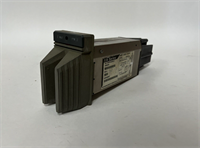
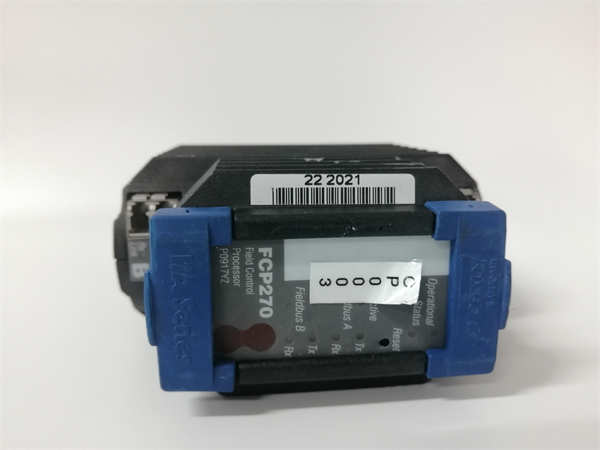
- Product Model: FCP270 P0917YZ
- Manufacturer: FOXBORO / Schneider Electric
- System Family: I/A Series (Phase 4 or 5 architecture)
- Processor Type: Proprietary RISC-based CPU with integrated I/O scan engine
- Memory: Fixed onboard program and data memory (non-expandable)
- Redundancy Support: Yes – supports hot standby with matching FCP270 pair
- Backplane Interface: Connects via I/A Series carrier board (e.g., in FBM20x/21x chassis)
- Power Requirements: Low-voltage DC supplied through backplane (typically +5 V, ±12 V)
- Diagnostic Features: Front-panel LEDs for RUN, STOP, REDUNDANCY, and FAULT status
- Firmware Dependency: Tightly coupled with I/A Series software version (e.g., v6.x); “P0917YZ” suffix denotes specific hardware revision and compatibility
- Mounting: Slot-specific in FCP carrier assembly within system cabinet
System Role and Downtime Impact
The FCP270 serves as the primary logic solver in legacy I/A Series DCS installations across oil & gas, power generation, and chemical processing facilities. It continuously executes regulatory and sequential control strategies for critical process units—such as boilers, compressors, or distillation columns. In a non-redundant setup, failure of a single FCP270 results in immediate loss of all associated control loops, typically forcing a controlled or emergency shutdown of the affected unit. Even in redundant pairs, degradation or latent faults in one module increase vulnerability, as the remaining unit bears full load without backup. Recovery requires physical replacement with a functionally and revision-matched unit, followed by synchronization—a process that can take hours in safety-critical environments due to procedural constraints.
Reliability Analysis and Common Failure Modes
Despite robust industrial design, the FCP270—introduced in the late 1990s—is susceptible to age-related electronic wear:
- Onboard electrolytic capacitor aging, particularly in power filtering circuits, causing voltage droop, intermittent resets, or failure to boot.
- Battery-backed SRAM corruption, due to depletion of the internal lithium cell (typically 5–10 year life), leading to loss of configuration or runtime data.
- Backplane connector oxidation or mechanical fatigue, resulting in communication errors between the FCP and I/O modules or the peer redundant unit.
- Latch-up events triggered by electrical noise on field wiring or ground potential shifts during maintenance activities.
A key limitation is the absence of field-upgradable firmware or memory; the module’s logic is mask-programmed or stored in non-replaceable PROMs. Mismatched hardware revisions (e.g., “P0917YZ” vs. “P0917YX”) can cause system rejection, even if physically compatible.
Preventive measures include: annual verification of redundancy switchover, visual inspection for capacitor bulging, cleaning of backplane contacts, and maintaining offline backups of the entire control configuration using legacy Workbench software.
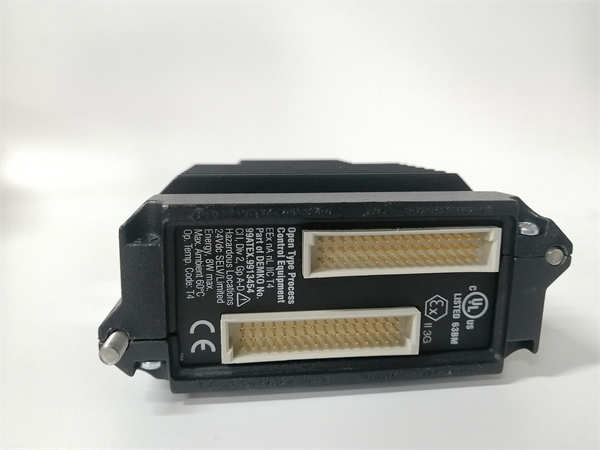
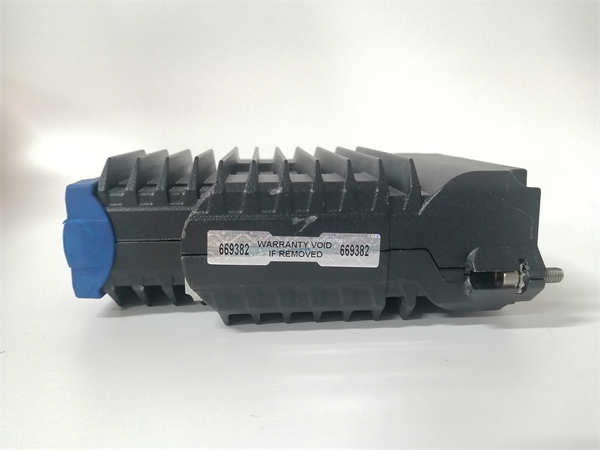
FOXBORO FCP270 P0917YZ
Lifecycle Status and Migration Strategy
Schneider Electric has formally discontinued the FCP270 and classified it as obsolete under its product lifecycle policy. No new units are manufactured, and technical support is limited to legacy service agreements at significant cost. Continued reliance poses escalating operational risk: authentic spares are scarce, prices have surged, and counterfeit or misrepresented modules are increasingly common.
Short-term mitigation includes securing tested, revision-matched spares from decommissioned sites, implementing strict ESD handling protocols, and performing quarterly functional tests to detect latent faults.
The recommended long-term path is migration to the modern Foxboro Evo DCS platform. This involves replacing FCP270 processors with Evo controllers (e.g., FCP300 series), upgrading I/O modules, and rehosting control logic using conversion tools. While requiring engineering effort and revalidation, migration delivers enhanced cybersecurity, Ethernet-based I/O, remote diagnostics, and ongoing vendor support—effectively eliminating dependency on obsolete hardware like the FCP270 P0917YZ.