 Tel:
Tel:  Email:
  WhatsApp:
 Description
Key Technical Specifications (For Spare Part Verification)
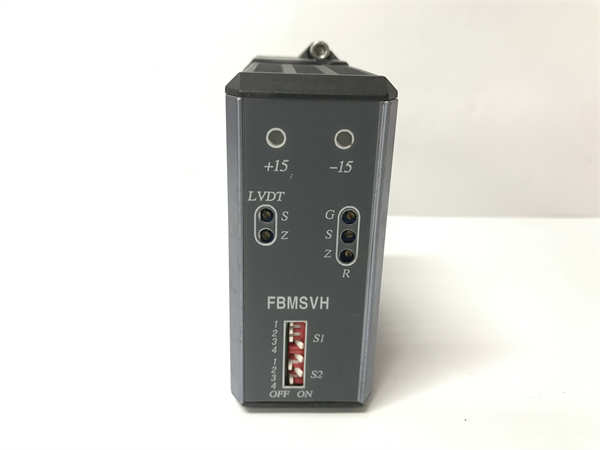
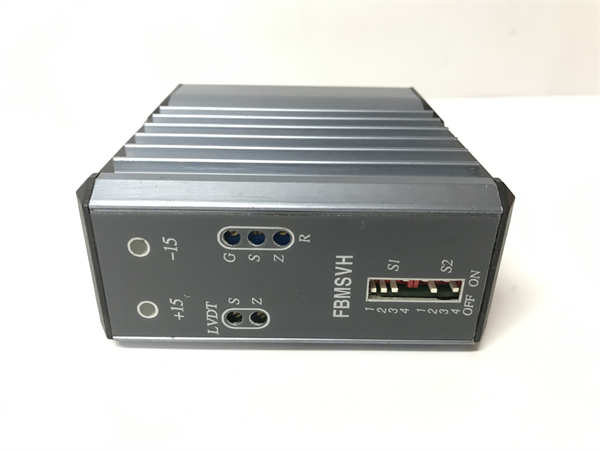
- Model: FBMSVH
- Manufacturer: FOXBORO / Schneider Electric
- System Platform: I/A Series Distributed Control System (DCS)
- Compatible I/O Modules: FBM242 (Smart Voltage/Current Input)
- Mounting Type: DIN rail-mounted, installed adjacent to FBM242 modules
- Function: Provides SV (Stationbus VME) bus termination and signal conditioning
- Connector Type: 50-pin ribbon cable to SIU backplane
- Power Source: Powered via FBM242 or dedicated power module in I/O rack
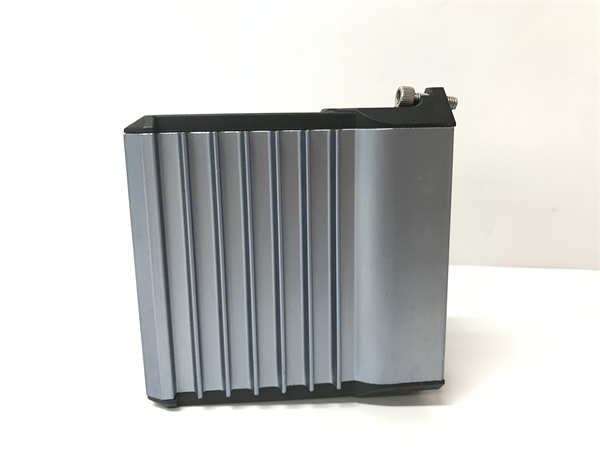
- Physical Dimensions: Approx. 30 mm width × 120 mm height × 80 mm depth
- LED Indicators: Power and bus activity status (if equipped)
System Role and Impact of Failure
The FBMSVH is a passive but essential hardware interface in FOXBORO’s I/A Series Smart I/O architecture. It serves as the physical and electrical bridge between the FBM242 analog input modules and the SV bus that connects to the Station Interface Unit (SIU). While it contains no active logic, it provides critical bus termination and signal integrity for reliable data transmission. If the FBMSVH fails—due to connector damage, internal trace fracture, or improper seating—the entire group of connected FBM242 modules becomes unresponsive. This typically results in loss of dozens of analog process signals (e.g., temperature, pressure, flow), which can trigger plant-wide alarms, force manual operation, or even initiate a controlled shutdown depending on the application. In continuous processes like refining or power generation, such a failure carries significant operational and safety implications.
Reliability Analysis and Common Failure Modes
Despite its simple design, the FBMSVH is vulnerable due to its role as a mechanical and electrical intermediary. The most common failure modes are not electronic but physical: repeated thermal cycling can fatigue solder joints on the edge connector; vibration may loosen its position on the DIN rail; and mishandling during maintenance can bend or break the fragile 50-pin ribbon cable interface. Although the module contains no electrolytic capacitors or batteries, its reliability is heavily dependent on environmental conditions—corrosive atmospheres can oxidize contact surfaces, while dust accumulation may impede proper seating.
A key design weakness is its dependency on precise mechanical alignment. Unlike active modules with self-diagnostics, the FBMSVH offers no fault indication; a partial connection may cause intermittent communication errors that are difficult to troubleshoot. As a preventive measure, maintenance teams should periodically inspect the module’s physical mounting, ensure the ribbon cable is strain-relieved, and verify that the locking mechanism on the connector is fully engaged. During any I/O rack work, the FBMSVH should be handled with anti-static precautions and never forced into place.
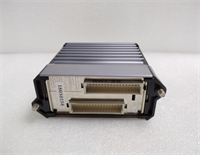
Lifecycle Status and Migration Strategy
The FBMSVH has been officially discontinued by Schneider Electric as part of the broader phase-out of legacy I/A Series Smart I/O hardware. No new units are produced, and original factory support ended years ago. Continued use carries high risk: spare parts are scarce, counterfeit or refurbished units may lack proper testing, and system documentation is increasingly difficult to access. For sites still operating this hardware, the primary short-term strategy is to secure verified, tested spares from trusted suppliers and implement strict handling protocols to extend service life.
For long-term sustainability, migration to modern I/O platforms is strongly advised. Schneider Electric’s recommended path is to transition to the I/A Series Electronic Marshalling with CHARMM I/O (compatible with DeltaV) or, for greenfield projects, to EcoStruxure Process Expert. This involves replacing the entire I/O subsystem—including SIU, FBM242, and FBMSVH—with new remote I/O stations. While this requires re-engineering and re-commissioning, it eliminates obsolescence risk, improves diagnostics, and reduces footprint. In the interim, some facilities opt for third-party “drop-in” replacements or custom bus interface solutions, though these carry integration and support uncertainties. A detailed migration feasibility study should be conducted to balance risk, cost, and operational continuity.