 Tel:
Tel:  Email:
  WhatsApp:
 Description
Technical Specifications (For Spare Parts Verification)
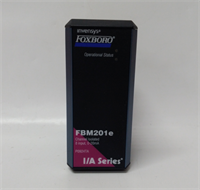
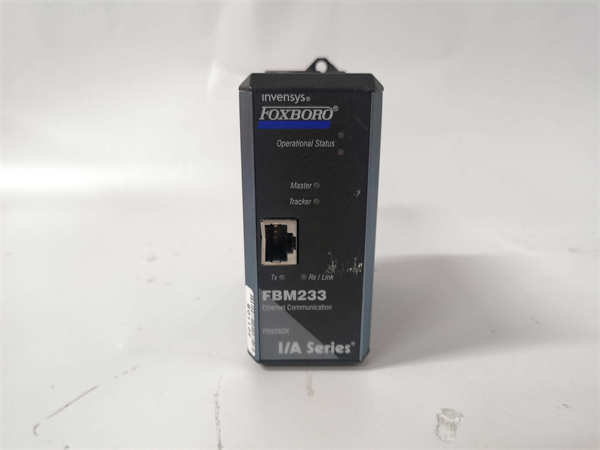
- Product Model: FBM233 P0926GX
- Manufacturer: FOXBORO / Schneider Electric
- System Platform: I/A Series DCS (Fieldbus-based architecture)
- Module Type: Discrete Input (DI), non-isolated per channel
- Number of Channels: 16
- Input Voltage Range: 18–32 VDC (nominal 24 VDC)
- Input Type: Sinking (current sourcing from field)
- Field Power: Not provided by module; requires external loop power
- Redundancy Support: Yes – supports redundant FBM mounting in paired slots
- Backplane Interface: Proprietary FOXBORO Fieldbus (via FBM carrier/backplane)
- Diagnostic Coverage: LED indicators per channel + module status; fault reporting via DCS software
- Operating Temperature: 0°C to 60°C
System Role and Downtime Impact
The FBM233 is a foundational I/O module in legacy I/A Series installations, commonly deployed in oil & gas, power generation, and chemical plants. It resides in remote I/O cabinets connected via redundant fieldbus to the central processors. Each module typically handles critical discrete signals—such as pump running status, valve position confirmation, or emergency stop feedback—that feed into control strategies and safety interlocks.
If an FBM233 fails—due to internal circuit fault, backplane communication loss, or power anomaly—the associated 16 input signals become invalid or frozen in the DCS. This may not cause an immediate plant trip, but it compromises operational integrity. For example, a failed “compressor running” signal could prevent automatic startup during demand peaks, or a lost “valve closed” confirmation might block a batch sequence. In safety-related applications, undetected signal loss could violate SIL requirements. Recovery requires physical replacement and DCS re-synchronization, often during unplanned outages.
Reliability Analysis and Common Failure Modes
Although designed for industrial environments, the FBM233 is susceptible to several age-related and design-linked failure mechanisms:
- Optocoupler degradation: The input channels use optoisolators that weaken over time, leading to increased turn-on voltage thresholds. This causes intermittent signal dropout, especially with marginal field voltages (<22 VDC).
- Backplane connector corrosion: Repeated thermal cycling and humidity exposure can oxidize the edge connector pins, resulting in communication errors or complete module dropout.
- Capacitor aging on internal DC/DC converter: Affects module logic power stability, potentially causing random resets or diagnostic faults.
- Lack of per-channel isolation: While optically isolated from the backplane, channels share a common field reference. A ground fault or short on one channel can affect neighboring inputs.
A notable limitation is the absence of hot-swap support in early I/A Series cabinets—module replacement often requires powering down the entire I/O carrier, increasing downtime risk.
Preventive maintenance should include:
- Periodic verification of field signal voltage under load (ensure >24 VDC at terminals)
- Cleaning backplane connectors with contact enhancer during scheduled outages
- Monitoring DCS diagnostic logs for “FBM Comm Fault” or “Input Stale” alarms
- Maintaining spares in climate-controlled storage to slow component aging
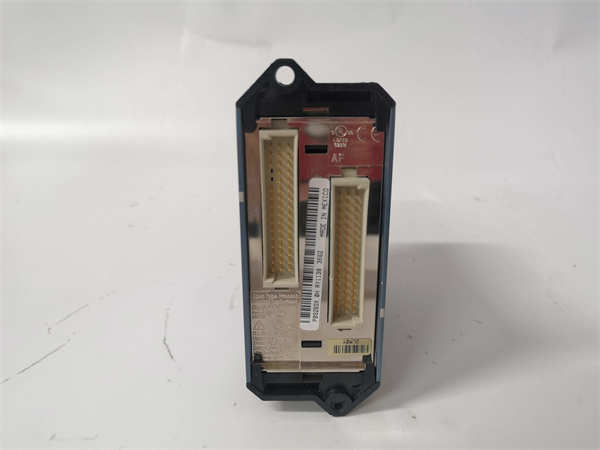
FOXBORO FBM233 P0926GX
Lifecycle Status and Migration Strategy
Schneider Electric has classified the FBM233 as obsolete, with official support phased out in favor of the I/A Series Electronic Marshalling (CHARMS) and FOX515/517 I/O platforms. No direct drop-in replacement exists, and new modules are unavailable from the manufacturer.
Immediate actions should focus on risk mitigation:
- Inventory all installed FBM233 units and prioritize those in safety-critical loops
- Source only tested, guaranteed-functional spares with full diagnostic history
- Implement signal redundancy where feasible (e.g., dual-contact devices feeding separate FBMs)
For long-term sustainability, the recommended migration path is:
- Option 1: Upgrade to Electronic Marshalling with CHARMS, which allows software-reconfigurable I/O and eliminates hardwired marshalling. This requires new carrier hardware but retains existing field wiring via junction boxes.
- Option 2: Replace with FOX515 discrete input modules in a modern I/A Series R100+ system, offering enhanced diagnostics, higher density, and improved cybersecurity.