 Tel:
Tel:  Email:
  WhatsApp:
 Description
Key Technical Specifications (For Spare Part Verification)
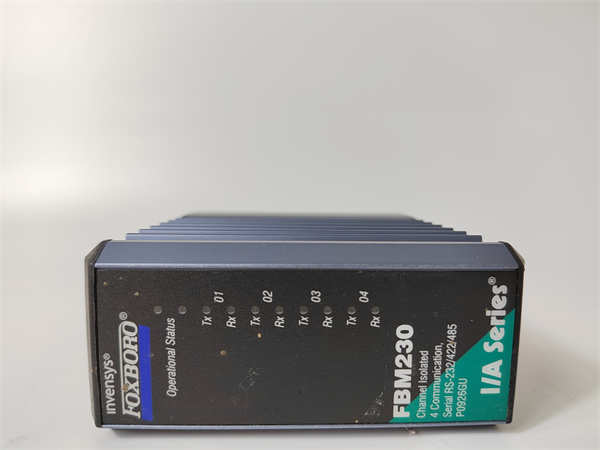
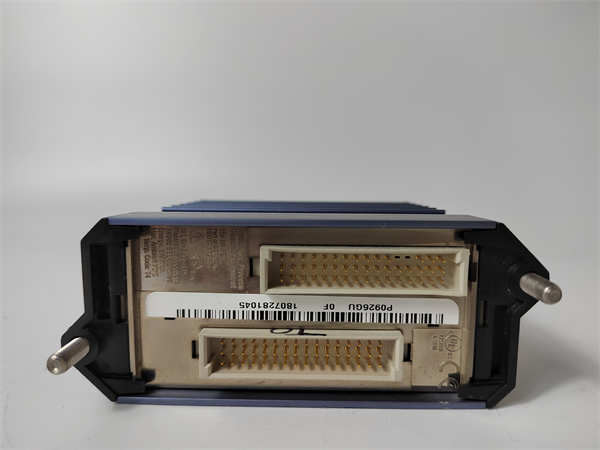
- Product Model: FBM230 P0926GU
- Manufacturer: Foxboro / Schneider Electric
- System Family: I/A Series Distributed Control System (DCS)
- Module Type: Foundation Fieldbus H1 Communication Interface
- Supported Protocol: IEC 61158 Foundation Fieldbus
- Redundancy Support: Optional (requires paired FBM230 modules)
- Power Consumption: Approx. 5 W
- Operating Temperature: 0°C to 60°C
- Mounting: Backplane-mounted in FBM carrier assembly
- Diagnostic Indicators: LED status (COMM, POWER, FAULT)
System Role and Downtime Impact
The FBM230 P0926GU serves as the gateway between Foundation Fieldbus field devices (e.g., transmitters, valve positioners) and the Foxboro I/A Series DCS. It resides in the field I/O cabinet and handles real-time data exchange, device configuration, and link scheduling. In continuous-process industries—such as refining, chemicals, or power generation—loss of this module can result in loss of control over multiple field instruments on a segment, potentially triggering alarms, safety interlocks, or partial unit shutdowns. If redundant configuration is not implemented, a single FBM230 failure may render an entire Fieldbus segment inoperable, directly impacting process stability and operator situational awareness.
Reliability Analysis and Common Failure Modes
Many FBM230 units have operated reliably for 15–20 years due to conservative design and stable industrial environments. However, aging electronics now pose growing risks. The most common failure points include degradation of onboard DC/DC converters, leading to intermittent power faults, and corrosion or oxidation on backplane connector pins causing communication dropouts. Additionally, the module’s firmware—stored in non-volatile memory—is susceptible to corruption from power cycling without proper shutdown procedures.
A key design limitation is the lack of hot-swap capability in early versions, requiring system downtime for replacement. Furthermore, diagnostic capabilities are basic, often necessitating external Fieldbus analyzers to isolate segment-level issues. Preventive maintenance should include: (1) periodic inspection of backplane connectors for signs of arcing or tarnish; (2) verification of grounding and shield integrity on Fieldbus trunk cables; (3) monitoring module temperature via infrared scans; and (4) maintaining up-to-date device description (DD) files for rapid reconfiguration if replacement is needed.
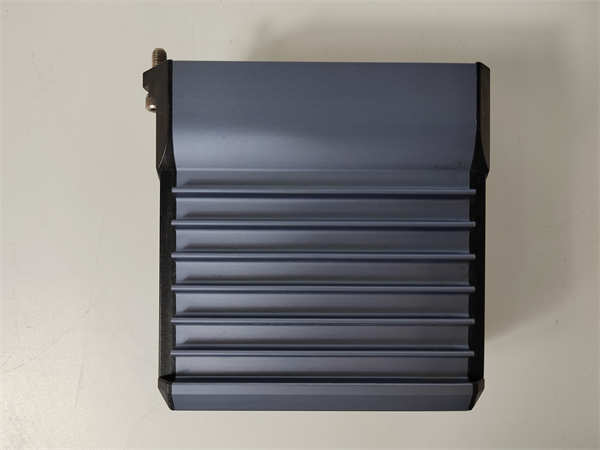
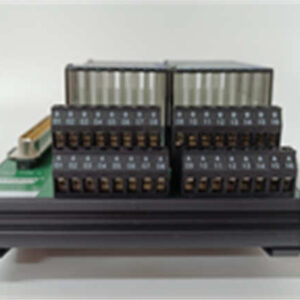
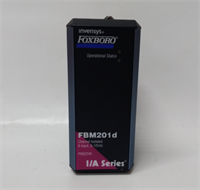
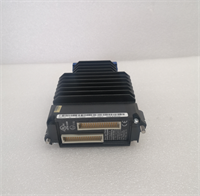
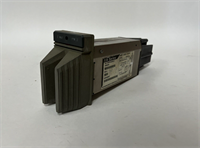
Foxboro FBM230 P0926GU
Lifecycle Status and Migration Strategy
Schneider Electric has classified the FBM230 as obsolete, with official support phased out. Spare parts are no longer manufactured, and factory repair services are discontinued. Continued reliance on this module introduces operational risk due to unpredictable availability and escalating costs from brokers or surplus channels.
Short-term mitigation includes securing tested spares from decommissioned systems or engaging third-party repair firms capable of component-level rework. However, these are stopgap measures.
The recommended migration path is transition to the Foxboro Evo™ DCS platform, which supports modern I/O architectures including remote I/O and Ethernet-APL. While the FBM230 cannot be directly replaced, its function can be replicated using Evo’s flexible I/O modules coupled with Fieldbus-to-Ethernet gateways or by replacing Fieldbus segments with conventional analog/digital I/O or wireless solutions. This migration typically involves engineering studies, loop revalidation, and operator training—but delivers long-term benefits in maintainability, cybersecurity, and integration with higher-level systems like MES or cloud analytics. Early assessment of segment criticality and phased replacement planning are strongly advised.