 Tel:
Tel:  Email:
  WhatsApp:
 Description
Technical Specifications (For Spare Parts Verification)
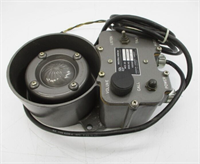
- Full Model: 85UVF1-1CEX
- Manufacturer: Fireye Inc. (acquired by Emerson)
- Detection Type: Ultraviolet (UV) sensing (responsive to 185–260 nm wavelength)
- Output Signal: 4–20 mA analog current loop proportional to flame intensity (not just on/off)
- Hazardous Area Rating:
- CSA Class I, Division 1, Groups B, C, D
- ATEX II 2G Ex d IIC T6 (explosion-proof housing)
- Viewing Window: Fused quartz lens (resistant to thermal shock and UV degradation)
- Sight Tube Compatibility: Designed for use with standard 1″ NPT sight tubes or purge assemblies
- Operating Temperature: –40°F to +150°F (–40°C to +65°C) at electronics head; higher temps possible with cooling extensions
- Power Supply: Typically 24 VDC (verify with documentation—some variants support 115/230 VAC)
- Response Time: < 100 ms to flame loss
- Mounting: Threaded housing (1″ NPT or flange options) for direct installation on burner throat or sight port
System Role and Downtime Impact
The Fireye 85UVF1-1CEX is a critical safety device in fuel-burning equipment, including utility boilers, thermal oxidizers, and refinery process heaters. It continuously monitors the combustion chamber for UV radiation emitted by hydrocarbon flames. Its 4–20 mA output allows the BMS (e.g., Honeywell, Siemens, or legacy Fireye panels) to assess not only flame presence but also stability—enabling early detection of flickering, lifting, or partial flameout.
If this sensor fails:
- False “flame present”: Could allow fuel valve to remain open during flame loss → risk of explosion
- False “no flame”: Triggers unnecessary trip → production loss, thermal stress on equipment
- In regulated industries (power, oil & gas), either scenario may violate NFPA 85, API 556, or OSHA PSM requirements
Due to its role in Safety Instrumented Functions (SIFs), many installations require redundant scanners—yet aging units increase common-cause failure risk.
Reliability Analysis and Common Failure Modes
Despite rugged design, the 85UVF1-1CEX is vulnerable to several field-induced failures:
- Quartz Lens Clouding or Cracking: Caused by thermal cycling, soot deposition, or chemical attack (e.g., from sulfur compounds). Reduces UV transmission → weak signal or false flame loss.
- UV Tube Aging: The internal Geiger-Müller-type UV sensor degrades over time (typical life: 5–10 years continuous use), leading to reduced sensitivity or erratic output.
- Moisture Ingress: Failed seals or improper purge air can allow condensation inside the housing, causing electrical shorts or corrosion.
- Electrical Overstress: Voltage spikes from nearby solenoids or poor grounding can damage the 4–20 mA output circuitry.
- Purge Air Blockage: If used with air purge, clogged filters or low pressure allow smoke/ash to coat the lens.
Recommended Maintenance:
- Perform quarterly flame simulation tests using calibrated UV sources
- Inspect lens clarity and housing integrity during outages
- Verify 4–20 mA output under known flame conditions
- Ensure purge air (if used) is clean, dry, and ≥5 PSI
Lifecycle Status and Migration Strategy
Emerson has discontinued the 85UVF1 series, replacing it with advanced models like the Fireye 95UVF2, 87UVR, or SmartFlame™ platforms featuring:
- HART communication
- Self-diagnostics
- Dual-spectrum (UV/IR) options for false-alarm immunity
- Enhanced SIL 2/3 compliance
Short-Term Mitigation:
- Secure verified spares from certified surplus dealers (demand calibration/test records)
- Implement dual-scanner voting logic if not already in place
- Use external lens-cleaning systems or high-flow purge to extend service life
Long-Term Strategy:
- Migrate to Fireye 95UVF2-1CEX (direct form-fit replacement with same certifications and 4–20 mA output)
- For new projects, consider multi-spectrum detectors (e.g., 87UVR) to reduce nuisance trips from hot refractory or background UV
- Update BMS logic to accommodate modern diagnostic alarms (e.g., “sensor degraded” vs. simple “flame lost”)