
 Tel:
Tel:  Email:
  WhatsApp:
 Description
Key Technical Specifications (For Spare Part Verification)
- Product Model: A4H124-24FX
- Manufacturer: Enterasys Networks (now under Extreme Networks)
- System Family: Matrix N-Series (A4H chassis line)
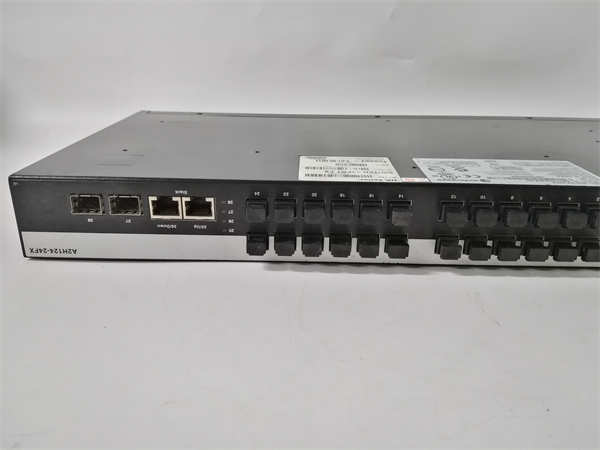
- Port Configuration: 24 × 100BASE-FX (fiber), SC or ST connectors (variant-dependent)
- Speed: 100 Mbps full-duplex per port
- Switching Capacity: ~4.8 Gbps
- MAC Address Table: 8,000 entries
- Management Interface: CLI via serial console or Telnet; limited web UI
- Protocols Supported: IEEE 802.1D (Spanning Tree), 802.1Q VLANs, IGMP snooping
- Power Input: 100–240 VAC, internal PSU
- Form Factor: 1U rack-mountable
- Operating Temperature: 0°C to 45°C
System Role and Downtime Impact
The A4H124-24FX was commonly deployed in early 2000s industrial automation projects—particularly in power utilities, transportation, and manufacturing—as a hardened fiber aggregation point for distributed control devices. Its all-fiber design provided electrical isolation and noise immunity in harsh environments. In such architectures, this switch often connects PLCs, RTUs, or remote I/O stations over long distances using multimode fiber. A failure can sever communication between field assets and the central SCADA or HMI system, leading to loss of visibility, inability to issue commands, or triggering of fail-safe modes. Because many legacy OT networks lack redundancy at the access layer, a single switch outage may result in complete subsystem shutdown until hardware is replaced.
Reliability Analysis and Common Failure Modes
Although built for industrial use, the A4H124-24FX is now vulnerable due to aging power supplies and obsolete optics. Common failure modes include:
- Internal power supply capacitor degradation: Causes intermittent reboots or complete power loss.
- Fiber transceiver (SFP-less) aging: Fixed FX ports rely on embedded optics that lose transmit power over time, increasing bit error rates.
- Flash memory corruption: Firmware stored on aging EEPROM can become unreadable, preventing boot-up.
- Fan or thermal failure: Dust accumulation in unfiltered environments leads to overheating and logic board damage.
A critical weakness is the absence of modern security features—no SSH, RADIUS, ACLs, or secure boot—making it non-compliant with current ICS cybersecurity standards (e.g., NERC CIP, ISA/IEC 62443). Additionally, diagnostics are minimal; there is no port-level optical power monitoring or link quality metrics. Preventive maintenance should focus on:
- Monitoring switch uptime and reboot logs via syslog (if configured)
- Cleaning intake vents and verifying fan operation quarterly
- Testing fiber link margins with an optical power meter
- Maintaining offline backups of configuration files (via TFTP)

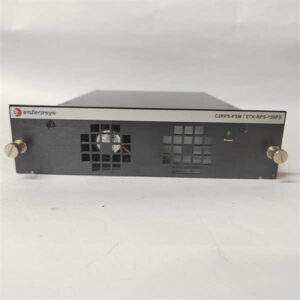
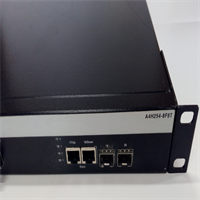
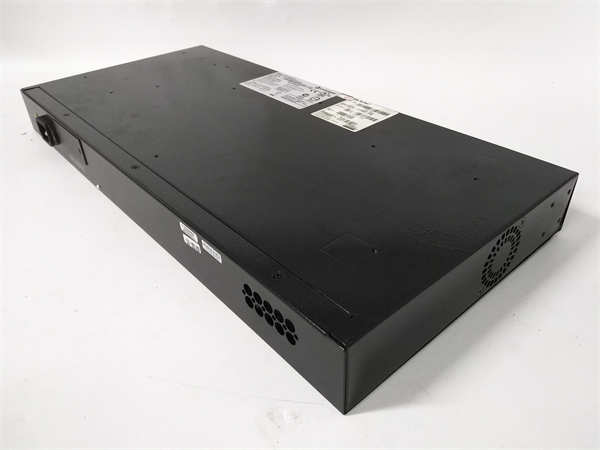
Enterasys A4H124-24FX
Lifecycle Status and Migration Strategy
Enterasys was fully absorbed into Extreme Networks, which has long since discontinued the A4H124-24FX and ended all support, including security patches and technical documentation access. No official replacement path exists within the original product line. Continuing to operate this switch introduces operational, safety, and compliance risks—especially in regulated sectors.
Short-term mitigation includes:
- Stocking verified working units from decommissioned sites
- Isolating the device in a segmented OT VLAN with strict firewall rules upstream
- Avoiding any configuration changes to reduce instability risk
For long-term sustainability, migration to a modern industrial managed switch is essential. Recommended alternatives include the Extreme Networks ISW-Series (e.g., ISW-200-24P2X) or Siemens SCALANCE XC-200, both offering:
- 100/1000BASE-FX SFP slots for flexible fiber connectivity
- Full Layer 2+/Layer 3 Lite capabilities
- IEC 62443 certification and secure management (SSHv2, HTTPS, SNMPv3)
- Lifetime hardware warranty and long-term availability commitments
Migration requires fiber connector adaptation (SC/LC), IP renumbering, and reconfiguration of VLANs and spanning tree—but delivers enhanced reliability, cybersecurity compliance, and support continuity. A staged replacement during planned outages is strongly advised.