 Tel:
Tel:  Email:
  WhatsApp:
 Description
Key Technical Specifications (For Spare Part Verification)
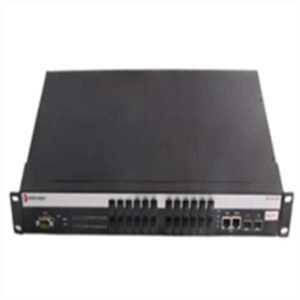
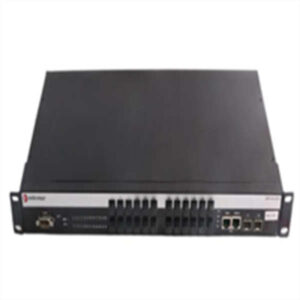
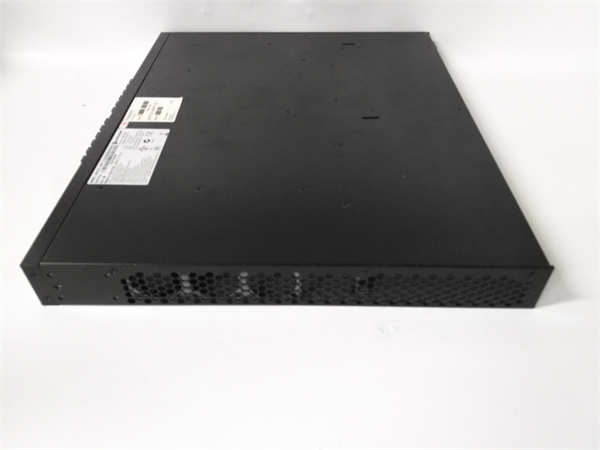
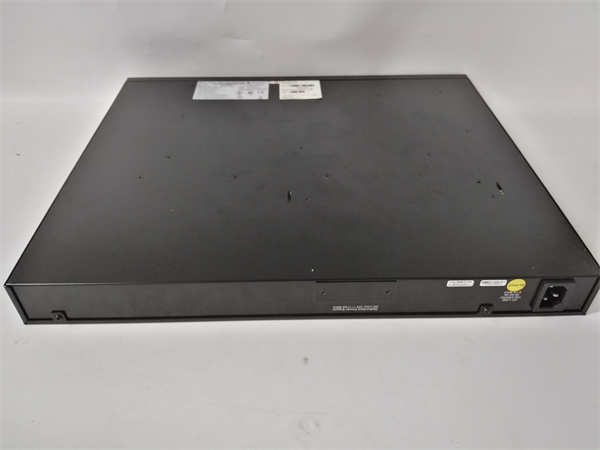
- Product Model: A2H124-24FX
- Manufacturer: Enterasys Networks
- System Family: Matrix E2 / A2H Series (standalone access switch line)
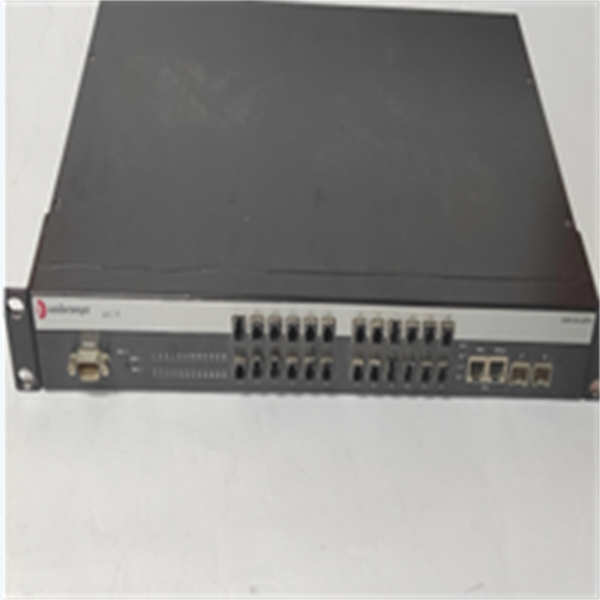
- Port Configuration: 24 fixed 100BASE-FX ports (multimode fiber)
- Connector Type: SC or ST (depending on specific sub-variant)
- Data Rate: 100 Mbps full-duplex per port
- Switching Fabric: Non-blocking, store-and-forward architecture
- MAC Address Table: 8,000 entries
- Management Interfaces: Serial console, Telnet, basic HTTP web UI
- Supported Protocols: IEEE 802.1D Spanning Tree, 802.1Q VLANs, IGMP snooping, SNMPv1/v2c
- Power Input: 100–240 VAC auto-ranging
- Form Factor: 1U rack-mountable
- Operating Temperature: 0°C to 40°C
System Role and Downtime Impact
The A2H124-24FX was widely deployed in early industrial Ethernet implementations where electrical isolation and noise immunity were required—common in power substations, rail signaling, water treatment plants, and factory automation. It typically aggregates traffic from remote I/O, PLCs, or motor drives over multimode fiber links. In non-redundant topologies, which are prevalent in older installations, the failure of this switch results in complete loss of communication with all downstream devices. This can trigger plant-wide alarms, force manual operation, or activate safety interlocks that halt production. Because the unit operates at the network edge but carries critical control traffic, its reliability directly impacts operational continuity.
Reliability Analysis and Common Failure Modes
Despite its industrial-grade intent, the A2H124-24FX is now prone to age-related hardware degradation. Primary failure modes include:
- Power supply capacitor aging: Leads to voltage instability, spontaneous reboots, or total power failure.
- Embedded fiber transceiver degradation: Fixed optics lose output power over time, increasing link errors or causing intermittent dropouts.
- Flash memory wear-out: Configuration or boot image corruption prevents startup, especially after unexpected power loss.
- Thermal stress on internal components: Dust accumulation and lack of active cooling in enclosed cabinets accelerate component fatigue.
The switch lacks modern diagnostic capabilities—no optical power monitoring, no per-port error counters via standard tools, and no secure logging. Its management interface relies on outdated protocols (Telnet, HTTP), posing cybersecurity risks in connected environments. Preventive maintenance should include:
- Verifying stable power input and checking for bulging capacitors during visual inspection
- Measuring received optical power on a sample of links annually
- Maintaining offline configuration backups via TFTP or serial capture
- Ensuring adequate ventilation and periodic dust removal from vents
Enterasys A2H124-24FX
Lifecycle Status and Migration Strategy
Following Extreme Networks’ acquisition of Enterasys, the A2H124-24FX was formally discontinued with no direct successor in the current portfolio. All firmware updates, technical support, and repair services have ceased. Continued use is unsupported and increasingly incompatible with modern OT security policies.
Interim risk-mitigation measures include:
- Securing tested spare units with known-good configurations
- Deploying the switch only in air-gapped or heavily firewalled network segments
- Avoiding any firmware or configuration changes to minimize instability
For sustainable operation, migration to a current industrial Ethernet switch is necessary. Suitable replacements include:
- Extreme Networks ISW-200-24P2X (with SFP slots for fiber)
- Siemens SCALANCE XC206-2SFP+
- Hirschmann OCTOPUS series
These offer 100/1000BASE-FX via pluggable SFPs, secure management (SSH, HTTPS, SNMPv3), VLAN and QoS support, and compliance with IEC 62443. Migration involves fiber connector adaptation (e.g., SC to LC), IP readdressing, and reconfiguration—but ensures long-term reliability, cybersecurity alignment, and vendor support. A phased replacement during scheduled maintenance windows is recommended to minimize operational disruption.