 Tel:
Tel:  Email:
  WhatsApp:
 Description
Key Technical Specifications
| Parameter | Specification | Notes |
|---|---|---|
| Channel Count | 16 Channels | Individually isolated per channel |
| Input Type | Thermocouple (TC) | Supports J, K, T, E, R, S, B, N, C |
| Resolution | 16-Bit | Provides fine granularity for temp control loops |
| Accuracy | ±0.1% of Span | Depends on TC type; verify specific type calibration |
| Scan Time | < 1 ms (per channel) | Critical for fast-response thermal protection trips |
| Cold Junction Comp | Internal (CJC) | Automatic compensation per channel; no external blocks needed |
| Isolation Voltage | 1500 V AC | Channel-to-channel and channel-to-ground |
| Input Impedance | > 10 MΩ | Minimizes loading on sensor circuits |
| Burnout Detection | Yes (Upscale/Downscale) | Configurable fail-safe direction for open sensors |
| Common Mode Rejection | > 100 dB | Filters out noise from nearby VFDs and motors |
| Operating Temp | 0°C to 60°C | Derate performance above 50°C ambient |
| Bus Interface | VMEbus (IEEE-1014) | 32-bit data path, A24 addressing |
| Power Consumption | ~3.8 Watts | Typical load on the 5V/12V backplane rails |
| Connector Type | 50-pin Ribbon / Terminal Block | Requires specific Ovation mating cable assembly |
Product Introduction
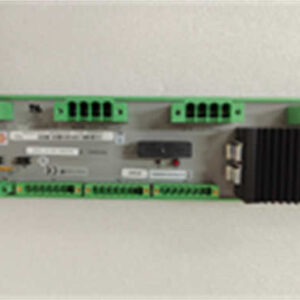
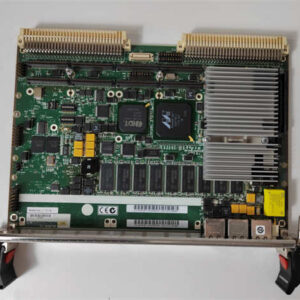
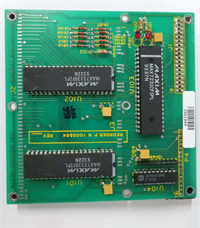
If you are running an older Ovation DCS in a power plant, the Emerson VME-ADTH16 is likely the card keeping your boiler tube temperatures in check. I’ve replaced hundreds of these when operators started complaining about “noisy” temperature readings that made the PID controllers hunt wildly. This isn’t a generic analog card; it’s built specifically for the messy reality of thermocouple signals, where microvolt changes matter and ground loops can ruin your day.The real value here is the per-channel isolation. In my experience, cheap multiplexed cards share a ground reference, so if one sensor shorts to ground, your whole card reads garbage. The VME-ADTH16 keeps each channel separate. I’ve seen plants run this card next to massive variable frequency drives with zero signal corruption, provided the shielding was done right. One caveat: the internal Cold Junction Compensation (CJC) sensors are sensitive to airflow. If your cabinet fan blows directly on this card, you’ll get drift. I once spent three hours chasing a “faulty sensor” ghost, only to realize a loose cabinet door was letting cold air hit the CJC point. Tape the vents or redirect the airflow; it saves the headache.
 Quality SOP & Tech Pitfalls (The Reality Check)
 Quality SOP & Tech Pitfalls (The Reality Check)
The Lab Report (SOP)
We treat analog cards like precision instruments, not digital switches. First, we visually inspect the terminal block pins for corrosion or bending—common in humid control rooms. Then, we use a Fluke 724 Process Calibrator to inject precise millivolt signals simulating Type K and Type J thermocouples into all 16 channels simultaneously. We verify the digital readout in the Ovation controller matches the injected value within ±0.1%. We also simulate an “open thermocouple” by disconnecting a lead to ensure the Burnout Detection logic triggers the correct upscale/downscale alarm. Finally, we measure insulation resistance between channels to guarantee the 1500V isolation is intact before sealing it in anti-static packaging.The Engineer’s Warning (Pitfalls)
- The Ground Loop Trap: Even though this card is isolated, I’ve seen technicians wire the thermocouple shield to ground at both the field head and the cabinet end. This creates a ground loop that induces 60Hz noise right into your temperature reading. Rule of thumb: Ground the shield at the field sensor only. Leave the cabinet end floating.
- CJC Drift from Heat: Do not install this card directly below a high-heat power supply module in the rack. The rising heat from the module below warms up the ADTH16’s internal CJC sensor, causing every single temperature reading to drift low. I’ve seen this cause false turbine trips. Always leave a blank filler panel below heat-generating cards if possible.
Installation & Configuration Guide
- Pre-Installation Safety: ⚠️ LOTO the controller rack power. Wait 30 seconds for capacitors to discharge. Take a photo of the existing wiring map and jumper settings (if any) on the old card. Note the specific Thermocouple type (J, K, etc.) for each channel.
- Removal: Disconnect the ribbon cable or terminal block carefully. Do not pull on the wires; pull on the connector housing. Remove the mounting screws and slide the card out. Inspect the backplane connector for bent pins.
- Installation: Slide the new VME-ADTH16 into the slot firmly until the ejector levers click. Critical Step: Re-verify the Thermocouple type configuration in the Ovation Engineer’s Workstation software. The hardware doesn’t know what type of wire you plugged in; the logic file must match the physical sensor (e.g., don’t leave it set to Type J if you have Type K sensors).
- Power-On & Testing: Restore power. Watch the “Module OK” LED; it should turn green steady. Go to the operator interface and compare the new readings against a handheld temp gun or process gauge. Force a known temperature change (if safe) to verify the response time. Check for “Bad PV” alarms.
Compatible Replacement Models
- ✅ Drop-in Replacement: Emerson VME-ADTH16 (Rev 02 or higher). Same form factor, pinout, and function. Newer revisions may have updated firmware for better noise filtering. Price varies by availability.
- ⚠️ Software Compatible: Emerson Ovation vX I/O (with adapter). Newer architecture requires a different backplane or carrier. You can migrate the logic, but you cannot physically plug this into a modern vX rack without significant hardware changes. Labor time: High (requires system outage).
- ❌ Hardware Mod Required: Third-party Universal Analog Cards. While they might fit the VME slot physically, the proprietary communication protocol with the Ovation controller will not work. The controller will report “Hardware Mismatch” or “Comm Fail.” Do not waste money on non-OEM VME analog cards for this system.
Frequently Asked Questions (FAQ)
Q: Can I mix different thermocouple types on this single card?
A: Yes, that’s the beauty of it. Each of the 16 channels is independent. You can have Channels 1-4 as Type K and Channels 5-16 as Type J. Just ensure you configure each channel correctly in the software database.Q: My readings are drifting slowly over the day. Is the card bad?
A: Maybe, but check the environment first. Is the control room temperature fluctuating wildly? Is there a heater or AC vent blowing on the rack? The internal CJC sensor tracks the card’s temperature. If the card heats up, the compensation shifts. If the room is stable and it still drifts, then suspect the card or the field wiring.Q: How do I handle an “Open Thermocouple” alarm?
A: The card has built-in burnout detection. You can configure it in the software to drive the value Upscale (max temp) or Downscale (min temp) when a wire breaks. For safety systems (like furnace temps), usually Upscale is preferred to trigger a trip. Verify this setting matches your safety logic.Q: Does this card require external cold junction compensation blocks?
A: No. That’s obsolete tech. The VME-ADTH16 has the CJC sensors built right onto the board for each channel. Adding external blocks would actually introduce more error and resistance. Wire the TCs directly to the terminals.Q: What if the “Module OK” light is flashing amber?
A: That usually means a configuration mismatch. The physical card revision doesn’t match what the controller expects, or the logic file hasn’t been downloaded yet. Check the controller fault table for “Configuration Error.” It’s rarely a hardware failure if the light is flashing rather than off.Q: Can I hot-swap this card while the unit is running?
A: Technically, the VME bus supports hot-swap, and Ovation allows it. However, for analog input cards, I strongly advise against it unless absolutely necessary. Pulling it out will cause a momentary loss of input, which might trip a sensitive interlock depending on your logic scan time. If you must, force the related control loops to manual mode first.