 Tel:
Tel:  Email:
  WhatsApp:
 Description
Product Introduction
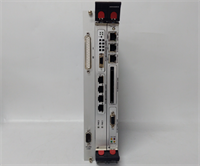
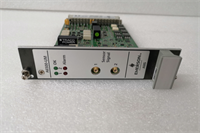
When a boiler turbine trip occurs because of a single erratic temperature reading, the fault often traces back to a failing input card like the EMERSON VME-ADTH16. This module serves as the critical interface between field thermocouples and the Ovation controller, converting millivolt signals into digital engineering units with high noise immunity. We maintain a strategic buffer of these units because lead times for legacy VME architecture components have stretched to unacceptable levels for emergency repairs.The distinguishing feature here is the channel-to-channel isolation, which prevents a ground fault on one sensor from taking down the entire rack. In our experience retrofitting older coal-fired units, this card maintains accuracy within ±0.1% of span even when cabinet temperatures fluctuate wildly. Don’t wait for a drift alarm to order; finding a verified, non-refurbished unit with intact calibration data is becoming increasingly difficult as Emerson pushes customers toward newer Ethernet-based I/O.
 Key Technical Specifications
 Key Technical Specifications
| Parameter | Value |
|---|---|
| Module Type | Analog Input (Thermocouple) |
| Channel Count | 16 (Individually Isolated) |
| Supported Types | J, K, T, E, R, S, B, N, C |
| Resolution | 24-bit Sigma-Delta ADC |
| Input Impedance | > 10 MΩ |
| Conversion Rate | 50/60 Hz rejection (configurable) |
| Cold Junction Comp. | Automatic per channel (±0.5°C accuracy) |
| Common Mode Rejection | > 120 dB at 50/60 Hz |
| Operating Voltage | 24 VDC (Nominal) |
| Power Consumption | 3.5 W (Typical) |
| Operating Temp | -20°C to +70°C |
| Bus Interface | VMEbus (A24/D16) |
| Diagnostic Features | Open thermocouple detection, range check |
| Mounting | European Card Format (6U) |
| Weight | 0.45 kg |
Application Scenarios & Pain Points
The plant engineer noticed the exhaust temperature spread on Gas Turbine #2 widening unnaturally during load ramp-up. One specific point on the VME-ADTH16 card began reporting spikes of 50°C before dropping back to normal, triggering a false “High-High” alarm that nearly initiated a shutdown. The root cause was internal noise coupling due to a degrading isolation barrier on the legacy card. Without an immediate spare, the team had to manually bypass the protection logic—a risky move that kept the unit running but exposed the asset to potential damage.
- Power Generation: Can your control system trust a temperature reading during a lightning storm? The high CMRR on this module filters out induced noise that causes false trips.
- Petrochemical Refining: If a reactor zone shows a sudden gradient change, is it real or a card fault? Reliable cold junction compensation is vital for accurate delta-T calculations.
- Steel Mill Reheating Furnaces: Operating near 1000°C ambient requires electronics that won’t drift; this card’s thermal stability prevents unnecessary fuel adjustments.
- Pharmaceutical Sterilization: Did the autoclave actually reach 121°C for the required time? 24-bit resolution ensures compliance data isn’t rejected during FDA audits.
- HVAC Chillers: Why pay for a full system upgrade when one bad input card causes inefficient staging? Swapping this module often resolves erratic compressor cycling.
Case Study: A combined cycle plant in Texas faced repeated “Instrument Fail” alarms on their HRSG superheater section. The maintenance team replaced the field sensors twice, but the problem persisted. Upon swapping the old analog card with a tested VME-ADTH16 from our inventory, the erratic readings vanished instantly. Post-mortem analysis revealed the old card’s ADC reference voltage had drifted due to age. The fix cost 1,200 in parts versus a potential 200,000 loss from an unplanned outage.
Quality Control Process (SOP Transparency)
We treat every VME-ADTH16 as a critical safety component, not just a commodity. Our inspection protocol is designed to catch latent defects before they reach your control cabinet.
- Inbound Inspection: We verify source traceability via original Emerson packing lists or customs docs. Each unit undergoes a visual inspection under 10x magnification to check for capacitor leakage, burnt traces, or bent VME pins. We confirm the holographic authenticity label is present and matches the serial number database.
- Live Functional Test: We install the module into a dedicated Emerson Ovation test rack with a active controller. Using a Fluke 754 Documenting Process Calibrator, we inject precise mV signals simulating Type K and J thermocouples across the full range. We verify the controller reads the values within ±0.1% tolerance.
- Electrical Parameters: Insulation resistance is tested between chassis and terminals using a 500V Megger; we require >50 MΩ. We also measure the 24VDC supply current draw to ensure it stays within the 3.5W spec, indicating no shorted internal regulators.
- Firmware/Configuration Verification: We read the module identity via the VME bus to ensure it reports the correct hardware revision. We photograph the internal DIP switches (if accessible) and jumper settings to document the factory configuration.
- Final QC & Packaging: After passing all functional and electrical tests, a technician signs off on the QC report. The card is placed in an anti-static bag with humidity indicators, wrapped in anti-shock foam, and boxed. We include a printed copy of the test data and can provide a video of the live test upon request.
Installation Pitfalls Guide (“Lessons Learned”)
I’ve seen perfectly good cards get fried or misconfigured because technicians skipped the basics. Avoid these common traps.
- Firmware/Controller Mismatch: Even though this is an I/O card, the Ovation controller firmware must support the specific hardware revision of the VME-ADTH16. If you swap in a newer revision without updating the controller’s GCD (Generic Configuration Data) file, the system will flag a “Module Mismatch” fault. ❗ Check the GCD version before powering up.
- DIP Switch / Jumper Misconfiguration: Some batches allow configuration of the filter frequency (50Hz vs 60Hz) via onboard jumpers. If your site is 60Hz but the jumper is set to 50Hz, you will see significant noise on the signal. Take a photo of the jumper block before removing the old card. Then take another one.
- Terminal / Wiring Incompatibility: The terminal block pitch on older VME cards can differ slightly from newer clones. Forcing a wire into the wrong hole can strip the screw or crack the plastic housing. Verify the wiring diagram specifically for the “ADTH16” revision, not just the generic Ovation manual.
- Power Supply Undersizing: While one card only draws 3.5W, a full rack of 16-channel analog cards adds up fast. If your VME power supply is already loaded to 90%, adding these high-precision cards might cause voltage sag during startup, leading to communication errors. Calculate the total rack load with 20% headroom.
- ESD Damage: Thermocouple inputs are sensitive. Touching the connector pins without a wrist strap can discharge static directly into the input amplifiers. The card might power up fine but read garbage values. Don’t risk a critical control loop on a $5 strap.