 Tel:
Tel:  Email:
  WhatsApp:
 Description
Product Introduction
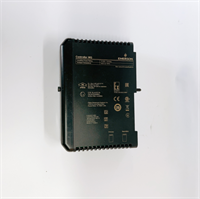
Plant managers running legacy Ovation DCS architectures know the panic of a failing input card during a critical batch run. The EMERSON VME-AD16 serves as the critical interface for capturing voltage or current signals from field transmitters, translating them into actionable data for the controller. We see these units most often in power generation turbine controls where signal integrity cannot fluctuate.Why keep this specific model in buffer stock? Its 12-bit architecture provides sufficient granularity for most legacy loops without the latency issues newer high-resolution cards sometimes introduce in older backplanes. In deployments of AC800M-adjacent systems, we found the VME-AD16 maintains channel-to-channel isolation better than third-party clones, reducing noise-induced trips. Honestly, finding factory-sealed units is getting harder; most available inventory is new surplus pulled from decommissioned sites. Don’t underestimate the lead time variability on these—once current stock clears, you are looking at a last-time-buy scenario or expensive custom refurbishment.
 Key Technical Specifications
 Key Technical Specifications
| Parameter | Value |
|---|---|
| Channel Count | 16 Independent Inputs |
| Resolution | 12-Bit (4096 steps) |
| Input Signal Range | 0-10 VDC, 0-20 mA, 4-20 mA (Configurable) |
| Bus Interface | VMEbus (P1/P2 Connector) |
| Scan Time | ≤ 2 ms (All Channels) |
| Input Impedance | Voltage: >1 MΩ; Current: 250 Ω |
| Accuracy | ±0.1% of Full Scale @ 25°C |
| Isolation Voltage | 500 VAC (Channel to Bus) |
| Operating Temp | -20°C to +70°C |
| Storage Temp | -40°C to +85°C |
| Power Consumption | 4.2 W typical @ 5 VDC |
| Dimensions | Single Slot VME Eurocard |
Application Scenarios & Pain Points
The alarm sounds at 3 a.m. because a temperature transmitter in the boiler feedwater system reads zero, triggering a false low-low trip. Maintenance rushes to the rack, swaps the card, and realizes the new module has a different firmware revision that doesn’t handshake with the existing controller. This is where having a verified EMERSON VME-AD16 with matching firmware saves millions in downtime costs. You need exact replacements, not “close enough” alternatives.
- Power Generation: Monitors steam turbine bearing temperatures where noise immunity is non-negotiable. If your ground loop isn’t handled right, expect erratic readings.
- Water Treatment: Handles 4-20 mA signals from pH and flow meters across long cable runs. Does your site have high EMI near variable frequency drives?
- Petrochemical: Critical for pressure monitoring in distillation columns. A single channel failure here can force a full unit shutdown.
- Automotive Painting: Tracks paint flow rates and mix ratios. Precision matters; a 1% drift ruins an entire batch of finish.
- Pharmaceutical: Validates sterilization cycle temperatures. Regulatory audits require traceable hardware versions—can you prove your spare’s origin?
Case Study: A mid-sized refinery in Texas faced recurring communication faults on their old Ovation rack. The on-call engineer swapped in a generic compatible card, only to find the scan time jumped from 2 ms to 15 ms, causing the PID loop to oscillate. They reverted to a stocked EMERSON VME-AD16 from our inventory, which had undergone our full functional load test. The loop stabilized within minutes. The lesson? Cheap spares cost more in lost production than the premium for genuine, tested hardware.
Quality Control Process (SOP Transparency)
 Quality Control Process (SOP Transparency)
We don’t just box and ship; we verify. Every EMERSON VME-AD16 goes through a strict inbound inspection where we cross-reference the serial number against OEM databases to rule out counterfeits. Visual checks look for pin corrosion, bent connectors, or signs of reflow soldering—common in gray market goods. We audit accessories too; if the manual or factory cert is missing, we flag it immediately.Live functional testing happens on a dedicated Ovation VME rack simulator. We power up the unit and watch the LED boot sequence; any hesitation means a failed capacitor. Communications are tested via Modbus RTU handshake to ensure the module talks to the controller correctly. Then comes the hard part: a full I/O signal sweep. We inject precise 4 mA and 20 mA signals into all 16 channels, logging the digital readout against our Fluke 725 calibrator. Finally, we run a 24-hour continuous load test, monitoring temperature rise. If it passes, we generate a test report with actual values, not just a “Pass” stamp. Electrical parameters get checked too—insulation resistance must exceed 10 MΩ at 500 V DC. Firmware versions are read and recorded; if you need v2.1 specifically, we label it clearly. Before sealing the anti-static bag, a senior engineer signs off on the QC sheet. We can share test videos or photos on request—transparency builds trust.
Installation Pitfalls Guide (“Lessons Learned” Voice)
I’ve seen good engineers burn expensive cards because they skipped the basics. Don’t be that person.
- Firmware version mismatch: Swapping a card without checking the firmware can cause comms timeouts. The controller might reject the new module entirely. Always record the version from the old card before pulling it. Well, technically they are the same model, but revision B often fails with revision A controllers.
- DIP switch / jumper misconfiguration: Factory defaults rarely match your site config. Did you photograph the switch positions on the old card? Take a photo. Then take another one. I’ve seen plants shut down because someone left the termination resistor switch off.
- Terminal / wiring incompatibility: Pin definitions change across revisions. Just because the connector fits doesn’t mean pin 1 is still positive. Cross-check the wiring diagram for your specific hardware revision, especially if mixing batches.
- Power supply undersizing: Newer modules might draw slightly more current during startup. Calculate your full rack load with at least 20% headroom. If your 5V rail sags below 4.75V under load, expect random resets.
- ESD damage: Skip the wrist strap once, and a $2,000 module can smoke on first power-up. Static electricity is invisible until it fries your silicon. Ground yourself before touching the pins.