 Tel:
Tel:  Email:
  WhatsApp:
 Description
Key Technical Specifications (For Spare Parts Verification)
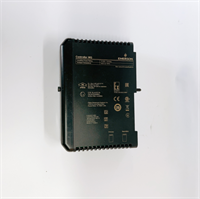
- Product Model: VE3008 (Emerson part number 12P3439X012, assembly code KJ2003X1-BB1)
- Manufacturer: Emerson Automation Solutions
- System Platform: DeltaV DCS (Generation 1/2, pre-M-series)
- Communication Protocol: Foundation Fieldbus H1 (IEC 61158 compliant)
- Channels per Module: 8 independent Fieldbus segments (each supporting up to 32 devices, typically limited to 4–8 in practice)
- Power Supply: Powered via DeltaV backplane; provides intrinsically safe or conventional Fieldbus power to segments (via external power conditioners)
- Termination: Screw-terminal or DIN rail-mounted terminal blocks (depending on carrier)
- Diagnostic Capability: Basic segment health (communication status, device count); no advanced waveform or signal integrity analysis
- Mounting: Installed in standard DeltaV I/O carrier (e.g., MTL or Pepperl+Fuchs type) within system chassis
- Operating Temperature: 0°C to +60°C
System Role and Downtime Impact
The VE3008 Fieldbus interface module serves as the critical bridge between the DeltaV controller and a network of intelligent field devices—such as pressure transmitters, temperature sensors, and digital valve controllers—on a Foundation Fieldbus H1 segment. It handles all low-level communication, device scheduling, and data acquisition for its assigned segment. If this module fails due to internal logic corruption, power regulation issues, or physical damage, the entire Fieldbus segment becomes unresponsive. This results in loss of real-time process data and control output to all connected devices, often triggering cascading alarms, automatic shutdown sequences, or manual intervention. In continuous-process industries like refining, chemicals, or pharmaceuticals, the loss of even one segment can halt a reactor batch, destabilize a distillation column, or violate environmental compliance limits—leading to production losses measured in hundreds of thousands of dollars per hour.
Reliability Analysis and Common Failure Modes
Despite its robust industrial design, the VE3008 is susceptible to age-related degradation common in early-generation digital I/O modules. The most frequent failure mode involves the internal Fieldbus communication ASIC or associated isolation circuitry, which can degrade due to thermal cycling or electrical overstress from field-side transients (e.g., lightning-induced surges on long cable runs). Electrolytic capacitors in the local power regulation stage may dry out over time, causing intermittent resets or complete loss of segment communication. A notable design limitation is the lack of redundant communication paths—each segment is single-point-of-failure by architecture. Additionally, the module offers minimal self-diagnostics; it cannot detect degraded signal quality or marginal device performance before total communication loss occurs. For preventive maintenance, technicians should annually inspect terminal connections for corrosion, verify segment power voltage/current under load, monitor DeltaV event logs for recurring “device offline” patterns, and ensure proper grounding of the Fieldbus shield. Keeping powered spares in a test rack with simulated devices helps validate functionality before emergency deployment.
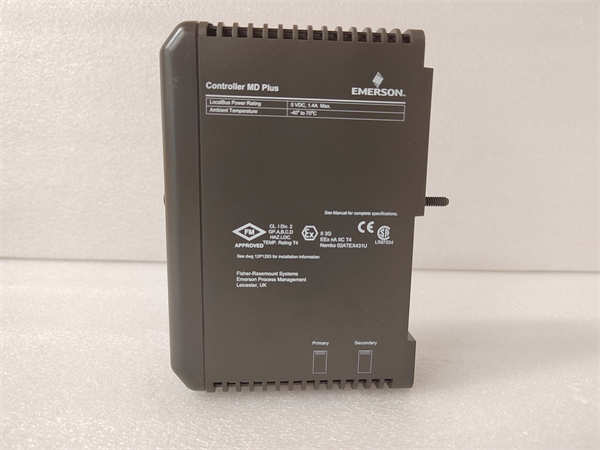
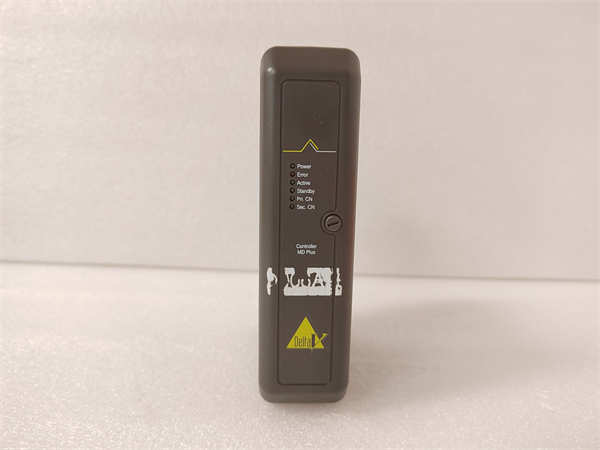
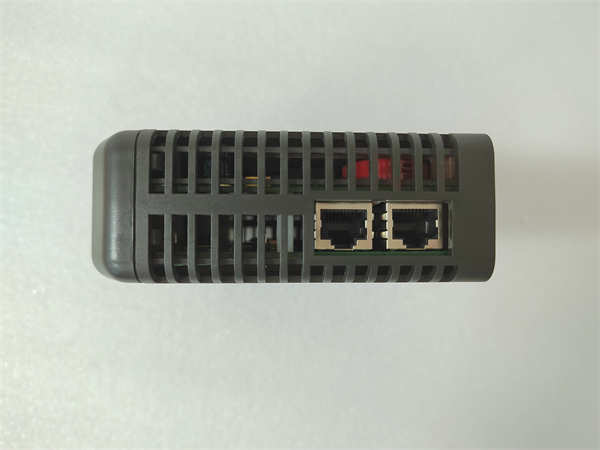
VE3008 12P3439X012 KJ2003X1-BB1 EMERSON
Lifecycle Status and Migration Strategy
Emerson has officially discontinued the VE3008 (KJ2003X1-BB1) as part of its legacy DeltaV hardware phase-out. New units are no longer available through authorized channels, and remaining inventory exists only in the surplus market—often without proof of testing or burn-in. Continued reliance on this module introduces substantial operational and safety risk, particularly in regulated environments where system integrity is mandated. As a short-term measure, facilities may source tested-used units or engage specialized repair services for board-level restoration, but these approaches lack long-term sustainability. The recommended migration path is integration with Emerson’s current DeltaV S-series or M5 I/O platforms. The direct functional successor is the KJ2201X1-BA1 (or newer variants), which offers enhanced Fieldbus diagnostics, higher device density, improved surge immunity, and seamless compatibility with existing DeltaV controllers and engineering tools. Migration typically requires replacing the I/O carrier, re-terminating field wiring, and re-downloading segment configuration via DeltaV Explorer—but retains the same Fieldbus device database, minimizing re-commissioning effort. A phased replacement strategy, prioritizing segments serving safety-instrumented functions or high-value processes, optimizes capital allocation while systematically eliminating obsolescence exposure.