

 Tel:
Tel:  Email:
  WhatsApp:
 Description
Key Technical Specifications
- Operating Principle: Rack and Pinion (Double Acting or Spring Return).
- Air Supply Pressure: 40 – 120 PSI (2.8 – 8.3 bar).
- Max Operating Pressure: 150 PSI (10.3 bar).
- Torque Output (Double Acting @ 60 PSI): ~85 Nm (750 in-lbs).
- Torque Output (Spring Return @ 60 PSI): Varies by spring count (check tag).
- Rotation Angle: 90° Standard (Adjustable ±5° via stop screws).
- Mounting Interface: ISO 5211 (F07/F10 flange typically).
- Shaft Type: Square or Star (Verify “A2.1” spec for exact drive shape).
- Operating Temperature: -40°F to +176°F (-40°C to +80°C) with standard seals.
- Air Consumption: Approx. 0.35 Liters per degree of rotation.
- Body Material: Hard anodized aluminum alloy.
- Seal Material: Nitrile (Buna-N) standard; Viton available for high temp.
Product Introduction
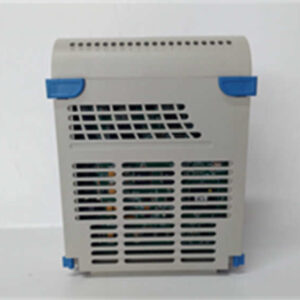
If you’ve ever been stuck in a rainstorm trying to muscle a stuck butterfly valve because the old actuator seized, you know why we keep EMERSON EL-O-MATIC EL100 units in the truck. This isn’t some delicate laboratory instrument; it’s a brute-force air motor designed to sit outside in freezing sleet or scorching heat and just work. I’ve seen these things survive floods that rusted the valve body solid, yet the actuator still spun when we finally got the pipe free. The rack and pinion design means fewer moving parts to jam compared to scotch-yoke styles, which matters when you’re 20 feet up a ladder with a wrench.The real value here is the consistency. Unlike cheaper actuators that lose torque as the seals wear, the EL100 maintains its grip on the valve stem thanks to those low-friction composite guides. In a recent wastewater plant retrofit, we swapped out twenty-year-old pneumatic drivers with these. The cycle time dropped from 12 seconds to 4 seconds because the new units didn’t stick-slip at the end of the stroke. One thing to watch: the “A2.1” designation usually implies a specific shaft adaptation. If you slap this on a valve with a mismatched drive square, you’ll strip the coupling in a week. Measure your valve stem before you bolt this down.
 Quality SOP & Tech Pitfalls (The Reality Check)
 Quality SOP & Tech Pitfalls (The Reality Check)
The Lab Report (SOP)
We don’t just shake the box and ship it. Every EL100 A2.1 gets a visual inspection for shipping damage—look for dents in the aluminum housing that could misalign the gears. Then, we hook it to our shop air line (regulated to 80 PSI) and cycle it 50 times. We use a torque wrench on the output shaft to verify it hits the rated Newton-meters at the end of the stroke. We also spray soapy water on all fittings to hunt for micro-leaks that waste air and slow down operation. Finally, we check the stop screws to ensure they haven’t backed out during transit, which would let the valve over-travel and break the seat.The Engineer’s Warning (Pitfalls)
Here is the mistake that costs you a weekend: ignoring the air quality. The EL100 has tight tolerances inside. If your plant air is wet and full of compressor oil sludge, the internal seals will swell and the rack will gum up. I watched a technician install a brand new unit on a dirty air line; three months later, it wouldn’t close fully because the gunk had turned into glue inside the cylinder. Always install a filtered regulator-lubricator (FRL) unit upstream. Also, don’t overtighten the mounting bolts. The aluminum threads strip easily. Use a torque wrench and follow the ISO 5211 specs, or you’ll crack the flange.
Installation & Configuration Guide
Phase 1: Pre-Installation Safety
⚠️ Isolate Pressure: Lockout/Tagout the air supply line. Bleed all residual pressure from the old actuator.
⚠️ Valve Position: Manually move the valve to the 50% open position if possible, or match the position of the old actuator (Open vs. Closed) to avoid slamming the valve during swap.Phase 2: Removal
Disconnect the air tubing (note which port opens/closes the valve). Unbolt the mounting clamps or nuts. Lift the old actuator off. Clean the valve mounting pad thoroughly; old gasket material causes leaks and misalignment.Phase 3: Installation
Match the Drive: Verify the shaft shape on the EL100 A2.1 matches your valve stem (Square vs. Star). If it doesn’t match, do not force it. You need a different coupling kit.
Place the mounting gasket (usually included). Lower the actuator onto the valve. Hand-tighten bolts in a star pattern to ensure even seating. Torque to spec (usually around 20-25 ft-lbs, check manual).
Re-connect air lines. Standard convention: Port A opens, Port B closes (verify with the arrow on the housing).Phase 4: Power-On & Testing
Slowly introduce air pressure. Watch the travel. Adjust the end-stop screws if the valve doesn’t seat fully or opens too far. Do not adjust these while under full pressure; back off the air slightly, tweak the screw, then re-test. Cycle the valve 5 times. Listen for air leaks at the exhaust ports. If it hisses constantly, the internal piston seal might be damaged or the lubrication is insufficient.
 Compatible Replacement Models
 Compatible Replacement Models
| Compatibility Tier | Model Number | Notes & Differences |
|---|---|---|
| ✅ Drop-in Replacement | EMERSON EL-O-MATIC EL100 | Exact match. Ensure the suffix (A2.1) matches your shaft requirement. |
| ⚠️ Software Compatible | EMERSON EL-O-MATIC E100 | Older series. Physical dimensions are similar, but mounting hole patterns might differ slightly. May require new bolts/adapters. |
| ⚠️ Upgrade Path | EMERSON FISHER 8580 | Newer digital/pneumatic hybrid. Requires wiring for positioner and potentially different mounting brackets. Significant upgrade in control, not a direct swap. |
| ❌ Hardware Mod Required | Competitor Rack & Pinion | Brands like Kele or Rotork might fit the ISO flange, but the shaft height and coupling size often vary. Expect to machine adapters or re-drill holes. |
Frequently Asked Questions (FAQ)
Q: Is the “A2.1” suffix important, or can I use any EL100?
A: It is critical. In the El-O-Matic world, suffixes often denote the shaft type (square, star, splined) or the presence of a specific mounting bracket for limit switches. Using the wrong shaft interface will result in a loose connection that rounds off the valve stem. Check your old unit’s data plate or measure the shaft before ordering.Q: Can I convert this from Double Acting to Spring Return?
A: No. The internal cassette is factory-assembled. A Double Acting unit has no springs; a Spring Return unit has a large spring cassette installed. You cannot field-convert one to the other. You must buy the correct type for your fail-safe requirement (Fail Open vs. Fail Close).Q: My actuator is moving slowly. Is it broken?
A: Probably not. Slow movement is usually an air supply issue. Check your regulator pressure; it needs at least 60 PSI for full speed. Check for kinked tubing or a clogged filter in your FRL unit. If the air is clean and pressure is good, then the internal seals might be worn, causing blow-by.Q: Does this come with a positioner?
A: No. The EL100 is a raw pneumatic actuator. It only goes fully open or fully closed unless you add an external pneumatic or electro-pneumatic positioner (like a Fisher DVC series) mounted on top. The unit has a standard NAMUR mounting pad for this.Q: What kind of air lubricator should I use?
A: Use a lightweight turbine oil (ISO VG 32). However, many modern plants run “oil-free” air. The EL100 comes pre-lubricated at the factory for life. If you start adding oil to an oil-free system, you must continue forever, or the oil will wash away the factory grease and cause failure. Pick one strategy and stick to it.Q: How do I manually override it if the air fails?
A: Most EL100 units have a handwheel option or a hex socket on the top of the pinion shaft. If yours has the hex socket, use a ratchet to turn it. Warning: If it is a Spring Return model, the spring is fighting you. It will be very hard to turn against the spring direction. Ensure you know which way the spring pushes before applying force.