 Tel:
Tel:  Email:
  WhatsApp:
 Description
Key Technical Specifications (For Spare Parts Verification)
- Manufacturer Part Number: 5X00846G01
- Manufacturer: Emerson Automation Solutions
- System Family: Ovation Expert Control System (used in power generation, water/wastewater, and industrial facilities)
- Module Type: Digital Input (DI), 16 channels
- Input Voltage: 24 V DC (sourced or sinked, depending on field wiring)
- Input Isolation: Group isolation (typically two groups of 8 channels) with opto-coupling
- Response Time: ≤ 5 ms per channel
- Backplane Interface: Connects to Ovation I/O carrier/backplane (e.g., in ENET or local I/O chassis)
- Diagnostic Features: Channel-level LED indicators, module status reporting via Ovation Workstation
- Mounting: Plug-in module in standard Ovation I/O enclosure
- Compliance: Designed for industrial environments; meets EMC and safety standards per original Ovation certification
System Role and Downtime Impact
The Emerson 5X00846G01 serves as a foundational data acquisition component in Ovation-based control systems, commonly deployed in fossil fuel, nuclear, and renewable power plants. It converts field-level discrete signals—such as circuit breaker positions, motor starter feedback, or fire/gas alarm contacts—into logical inputs used by control strategies, sequence logic, and safety interlocks. Loss of this module results in the disappearance of up to 16 critical status points from the operator interface, potentially causing incorrect logic evaluation (e.g., false “pump not running” alarms), disabling permissive conditions, or masking real equipment faults. In non-redundant I/O configurations—which are common for auxiliary systems—a single module failure can delay startup sequences or trigger unnecessary process interruptions. Replacement requires physical installation, I/O re-commissioning, and verification against the control database, all of which are hindered by spare parts scarcity.
Reliability Analysis and Common Failure Modes
Although designed for rugged industrial use, the 5X00846G01 is now vulnerable to age-related degradation due to its likely deployment era (late 1990s to early 2000s). The most frequent failure mechanisms involve degradation of optocouplers used for input isolation, leading to signal dropout or “stuck” states—especially under sustained high ambient temperatures or voltage transients. Terminal block connections may loosen over time due to thermal cycling, causing intermittent contact that mimics field device faults. Additionally, internal filtering capacitors can degrade, increasing susceptibility to electrical noise and causing false triggering in electrically noisy environments (e.g., near large motors or switchgear). A known limitation is the lack of individual channel fusing; a short circuit on one input can affect an entire group of 8 channels. Preventive maintenance should include periodic inspection of terminal tightness, cleaning of dust/debris from terminals, functional loop checks during outages, and monitoring of diagnostic logs for recurring input anomalies.
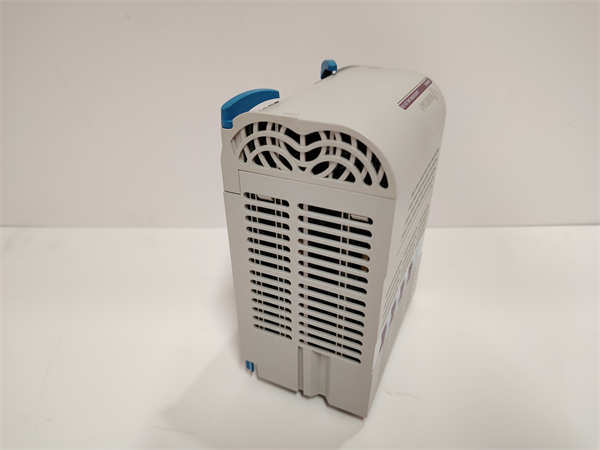
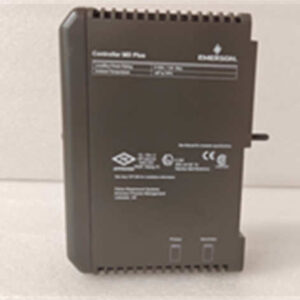
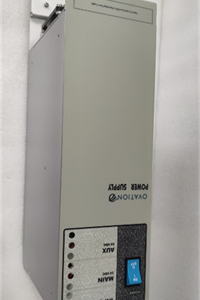
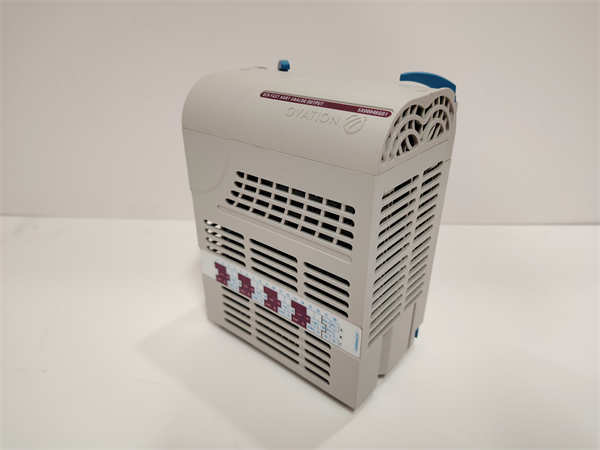
EMERSON 5X00846G01
Lifecycle Status and Migration Strategy
Emerson has officially discontinued the 5X00846G01 as part of the evolution of the Ovation platform toward newer I/O architectures (e.g., Ovation 3.0+ with enhanced cybersecurity and higher-density modules). No new units are available through official distribution channels. Continued operation entails significant risk: untested surplus modules may fail prematurely, counterfeit or re-marked units may lack proper isolation ratings, and compatibility issues with current Ovation software versions can arise. Short-term mitigation includes sourcing from certified vendors with full functional test reports, implementing pre-installation validation (including wet-loop testing), and maintaining a small inventory of verified spares for critical applications. The strategic long-term solution is migration to current-generation Ovation I/O modules—such as the 5X00846G02 (if backward-compatible) or newer high-density DI packs—which offer improved diagnostics, better noise immunity, and support for modern engineering tools like Ovation Developer Studio. While migration may require chassis updates or re-engineering of I/O assignments, it restores access to sustainable spare parts, vendor support, and compliance with evolving cybersecurity standards (e.g., NERC CIP, IEC 62443), ensuring operational resilience for critical infrastructure assets.