 Tel:
Tel:  Email:
  WhatsApp:
 Description
Key Technical Specifications (For Spare Parts Verification)
- Product Model: S20360-SRS
- Manufacturer: Danaher Motion (now part of Fortive, with motion products under Kollmorgen brand)
- Drive Series: S-Series (Legacy compact servo platform)
- Continuous Current Output: 3.6 A RMS
- Peak Current Output: Typically 10.8 A (3x continuous, duration-limited)
- Bus Voltage Range: 40–80 VDC
- Feedback Support: Incremental encoder (A/B/Z), Hall sensors (for commutation)
- Control Modes: Torque, velocity, and position (via external motion controller)
- Communication Interface: Analog ±10 V command input; no fieldbus (standalone or basic indexer mode optional)
- Mounting: DIN rail or panel mount with heatsink
- Dimensions: Compact footprint (~100 mm H x 45 mm W x 120 mm D)
- Protection Features: Overcurrent, overvoltage, undervoltage, overtemperature, short-circuit
System Role and Downtime Impact
The S20360-SRS was widely deployed in the 2000s as a cost-effective, high-performance servo drive for small-to-medium automation axes—common in packaging, labeling, semiconductor handling, and medical equipment. It typically receives motion commands from a PLC or motion controller via analog signals and powers a compatible brushless motor (often from the same S-Series ecosystem). In such architectures, the drive is the sole interface between control logic and physical motion. If it fails—due to power stage damage, feedback loss, or thermal shutdown—the affected axis becomes inoperable. Because many of these machines were built with tight integration and minimal redundancy, a single drive failure can halt an entire production cell. With Danaher having fully retired the S-Series and merged motion product lines under Kollmorgen, there is no path to order a new unit, making this component a critical spare.
Reliability Analysis and Common Failure Modes
Despite its robust design, the S20360-SRS is now operating well beyond its intended lifecycle. The most prevalent failure mechanisms include:
- Power stage degradation: MOSFETs or IGBTs in the inverter section fail due to repeated thermal cycling, especially in high-duty-cycle applications without adequate cooling.
- Capacitor aging: Electrolytic capacitors on the DC bus dry out, leading to voltage instability, increased ripple, and eventual drive shutdown or erratic behavior.
- Feedback circuit damage: Encoder input circuits are vulnerable to ESD or wiring faults, causing loss of position feedback and runaway conditions.
A key vulnerability is the reliance on analog command signals, which are susceptible to noise in electrically harsh environments—potentially causing unintended motion if not properly shielded. Additionally, the drive lacks modern diagnostic capabilities (e.g., real-time temperature monitoring or predictive maintenance data). For maintenance teams, recommended actions include: ensuring adequate airflow around the drive, inspecting for bulging capacitors or discoloration on the PCB, verifying encoder cable shielding integrity, and logging fault codes during operation to detect early signs of stress.
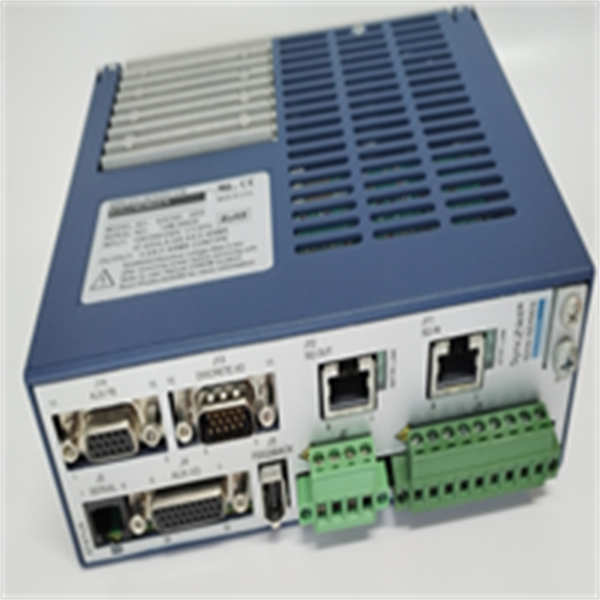
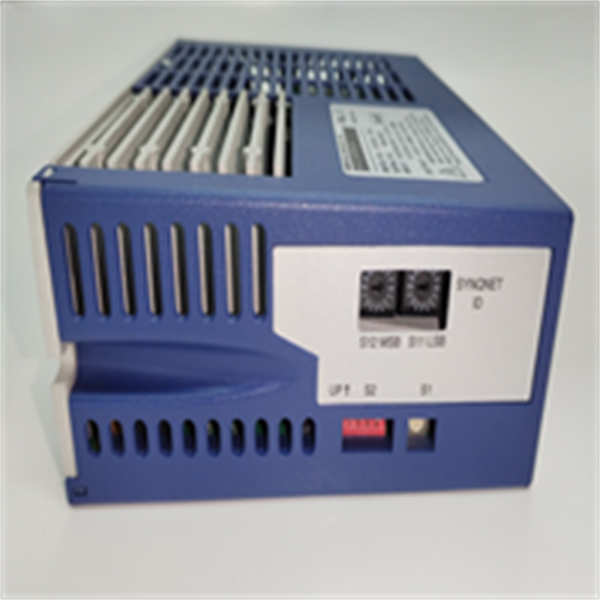
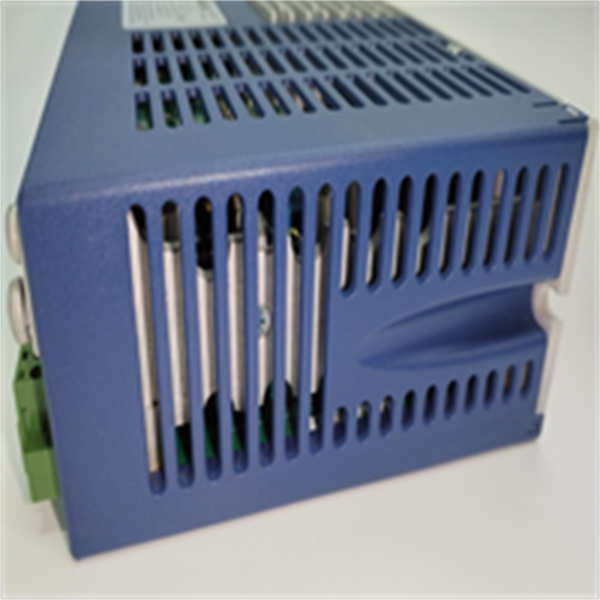
DANAHER S20360-SRS
Lifecycle Status and Migration Strategy
Danaher discontinued the S-Series drives years ago as part of its portfolio consolidation under the Kollmorgen brand. The S20360-SRS has no direct replacement, and official support (including repair services) is no longer available. Continuing to use this drive entails significant risk: spares are scarce, prices are inflated, and compatibility with modern controllers is increasingly tenuous.
Short-term mitigation includes sourcing tested units from specialized surplus vendors or using third-party repair—but these offer only temporary relief. The strategic migration path is to transition to Kollmorgen’s current-generation AKD servo drives. For example, the AKD-NB00360 (3.6 A continuous) provides equivalent or better performance with modern features such as EtherCAT, absolute encoder support, and embedded safety (STO). This upgrade requires:
- Replacing the drive unit and updating mounting/cooling
- Rewiring power, motor, and feedback connections (due to different connector standards)
- Configuring the new drive via WorkBench software instead of legacy tuning tools
- Potentially updating the motion controller to support digital communication (if moving from analog to fieldbus)
While this involves engineering effort, it restores access to warranty, global technical support, cybersecurity updates, and advanced diagnostics—converting an obsolescence liability into a performance and reliability upgrade.