 Tel:
Tel:  Email:
  WhatsApp:
 Description
Key Technical Specifications (For Spare Parts Verification)
- Model: VB-430
- Manufacturer: B&K Vibro A/S (Denmark)
- System Family: Standalone or rack-mounted vibration protection systems (pre-AVM era)
- Input Channels: 2 independent channels, accepting velocity (10 mV/mm/s) or displacement (proximity probe via external driver) signals
- Frequency Range: Typically 1–1000 Hz (configurable via internal filters)
- Alarm Logic: Independent Warning and Danger thresholds per channel, with time delay options
- Relay Outputs: 2 SPDT relays per channel (total 4), rated for 250 VAC / 2 A resistive load
- Power Supply: 24 VDC nominal (±10%), drawn via rear connector or terminal block
- Mounting: DIN rail or panel mount; often installed in 19″ racks alongside other VB-series modules
- Configuration: Set via internal DIP switches and potentiometers—no digital interface
- Certifications: Designed to meet API 670 (4th edition) requirements for machinery protection
System Role and Downtime Impact
The VB-430 is typically deployed as a dedicated protection unit in power generation plants, oil refineries, and chemical facilities—often monitoring main boiler feedwater pumps, induced draft fans, or small steam turbines. It operates independently of DCS or PLC systems, providing hardwired relay contacts directly to emergency shutdown (ESD) or alarm panels. Because it lacks network connectivity, its status is not visible in modern control rooms unless integrated via external dry contacts.
If the VB-430 fails—due to power loss, component drift, or relay welding—the associated machine loses its primary vibration-based trip function. While secondary monitoring may exist (e.g., via Bently Nevada 3500), many legacy sites rely solely on the VB-430 for automatic shutdown. A failure during high-vibration events (e.g., imbalance or bearing wear) could lead to catastrophic equipment damage, extended outages, and safety incidents. In such contexts, the VB-430 is not just a sensor conditioner—it is a final safeguard.
Reliability Analysis and Common Failure Modes
Although robustly built, the VB-430 suffers from age-related degradation. The most common failure points are:
- Electrolytic capacitors in the power supply section, which lose capacitance over time, causing voltage ripple and erratic relay behavior.
- Mechanical relays, which suffer contact oxidation or welding after decades of operation—especially if frequently cycled.
- Potentiometer drift in threshold settings, leading to false alarms or missed trips due to calibration shift.
- Connector corrosion on the rear I/O terminals, exacerbated by humid or corrosive plant environments.
A design limitation is the lack of self-diagnostics: there is no way to verify internal health without external test equipment. The unit provides no indication of power supply integrity or relay coil status—only LED indicators for alarm activation.
For preventive maintenance, site engineers should:
- Perform annual functional tests using a calibrated vibration simulator
- Measure relay contact resistance (<100 mΩ) and insulation (>10 MΩ)
- Replace all electrolytic capacitors proactively in units over 15 years old
- Document threshold settings before any handling, as potentiometers can shift during transport
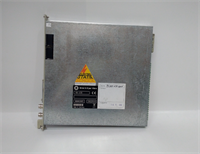
B&K Vibro VB-430
Lifecycle Status and Migration Strategy
B&K Vibro officially discontinued the VB-430 in the early 2000s, replacing it with the AVM (Advanced Vibration Monitor) series, which offered digital communication, enhanced diagnostics, and modular scalability. Following corporate acquisitions (first by Spectris, then partial integration into Baker Hughes), legacy support for VB-series products has been minimal. No factory repair or recalibration services are available.
Continued use carries clear risks: spare units are scarce, pricing is volatile, and technical documentation is increasingly difficult to source. As a short-term measure, some operators stockpile tested spares or use third-party repair services specializing in analog monitoring hardware.
For long-term reliability, migration is strongly advised. Modern replacements include:
- Baker Hughes (formerly Bently Nevada) 3500/42 or 3500/45 modules, which offer superior accuracy, API 670 compliance, and integration with asset management systems
- Emerson AMS Machine Works compatible monitors with OPC UA output
- Custom retrofit solutions using programmable safety relays (e.g., Pilz PNOZ) paired with signal conditioners—but this requires re-validation of protection logic
Migration typically involves:
- Replacing the VB-430 with a 2-channel monitor in a new or existing rack
- Rewiring field sensors and relay outputs
- Recalibrating alarm thresholds and time delays
- Updating plant safety documentation (SIL verification if applicable)
Given the critical protection role of the VB-430, planning for its replacement should be treated as a risk mitigation priority—not a routine upgrade.