 Tel:
Tel:  Email:
  WhatsApp:
 Description
Key Technical Specifications (For Spare Parts Verification)
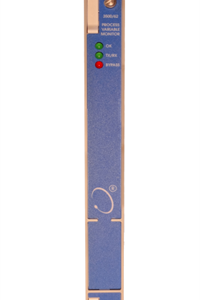
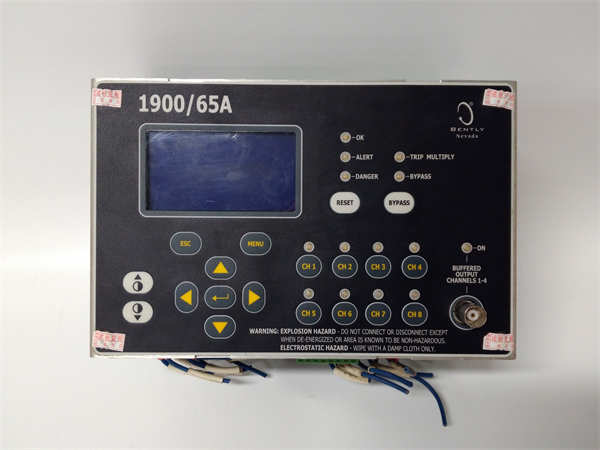
- Product Model: 1900/65A
- Manufacturer: Bently Nevada
- System Family: 1900/65 Series Monitoring System
- Input Type: Accepts dynamic sensor input (e.g., seismic velocity transducer, accelerometer, or eddy-current probe with external driver)
- Output Signals: 4–20 mA proportional output + dual SPDT alarm relays (Alarm & Danger)
- Power Requirement: Typically ±15 VDC or 24 VDC (depending on backplane configuration)
- Mounting: Designed for DIN rail or 19″ rack-mounted chassis with compatible backplane (e.g., 1900/65 backplane)
- Alarm Logic: Configurable via DIP switches (time delay, latching/non-latching)
- Front Panel Indicators: LED status for Power, OK, Alarm, Danger
- Calibration: Requires periodic verification using sine-wave calibrator (e.g., Bently Nevada 2210)
-

Bently Nevada 1900-65A
System Role and Downtime Impact
The 1900/65A typically resides in a local monitoring panel near critical rotating assets such as steam turbines, centrifugal compressors, or large pumps. It processes raw vibration signals from sensors and generates analog outputs for trending while activating dry contacts to trigger emergency shutdown sequences when preset thresholds are exceeded. If this module fails—due to power loss, relay weld, or signal drift—the associated machine may lose its primary vibration-based protection. In high-risk applications (e.g., hydrogen compressors or power generation turbines), this creates an unacceptable safety exposure and often forces operators to run equipment in bypass mode or at reduced load, increasing mechanical risk. A complete failure during operation could prevent automatic trip activation, potentially leading to catastrophic equipment damage and extended plant outages.
Reliability Analysis and Common Failure Modes
Many 1900/65A units remain in service due to their robust analog design and installation in controlled environments. However, after 20+ years, component aging is prevalent. The most common failure modes include relay contact welding (especially in high-cycle alarm scenarios), electrolytic capacitor degradation in the power supply section causing intermittent operation, and DIP switch corrosion leading to incorrect alarm settings. The module’s reliance on external jumpers and manual configuration introduces human error risk during replacement.
A key design limitation is the lack of digital self-diagnostics—unlike modern modules, it cannot report internal health or sensor faults beyond basic LED indicators. Additionally, the analog circuitry is sensitive to ground loops and EMI, which can cause false alarms if shielding or grounding degrades over time.
For maintenance teams, preventive actions should include:
- Annual functional testing using a calibrated signal source to verify alarm setpoints and relay operation
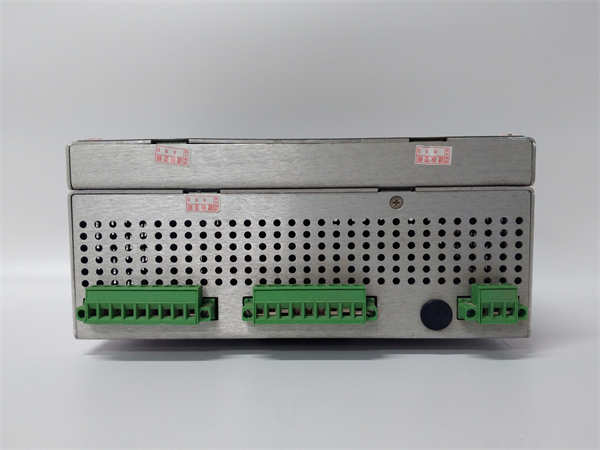
- Inspection of terminal blocks for signs of arcing or oxidation
- Verification that DIP switch settings match the original configuration documentation
- Ensuring proper separation from high-voltage cables to minimize noise coupling
Keeping a bench-tested spare with matching firmware/jumper settings is strongly recommended.
Lifecycle Status and Migration Strategy
Bently Nevada officially discontinued the 1900/65A series in the early 2000s, with end-of-service-life notices issued well over a decade ago. Continuing to operate systems dependent on this module carries significant risk: genuine spares are scarce, counterfeit or uncalibrated units may enter the supply chain, and technical support from the OEM is no longer available outside of legacy service agreements.
As a temporary measure, facilities may rely on verified refurbished units or engage specialized third-party vendors offering board-level repair and recalibration. However, these are not sustainable long-term solutions.
The recommended migration path is to Bently Nevada’s 3300/60 or 3500 systems, or the newer Orbit 60 platform within the System 1 ecosystem. These offer digital communication (Modbus, OPC UA), advanced diagnostics, redundant architectures, and integration with enterprise asset performance management (APM) tools. Migration typically involves:
- Replacing the 1900/65 chassis with a modern monitor rack
- Reusing existing proximity probes where compatible (with updated drivers if needed)
- Reconfiguring alarm logic in software instead of DIP switches
- Integrating vibration data into central monitoring platforms
While migration requires engineering effort and capital investment, it eliminates obsolescence risk, improves diagnostic coverage, and aligns with modern cybersecurity and data governance requirements. Planning should begin immediately, as lead times for engineering studies and hardware delivery can be substantial.