 Tel:
Tel:  Email:
  WhatsApp:
 Description
Key Technical Specifications (For Spare Parts Verification)
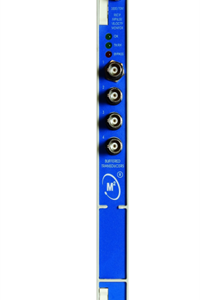
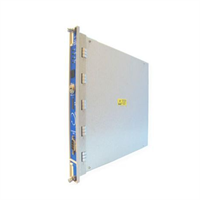
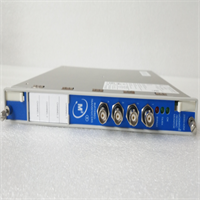
- Product Model: 3500/33 Relay Module
- Bently Part Number: 125760-01
- System Family: 3500 Machinery Protection System
- Relay Channels: 16 independent electromechanical relays (Form A contacts: SPST normally open)
- Contact Ratings:
- 2 A @ 30 VDC (resistive load)
- 0.5 A @ 125 VAC
- Maximum switching voltage: 250 VAC / 125 VDC
- Input Source: Receives alarm status from 3500 monitor modules (e.g., 3500/42M, /44M, /25) via backplane
- Configuration: Each relay assignable to specific alarm conditions (Alert, Danger, OK-to-Run, etc.) using Rack Configuration Software (RCS)
- Diagnostics: LED indicators per channel (energized/de-energized); module fault detection via backplane communication
- Redundancy: Not redundant; intended for non-critical or annunciation-only functions
- Form Factor: Full-height module (occupies one slot in 3500 rack)
- Certification: Designed for use in API 670 systems; not recommended for SIL-rated safety shutdowns due to lack of contact feedback or voting architecture
- Operating Temperature: 0°C to +65°C
System Role and Operational Impact
The 125760-01 (3500/33) is primarily deployed for high-channel-count alarm annunciation and auxiliary control in large rotating machinery applications, such as:
- Sending vibration alerts to central control rooms
- Activating local panel lamps or horns
- Enabling/disabling auxiliary pumps or lubrication systems
- Providing “machine healthy” signals to sequence controllers
Unlike the 3500/20 or 3500/53, the 3500/33 uses single-pole, normally open (Form A) relays without force-guided contacts, making it unsuitable for direct safety shutdown functions per IEC 61508. However, its reliability remains important because:
- Loss of alarm signaling delays operator response
- Missing permissive signals can cause process inefficiencies or startup failures
- In complex plants, multiple 3500/33 modules may feed data historians or asset management systems
A failed 3500/33 does not typically cause immediate equipment damage but degrades situational awareness and maintenance responsiveness.
Reliability Analysis and Common Failure Modes
Despite industrial-grade construction, aging 125760-01 modules are prone to:
- Contact wear or oxidation: High channel count increases cumulative switching cycles; low-current signaling loads can lead to film buildup, causing high contact resistance or intermittent opens.
- Coil driver circuit failure: Semiconductor components degrade over time, especially under thermal stress, leading to stuck-open relays.
- Backplane communication errors: Corrosion or vibration-induced loosening causes configuration mismatches or “ghost” relay states.
- Power supply droop: Under full load (all 16 relays energized), internal regulation may sag, causing marginal relays to drop out.
- EEPROM corruption: Rare, but possible after decades of service, resulting in incorrect alarm-to-relay mapping.
Design limitations include:
- No contact supervision or weld detection
- Lower current rating than 3500/20 or /53 modules
- Higher density increases thermal load in confined racks
For preventive maintenance, technicians should:
- Periodically verify continuity on critical annunciation circuits
- Avoid using 3500/33 for inductive loads (e.g., solenoids) without external suppression
- Monitor RCS logs for “Module Fault” or unexpected relay state changes
- Ensure adequate ventilation in the 3500 rack to prevent thermal derating

BENTLY 125760-01
Lifecycle Status and Migration Strategy
Bently Nevada has discontinued the 125760-01 as part of its focus on integrated digital communication (e.g., 3500/94 Enhanced Gateway) and reduced reliance on discrete relay modules for non-safety functions. The 3500/33 is no longer produced, and factory support is unavailable outside rare legacy agreements.
Continued use introduces risks:
- Inability to replace failed units with verified spares
- Growing difficulty integrating with modern control architectures (e.g., OPC UA, Ethernet/IP)
- Increased maintenance burden due to aging electromechanical components
Interim Mitigation Measures
- Source replacements only from Bently-authorized refurbishers who provide full channel-by-channel functional testing
- Maintain at least one spare per major 3500 system
- Where possible, migrate annunciation functions to digital protocols (Modbus TCP, OPC) via a 3500/92 or /94 gateway
Long-Term Strategy
Bently Nevada recommends:
- Replacing legacy relay-based annunciation with System 1 v22+ APM dashboards and email/SMS alerting
- Using the 3500/94 Enhanced Gateway to stream alarm states directly to DCS or cloud platforms
- Reserving electromechanical relays only for hardwired safety or regulatory-mandated interfaces
While not a safety-critical component, the obsolescence of the 125760-01 erodes operational visibility and increases lifecycle costs. Proactive migration to digital communication reduces hardware dependency and enhances diagnostic agility—supporting long-term reliability and modernization goals.