 Tel:
Tel:  Email:
  WhatsApp:
 Description
Technical Specifications (For Spare Parts Verification)
- Product Model: 60M100-00
- Manufacturer: Bently Nevada
- System Platform: 60M Machinery Monitoring System (modular rack-based, pre-3500 era)
- Input Type: Accepts proximity probe (–24 VDC powered) or velocity sensor input
- Measurement: User-selectable for displacement (mils), velocity (in/s), or acceleration (g)
- Alarm Outputs: Two independent relay contacts (Form C) – Warning and Danger
- Power Requirement: ±15 VDC and +24 VDC from 60M backplane
- Configuration: Set via internal DIP switches and front-panel potentiometers
- Frequency Response: Typically 10 Hz to 1 kHz (configurable via filter settings)
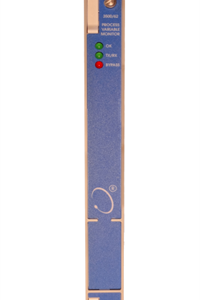
- Diagnostic Indicators: Front-panel LEDs for power, OK status, and alarm activation
- Physical Form: Full-height module occupying one slot in 60M chassis
- Calibration: Requires external signal generator and manual adjustment of gain/offset pots
System Role and Downtime Impact
The BENTLY 60M100-00 was a foundational component in 1980s–1990s turbomachinery protection systems, commonly installed on steam turbines, centrifugal compressors, and generators in power plants and refineries. It operates as a standalone analog monitor—processing raw sensor signals, applying filtering, and triggering hardwired relay outputs upon exceeding user-defined thresholds. Unlike modern digital systems, it lacks communication capability and centralized diagnostics. A failure in this module—such as drift in calibration, relay sticking, or power supply degradation—can result in either missed trips (risking catastrophic mechanical failure) or nuisance trips (causing unplanned production loss). Because many 60M systems remain in service due to asset longevity, the 60M100-00 continues to play a safety-critical role despite its age.
Reliability Analysis and Common Failure Modes
After 25–40 years of service, the 60M100-00 is highly susceptible to component aging:
- Potentiometer drift: The front-panel calibration pots (gain, offset, alarm setpoints) develop intermittent contact or value shift due to oxidation, leading to inaccurate trip points.
- Electrolytic capacitor failure: Aging capacitors in the power and signal conditioning circuits cause noise, instability, or complete loss of output.
- Relay contact degradation: Mechanical relays suffer from contact wear, oxidation, or welding—especially if used with inductive loads like solenoid valves.
- Backplane connector corrosion: Edge fingers oxidize over time, causing intermittent power or ground faults that manifest as random alarms or module dropout.
Recommended maintenance includes annual functional testing using a calibrated simulator (e.g., Bently 7770), visual inspection for leaking capacitors or burnt components, cleaning of potentiometer shafts and DIP switches, and verifying relay continuity under load. Given the lack of self-diagnostics, proactive replacement of modules over 30 years old is often prudent.
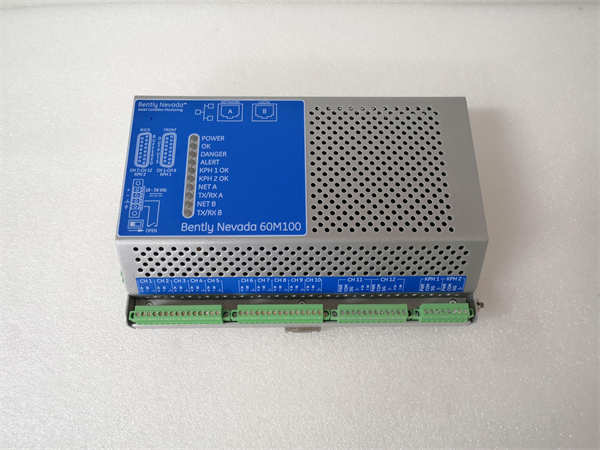
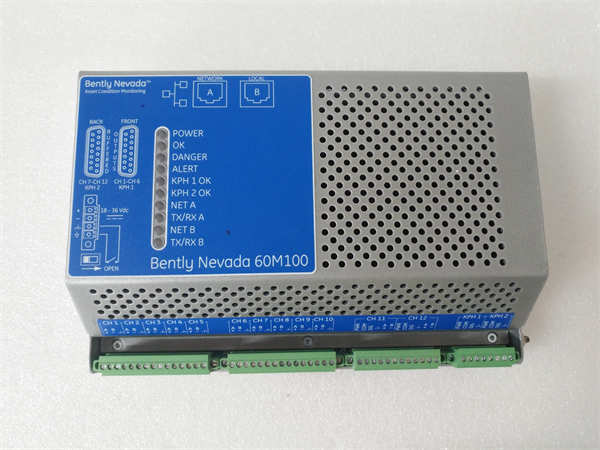
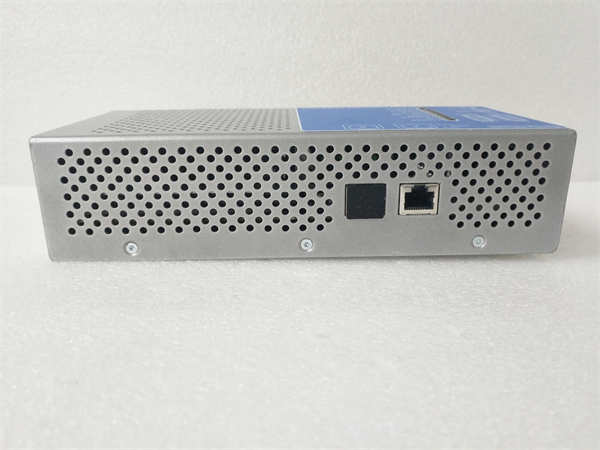
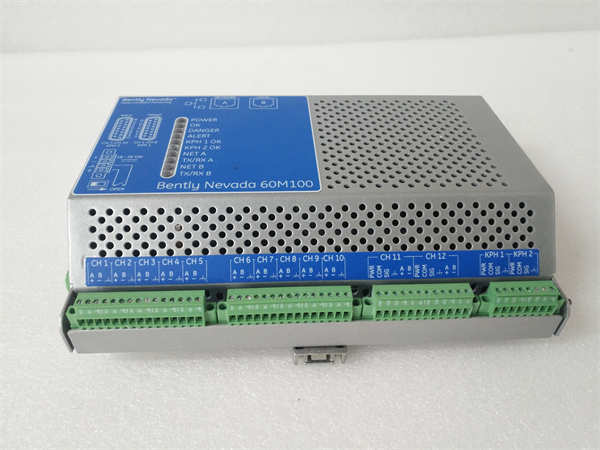
BENTLY 60M100-00
Lifecycle Status and Migration Strategy
Bently Nevada officially ended support for the 60M platform decades ago. No new 60M100-00 modules are available, and factory repair services ceased long ago. Continued use represents a growing operational liability.
Short-term risk mitigation includes:
- Building a small inventory of fully tested spares
- Implementing manual bump tests during each startup
- Cross-referencing with redundant monitoring (e.g., portable data collectors)
The recommended long-term solution is migration to the 3500 system or Bently Nevada 3300/3300 XL with 3500/42M or 3500/45 monitors. This requires:
- Replacing the entire 60M chassis with a 3500 rack
- Rewiring sensors to new I/O modules (though existing cabling can often be reused)
- Recalibrating alarm/trip setpoints in software (eliminating potentiometers)
- Integrating with modern plant networks via Modbus or Ethernet
While migration involves upfront effort, it eliminates single-point hardware risks, adds remote diagnostics, and aligns with current API 670 standards. For facilities still relying on 60M, a formal obsolescence review should be initiated immediately.