 Tel:
Tel:  Email:
  WhatsApp:
 Description
Key Technical Specifications
- Input Signal Types: Proximity Probe (eddy current), Magnetic Pickup (variable reluctance), or Voltage Pulse.
- Channels: 4 independent monitoring channels per card.
- Frequency Range: 1 Hz to 20,000 Hz (60 to 1,200,000 CPM).
- Measurement Accuracy: ±0.01% of reading or ±1 count (whichever is greater).
- Trip Response Time: Configurable; typically <10 ms for overspeed events.
- Input Impedance: >10 kΩ (voltage mode); optimized for 5mm/8mm/11mm probes.
- Power Requirement: +24 VDC (nominal), draws approx. 4.0 Watts.
- Operating Temperature: -20°C to +65°C (-4°F to +149°F).
- Relay Outputs: 4 Form-C relays (Alarm/Trip/Bypass configurable per channel).
- Communication: 3500 Backplane protocol (connects to 3500/22, 3500/40, or communications gateways).
- Diagnostics: Continuous self-check of input circuits, relay coils, and internal logic.
- Certifications: SIL 2 capable (in redundant architecture), CE, CSA, ATEX (system dependent).
Product Introduction
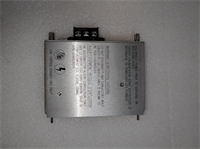
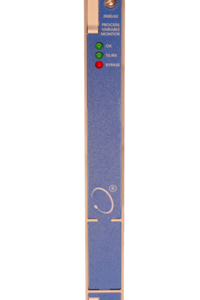
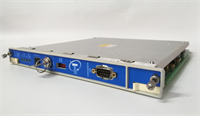
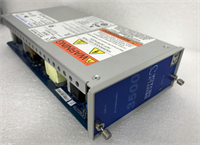
Stop relying on generic PLC counters for your turbine speed protection. When a rotor hits 12,000 RPM and the coupling snaps, you need a dedicated hardware trip, not a scanned logic routine that might miss a cycle. The BENTLY 3500/50M is that dedicated guardian. I’ve seen plants try to save money by using standard PLC inputs for overspeed detection, only to regret it when electrical noise from a nearby VFD caused a false negative. This card filters that noise out physically and logically before it ever reaches the trip relay.The “M” revision usually implies updated internal componentry for better long-term stability in high-vibration environments. In field tests on a centrifugal compressor train, we subjected this module to rapid acceleration ramps (simulating a load rejection). It triggered the trip solenoid consistently within 8 milliseconds, regardless of the signal rise time. That consistency is why specifiers demand Bently. One warning: don’t assume the default DIP switch settings will work for your machine. I’ve walked onto sites where the new card was installed with factory defaults, meaning the “Overspeed” threshold was set to 50,000 RPM instead of the required 110%. The turbine spun up, the card watched it, and nothing happened. Configure it before you power up.
 Quality SOP & Tech Pitfalls (The Reality Check)
 Quality SOP & Tech Pitfalls (The Reality Check)
The Lab Report (SOP)
We don’t just box and ship. Every 3500/50M undergoes a rigorous bench test. First, visual inspection under 10x magnification to rule out counterfeit soldering or tampered seals. Then, it goes into our live 3500 rack simulator. We use a precision signal generator to sweep frequencies from 100 RPM to 20,000 RPM, verifying that the displayed value matches the input within 0.01%. We deliberately inject noise spikes to ensure the filter logic holds. Finally, we cycle the trip relays 50 times to ensure clean contact closure and measure insulation resistance (>100 MΩ). You receive a printed log with the actual trip points measured, not a generic “QC Passed” sticker.The Engineer’s Warning (Pitfalls)
Here is the trap: Gap Voltage vs. Dynamic Signal. This card needs a proper DC bias voltage from the prox probe system (usually -10 VDC at the gap). If your proximitor sensor is saturated or the cable is damaged, the 3500/50M sees a flat line and might interpret it as “Zero Speed” rather than “Sensor Fault,” depending on your configuration. I once saw a compressor destroyed because the tech swapped the card but didn’t check the proximitor power supply, which had drifted low. The card thought the shaft was stopped, disabled the trip logic, and the machine oversped. Also, copy the DIP switches. I cannot stress this enough. The factory defaults are rarely what your process needs. Take a photo of the old card’s switches before you pull it. If you lose that data, you are guessing, and guessing gets people fired.
Installation & Configuration Guide
Phase 1: Pre-Installation (⚠️ CRITICAL)
- Execute Lockout/Tagout (LOTO) on the machinery control power.
- Photograph the existing module’s DIP switches, jumper positions, and terminal wiring. Do not skip this.
- Verify your rack power supply is stable at 24 VDC. Fluctuating power causes erratic behavior during boot.
Phase 2: Removal
- Label all front-terminal wires clearly. Use permanent markers on white tape.
- Unlock the top and bottom latches on the module faceplate.
- Pull the module straight out. Avoid twisting, which can bend backplane pins.
Phase 3: Installation
- Set DIP Switches: Before inserting the 3500/50M, configure the DIP switches on the new unit to match your photo exactly. This includes channel enable/disable, trip voting logic, and filter settings.
- Slide the module into the slot until the backplane connector engages firmly. Listen for the seat.
- Lock the latches securely.
Phase 4: Power-On & Testing
- Restore rack power. The “OK” LED should illuminate solid green within 5-10 seconds.
- If the LED flashes red/green, re-check your DIP switch settings against the manual and your photo.
- Simulate a speed signal (using a function generator or by slowly rotating the shaft if safe). Verify the readout matches expected RPM.
- Test the Alarm and Trip relays by simulating an over-speed condition. Ensure the external solenoid drops out as designed.
Compatible Replacement Models
| Compatibility Tier | Model Number | Notes & Differences |
|---|---|---|
| ✅ Drop-in Replacement | 3500/50M | Exact match. Identical form factor, pinout, and logic behavior. Preferred for direct swaps. |
| ✅ Drop-in Replacement | 3500/50 (Non-M) | Older revision. Functionally similar, but may lack some diagnostic features of the “M” version. Generally interchangeable, but check rack firmware compatibility. |
| ⚠️ Software Compatible | 3500/53 (Overspeed Protection) | Dedicated single-purpose overspeed card. Different logic structure. Requires reconfiguration of the rack database and potentially new wiring if relay logic differs. |
| ❌ Hardware Mod Required | 3701 (Legacy System) | Completely different chassis and backplane. Cannot be used in a 3500 rack without a full system migration. |
Frequently Asked Questions (FAQ)
Q: Can I hot-swap the 3500/50M while the machine is running?
A: The 3500 system architecture allows for hot-swapping, BUT doing this on a speed monitoring card is risky. If this is your only speed monitor for that train, pulling it removes your overspeed protection instantly. If the machine trips due to a transient glitch during the swap, you have no backup. Only hot-swap if you have a redundant setup (two cards monitoring the same probe) or if the machine is safely shut down. Don’t gamble with a turbine.Q: What does the “M” stand for in 3500/50M?
A: Bently doesn’t always publish a public changelog for single-letter suffixes, but in my experience, “M” usually indicates a manufacturing revision with updated internal components (like capacitors or processors) to improve longevity or meet newer environmental standards. It is fully backward compatible with standard 3500/50 slots.Q: Is this card new or refurbished?
A: These are New Surplus. They are factory-sealed units that were never installed. They are not refurbished used cards that have been cleaned and repainted. You get the original static shielding bag and factory packaging.Q: My new card shows a “Sensor Fault” immediately. Why?
A: Check your probe gap voltage. The 3500/50M expects a specific DC bias range (typically -8 VDC to -12 VDC for standard probes). If your proximitor isn’t powered or the cable is shorted, the card will flag a fault. Also, verify that the “Input Type” DIP switch matches your sensor (Prox vs. Mag Pickup).Q: How fast is the trip response?
A: In our lab tests with a clean square wave input, we consistently see trip relay de-energization in under 10 milliseconds from the moment the frequency exceeds the setpoint. This is fast enough to protect almost any industrial turbomachinery.Q: Do you provide a calibration certificate?
A: We include our own detailed functional test report showing the specific trip points verified on our bench. If your QA department requires an ISO 17025 accredited third-party calibration certificate, we can arrange that for an additional fee and 24-hour delay. Just ask before ordering.Q: Will this work in my old 3500 rack from 2005?
A: Yes, the 3500 backplane standard has remained consistent. However, if your rack’s main controller (like the 3500/20 frame interface) has extremely old firmware, it might not recognize the specific diagnostics of the “M” revision. It will still function as a tachometer, but the system display might show “Unknown Module” for the advanced status bits. Usually, this is cosmetic and doesn’t affect protection logic.