 Tel:
Tel:  Email:
  WhatsApp:
 Description
Product Introduction
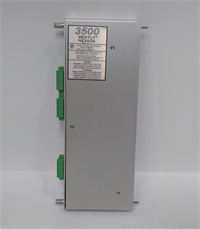
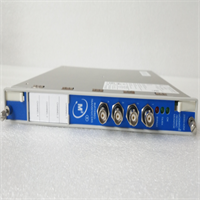
When a gas turbine trips because a single accelerometer signal drifted out of range, the 3500/42M-07-00 is the card that validates those four seismic inputs before they ever reach the trip logic. This module sits in the 3500 rack chassis, converting raw velocity or acceleration signals into engineered units while performing continuous self-diagnostics to catch sensor faults instantly.We specify this exact suffix (-07-00) for applications requiring specific filter settings and alarm relay configurations that newer generic replacements might not default to. It supports both velocity and acceleration sensors, handling frequencies from 10 Hz up to 1000 Hz, which covers most critical pump and compressor monitoring needs. To be frank, the “M” designation means it’s approved for safety-instrumented systems (SIS), a requirement you can’t ignore in upstream oil and gas facilities complying with IEC 61511.
 Key Technical Specifications
 Key Technical Specifications
| Parameter | Value |
|---|---|
| Compatible Chassis | Bently Nevada 3500 Rack (3500/15, 3500/25, etc.) |
| Channel Count | 4 Independent Seismic Input Channels |
| Input Signal Type | Velocity (mm/s, in/s) or Acceleration (g, m/s²) |
| Frequency Range | 10 Hz to 1000 Hz (Configurable via software) |
| Dynamic Range | 0 to 50 mm/s (peak) typical |
| Safety Rating | TUV Certified SIL 2 (IEC 61508) |
| Compliance | API 670 (Machinery Protection Systems) |
| Alarm Relays | 4 Form-C relays (configurable per channel) |
| Operating Temp | -20°C to +60°C (-4°F to +140°F) |
| Power Consumption | 12.5 W (typical at 24 VDC) |
| Backplane Comm | 3500 Backplane Protocol (Ethernet gateway required for PC) |
| Certification | ATEX, IECEx, CSA, UL, CE |
 Application Scenarios & Pain Points
 Application Scenarios & Pain Points
A refinery in Texas faced a recurring nuisance trip on their main air blower; the old monitor card was filtering out valid high-frequency data, masking a developing bearing fault until it was too late. Swapping in the BENTLY 3500/42M-07-00 allowed the team to adjust the filter bandwidth down to 10 Hz, catching the early warning signs of looseness that the previous hardware missed. The result? They caught the fault during a scheduled shutdown instead of an unplanned outage costing $200k/hour.
- Upstream Oil & Gas: Compressor stations in remote locations need reliable seismic monitoring to prevent catastrophic crankshaft failures. Can your current system distinguish between a sensor break and actual vibration?
- Power Generation: Steam turbines operating near critical speeds require precise velocity monitoring. If your monitor drifts, you risk tripping on noise or failing to trip on danger.
- Chemical Processing: Large centrifugal pumps handling hazardous fluids must meet API 670 standards. This module provides the documented compliance auditors demand.
- Water/Wastewater: High-speed blowers in aeration tanks often suffer from imbalance. Four channels let you monitor non-drive end, drive end, and two auxiliary points simultaneously.
- Marine Propulsion: Shipboard generators face constant motion; the ruggedized design of the 3500 series handles the shock and vibration better than standard industrial cards.
Field Case Note:
During a commissioning phase at a LNG plant in Qatar, the integration team discovered that the specified monitor didn’t support the specific acceleration range of the new GE compressors. The project manager panicked until we sourced the 3500/42M-07-00, which supported the required 0-50g range out of the box. The lead instrumentation engineer noted that the “plug-and-play” configuration via the System 1 software saved three days of manual dip-switch tweaking. They logged zero false alarms during the 72-hour run test.❗ Installation Pitfalls Guide
- Firmware/Software Mismatch: The 3500 rack requires specific firmware versions to recognize the “-07-00” configuration correctly. We’ve seen racks throw “Module Mismatch” errors because the main interface module (3500/22) was running v2.0 while the monitor needed v3.1 features. Check your rack firmware before installation.
- Sensor Sensitivity Settings: This card doesn’t auto-detect sensor sensitivity (mV/g or mV/mm/s). If you wire a 100 mV/g sensor but leave the software at 10 mV/g, your alarms will trigger at 10% of the intended value. Double-check the scaling factors in System 1 software.
- Wiring Shield Grounding: Seismic sensors are prone to noise. If you ground the cable shield at both the sensor and the monitor end, you create a ground loop that looks like low-frequency vibration. Ground at one end only—usually the monitor side.
- Power Supply Loading: Adding four channels of seismic processing draws significant current. If your 3500 power supply (3500/15) is already loaded with proximity probe cards, adding this might brownout the rack during startup. Calculate the total wattage; keep a 20% margin.
- ESD Damage during Handling: The backplane connectors are sensitive. We had a unit fail its self-test because a technician touched the gold pins while sliding it into the slot without a wrist strap. Always wear an ESD strap and hold the card by the faceplate edges.