 Tel:
Tel:  Email:
  WhatsApp:
 Description
Key Technical Specifications (For Spare Parts Verification)
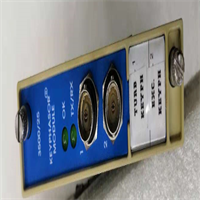
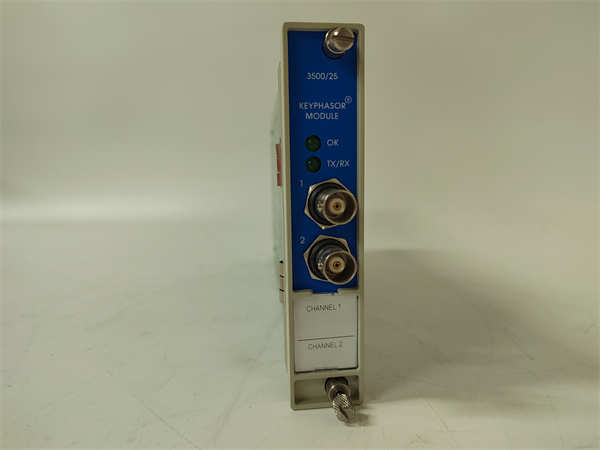
- Product Model: 3500/25 Enhanced Keyphasor Module
- Bently Part Number: 149369-01
- System Family: 3500 Machinery Protection System
- Input Channels: 2 independent Keyphasor inputs (typically from eddy-current proximity probes or magnetic pickups)
- Signal Type: AC-coupled analog waveform (typically 0.2–20 Vpp)
- Output: Digital TTL-compatible once-per-revolution (1X) pulse + real-time speed (RPM) data via backplane
- Frequency Range: 3 to 12,000 RPM (configurable thresholds)
- Diagnostic Features:
- Probe gap voltage monitoring
- Signal amplitude and frequency validation
- Loss-of-signal detection
- Configurable hysteresis to prevent chatter near threshold
- Redundancy: Not inherently redundant, but dual channels allow cross-verification
- Form Factor: Half-height module (occupies one slot in 3500 rack)
- Compatibility: Works with 3500/42M, /44M monitors and 3500/92 or /94 gateways for data export
- Certification: Supports SIL 2 applications when used in approved architectures (not a voting trip device itself)
- Operating Temperature: 0°C to +65°C
System Role and Operational Impact
The 3500/25 is essential for rotordynamic analysis in critical machinery such as steam turbines, gas turbines, centrifugal compressors, and large motors. It processes raw tachometer or Keyphasor probe signals to generate a clean, jitter-free once-per-turn pulse that serves as the timing reference for all synchronous vibration measurements.
Without a functioning 3500/25:
- Orbit plots become distorted or unavailable
- Bode and waterfall plots lose phase coherence
- Shaft centerline and polar plots cannot be generated
- Automated diagnostics (e.g., rub detection, imbalance identification) degrade or fail
While the module does not directly trigger shutdowns (that role belongs to modules like the 3500/53), its data is crucial for:
- Validating alarm legitimacy during trips
- Meeting API 670 requirements for machinery health documentation
- Supporting predictive maintenance and reliability-centered strategies
Loss of Keyphasor signal integrity can lead to misdiagnosis—e.g., attributing a rub to imbalance—resulting in unnecessary repairs or missed developing faults.
Reliability Analysis and Common Failure Modes
Despite rugged design, aging 149369-01 modules exhibit predictable degradation:
- Input amplifier drift: Analog front-end components age, reducing sensitivity to low-amplitude probe signals—especially at startup/shutdown speeds.
- Comparator hysteresis shift: Causes false triggering or missed pulses under noisy conditions.
- Backplane communication errors: Intermittent contact with the 3500 rack leads to “module fault” or missing RPM data in System 1.
- Internal power regulation failure: Affects threshold detection accuracy, leading to erratic speed readings.
- Firmware corruption (rare): Due to EMI or aging memory cells, causing configuration loss.
Design limitations include no built-in self-test beyond basic LED status and dependence on clean probe signals. For preventive maintenance, technicians should:
- Verify Keyphasor signal amplitude (>0.5 Vpp recommended) at the module input
- Cross-check RPM readings against handheld tachometers during startups
- Monitor “Keyphasor Fault” flags in System 1 or historian logs
- Ensure proper probe installation (gap setting, cable routing away from power conductors)
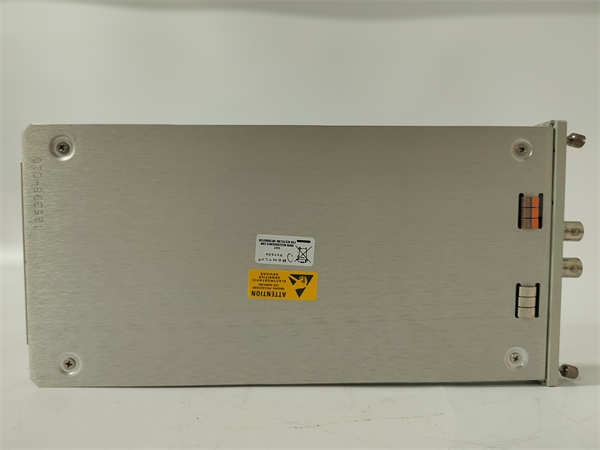
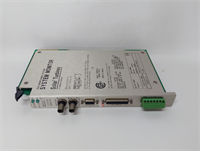
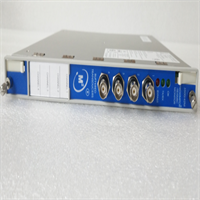
BENTLY 3500-25 149369-01
Lifecycle Status and Migration Strategy
Bently Nevada has discontinued the 3500/25 (149369-01) as part of its transition to integrated diagnostics in the 3500/94 Enhanced Gateway and System 1 v22+ platforms. No new units are produced, and factory support is limited to legacy service agreements. Continuing to operate with this module introduces risk:
- Inability to replace failed units promptly
- Loss of phase-synchronous data continuity
- Challenges integrating with modern analytics or cloud-based APM tools
As an interim solution, facilities may:
- Source only from Bently-authorized refurbishers who provide full signal simulation testing
- Maintain at least one spare per critical machine train
- Configure backup speed reference via alternative probes or external tachometers (if supported by monitor firmware)
For strategic migration, Bently recommends:
- Upgrading to the 3500/94 Enhanced Gateway, which supports embedded Keyphasor processing and Ethernet-based data streaming
- Leveraging System 1 APM for automated transient analysis without discrete TDI or Keyphasor modules
- Replacing legacy proximity probes with modern Velomitor® or Microlog wireless sensors where appropriate
Although not a safety-trip component, the 3500/25 is foundational to machinery intelligence. Its obsolescence erodes the ability to perform accurate diagnostics—making proactive management essential for long-term asset reliability and operational excellence.