Tel:
Tel:  Email:
  WhatsApp:
 Description
Technical Specifications (For Spare Part Verification)
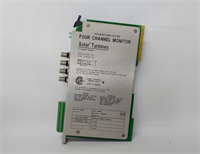
- Product Model: 3500/20
- Manufacturer: Bently Nevada
- Part Number: 125744-02
- System Family: 3500 Machinery Protection System
- Function: Rack Interface Module (RIM)
- Backplane Interface: Proprietary 3500 parallel bus for module communication and synchronization
- External Communication: RS-232/RS-485 serial port for configuration via Rack Configuration Software (RCS)
- Module Addressing: Supports up to 14 I/O slots (excluding power and RIM slots)
- Diagnostic Capabilities: Monitors module presence, power status, and communication health; reports faults to display or host
- LED Indicators: Power, OK, Fault, Comm Activity, and Module Status
- Mounting: Fixed in Slot 1 of standard 3500 chassis (e.g., 3500/05)
- Operating Temperature: 0°C to +65°C
- Safety Certification: Suitable for use in SIL 2 applications when deployed in compliant redundant architecture
System Role and Downtime Impact
The BENTLY 3500/20 (125744-02) is a foundational component in legacy 3500 racks, serving as the communication hub that enables all I/O modules—vibration monitors, position sensors, speed inputs—to function as a unified protection system. It handles module enumeration during power-up, routes alarm and trip signals, and provides the serial interface for engineering access via Bently’s Rack Configuration Software. If this module fails or becomes corrupted, the entire rack may appear “dead” to operators: displays show no data, relays remain de-energized, and remote SCADA systems lose connectivity. In non-redundant configurations (which are common in older installations), a single 3500/20 failure results in total loss of machinery protection—potentially forcing an immediate process shutdown or, more critically, leaving rotating equipment unprotected during a developing fault. Given its irreplaceable role, the absence of a verified spare represents a severe operational vulnerability.
Reliability Analysis and Common Failure Modes
Although solid-state and fanless, the 3500/20 is susceptible to long-term reliability issues after 15–20 years of continuous operation. The most prevalent failure mode involves corruption of the onboard configuration memory (EEPROM), often triggered by power cycling under marginal voltage conditions or electrostatic discharge during handling. Internal logic ICs and the serial communication transceiver can also degrade due to thermal stress, leading to intermittent communication dropouts or complete loss of host connectivity. Additionally, solder joints on the backplane connector may develop micro-cracks from vibration or thermal expansion, causing intermittent module recognition failures.
Key design vulnerabilities include:
- No field firmware update capability—units are factory-programmed with fixed revision logic
- Sensitive to ESD during installation or removal; improper handling can cause latent damage
- Relies on stable 5 VDC from the 3500/15; ripple or brownouts increase error rates
Preventive maintenance recommendations:
- Perform annual functional verification by connecting RCS and confirming full module recognition
- Inspect backplane connector pins for corrosion or deformation during outages
- Ensure proper grounding of the rack and use anti-static procedures during handling
- Store spares in static-shielded bags with humidity control

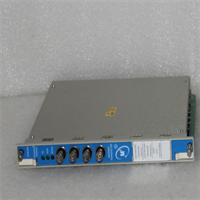
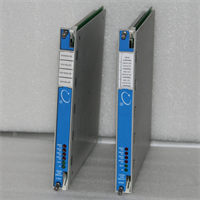
BENTLY 3500-20 125744-02
Lifecycle Status and Migration Strategy
Bently Nevada has discontinued the 3500/20 (125744-02) as part of the end-of-life plan for early 3500 platform components. No new units are manufactured, and technical support for configuration or troubleshooting is no longer available from the OEM. Remaining inventory consists of untested surplus or refurbished units with unknown service history—posing significant risk in safety-critical applications.
As an interim measure, facilities may:
- Secure one or more fully tested spares with documented RCS communication logs
- Maintain a backup of the current rack configuration file (.rcf) for rapid reconfiguration if needed
- Avoid unnecessary power cycles to reduce stress on aging memory components
For long-term sustainability, Baker Hughes recommends upgrading to the 3500/22 or 3500/25 series Rack Interface Modules (where mechanically compatible), though these require updated firmware ecosystems and may not support all legacy I/O. More strategically, migration to the Bently Nevada System 1 platform is advised, which replaces discrete rack architecture with integrated edge controllers featuring:
- Ethernet-based configuration and OPC UA data access
- Enhanced cybersecurity and remote diagnostics
- Guaranteed hardware support through 2035+
Migration from a 3500/20-based system typically involves:
- Replacing the entire rack with a System 1 Data Manager and compatible I/O
- Reusing existing proximity probes and cabling where possible (via adapter terminals)
- Recreating protection logic in System 1 Asset Configuration Environment (ACE)
- Revalidating all safety instrumented functions per API 670 and IEC 61511
Until full modernization is feasible, maintaining verified spares and enforcing strict handling protocols for the 3500/20 remains essential to preserving machinery protection integrity in critical industrial assets.