 Tel:
Tel:  Email:
  WhatsApp:
 Description
Key Technical Specifications (For Spare Parts Verification)
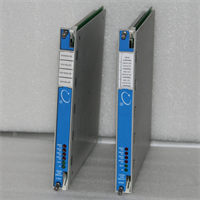
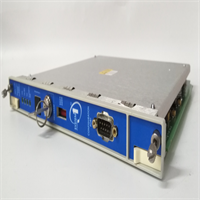
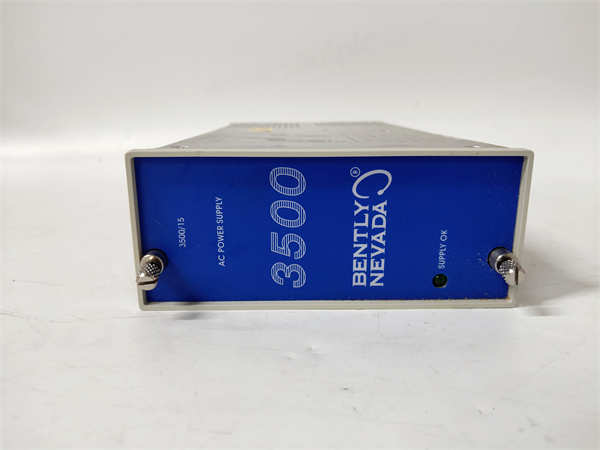
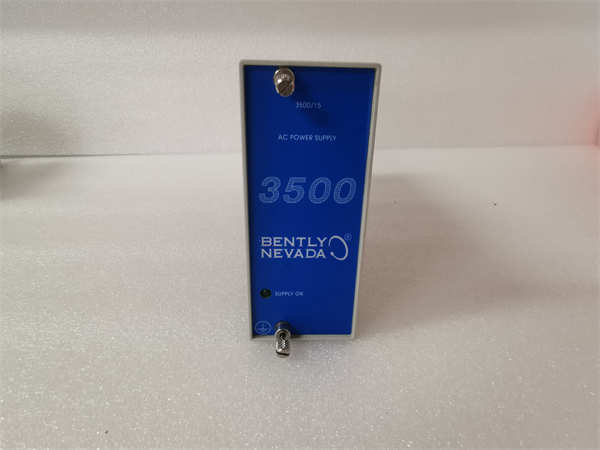
- Product Model: 3500/15
- Manufacturer: Bently Nevada
- System Platform: 3500 Machinery Protection System
- Input Voltage: 90–132 VAC or 180–264 VAC (selectable via internal jumper), 47–63 Hz
- Output Voltages: +5 VDC, ±15 VDC (for internal chassis electronics)
- Redundancy Support: Dual-module hot-swap capable with automatic load sharing
- Chassis Slot Assignment: Occupies slots 1 and 2 (leftmost positions) in the 3500 rack
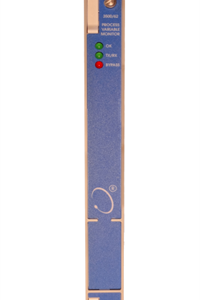
- Status Indicators: Front-panel LEDs for “OK”, “Redundancy Lost”, and “Power Fail”
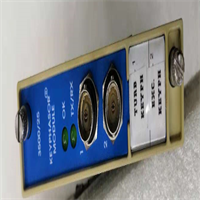
- Input Connector: IEC C14 AC inlet on front panel
- Certifications: CSA, CE, ATEX (varies by revision)
System Role and Downtime Impact
The 3500/15 serves as the electrical backbone of the entire 3500 monitoring chassis. In critical applications—such as steam turbines, centrifugal compressors, or large pumps—the 3500 system often functions as an independent machinery protection layer, separate from the main DCS. If the 3500/15 fails completely (e.g., due to internal converter fault or blown fuse), the entire rack loses power. This causes immediate dropout of all safety-critical signals (vibration, axial position, speed). Depending on the protection relay configuration (e.g., 3500/53), this is typically interpreted as a severe fault condition, leading to an automatic trip and unplanned process shutdown. Even in redundant configurations, delayed replacement of a failed unit leaves the system vulnerable to single-point failure.
Reliability Analysis and Common Failure Modes
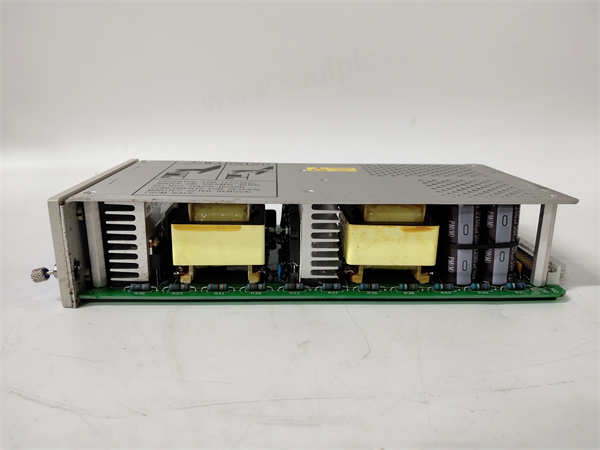
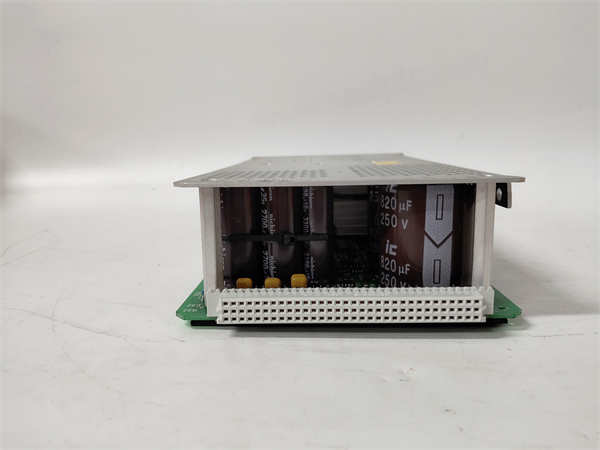
Despite robust original design, most 3500/15 units in service today exceed 15 years of operation, placing them deep into the wear-out phase of the bathtub curve. Common failure modes include: drying-out of internal electrolytic capacitors, leading to excessive output ripple and intermittent I/O resets; surge damage to input-stage TVS diodes or thermal fuses due to poor power quality; fan bearing failure (on versions with active cooling); and oxidation of backplane connectors causing intermittent contact. A key design vulnerability is its sensitivity to line voltage disturbances—repeated sags or harmonics accelerate component degradation. Early revisions also lacked discrete alarm contacts for redundancy loss, delaying operator awareness.
Recommended preventive maintenance actions include: quarterly infrared thermography to detect abnormal heating; annual cleaning of ventilation paths and heatsinks; periodic torque-check of AC terminal connections; and mandatory migration to dual-power configurations if still operating in single-supply mode. Maintaining a health log tracking output voltage stability can provide early warning of impending failure.
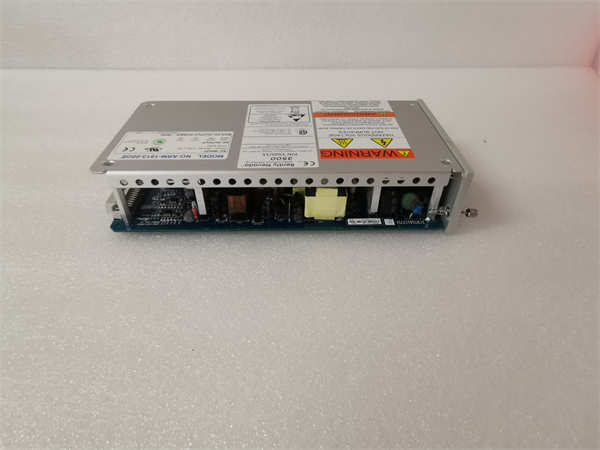
BENTLY 3500/15
Lifecycle Status and Migration Strategy
Bently Nevada has formally declared the 3500/15 end-of-life, with no new production or official repair services available. Continued use carries significant operational risk: unreliable spare parts sourcing, extended mean time to repair (MTTR), and absence of OEM engineering support for complex diagnostics. As interim measures, facilities may consider: establishing a strategic reserve from decommissioned systems; engaging qualified third-party vendors for board-level repair (with post-repair validation of EMC and long-term stability); or installing upstream UPS systems to mitigate power-related stress.
The manufacturer’s recommended migration path is either upgrading to the 3500/15R (if the existing chassis remains viable) or transitioning to the next-generation Bently Nevada 3300 XL 8200 series or System 1 Condition Monitoring Platform. The latter offers modern IT integration (OPC UA, cloud connectivity, remote diagnostics) but requires comprehensive re-engineering—including sensor compatibility checks, logic reconfiguration, and integration testing with existing SIS/DCS interfaces. A phased migration plan is strongly advised to manage cost and operational risk.