 Tel:
Tel:  Email:
  WhatsApp:
 Description
Key Technical Specifications
| Parameter | Specification | Notes |
|---|---|---|
| Input Voltage | 90 – 132 VAC | Nominal 120VAC operation |
| Input Frequency | 47 – 63 Hz | Auto-sensing |
| Output Voltage 1 | +5.0 VDC @ 8.0 A | Backplane logic power |
| Output Voltage 2 | +12.0 VDC @ 1.5 A | Analog circuitry |
| Output Voltage 3 | -12.0 VDC @ 0.5 A | Analog circuitry |
| Output Voltage 4 | +24.0 VDC @ 2.0 A | Relay/Transistor drivers |
| Total Power | 65 Watts Max | Do not exceed rack load calculations |
| Hold-up Time | > 1 Cycle (16ms) | At full load, 90VAC input |
| Redundancy | Yes | Requires two modules in specific slots |
| Operating Temp | -20°C to +60°C | Derate above 50°C |
| Dimensions | 3500 Series Half-Height | Fits standard 3500 chassis |
| Certifications | CE, CSA, UL | Check specific label on unit |
Product Introduction
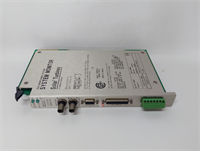
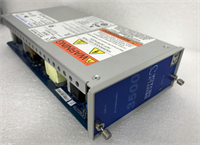
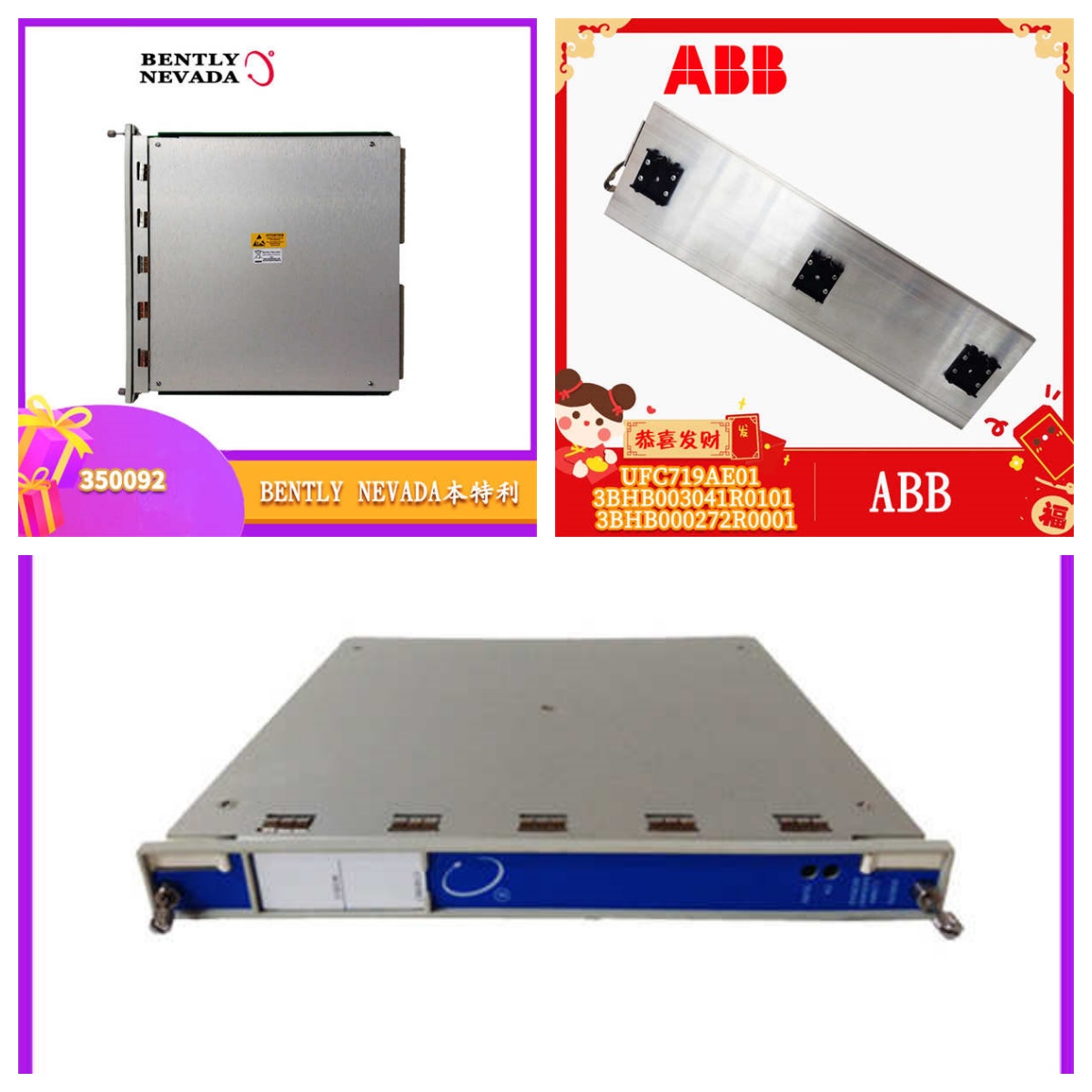
I’ve walked into more compressor stations than I can count where the whole protection system went dark because someone skimped on the power supply. The Bently Nevada 3500/15-04-04-00 isn’t just a box that makes electricity; it’s the heartbeat of your machinery protection rack. If this thing hiccups, your proximity probes go blind, your relays drop out, and your turbine trips on a false signal—or worse, doesn’t trip when it should. I’ve seen plants lose millions in production because a $2,000 power module failed silently.Engineers stick with this specific revision (the -04-04-00 suffix) because it handles the dirty power found in older refineries better than the newer switching designs. It puts out clean, stable DC even when the line voltage sags to 95VAC during a motor start. The hold-up time is critical here; it bridges the gap during those brief utility flickers so your logic solver doesn’t reboot mid-cycle. Just be warned: these units are sensitive to ground loops. If your rack grounding isn’t solid, you’ll see noise on the -12V rail that makes vibration readings jump around like crazy.
 Quality SOP & Tech Pitfalls (The Reality Check)
 Quality SOP & Tech Pitfalls (The Reality Check)
The Lab Report (SOP)
We don’t just plug it in and look for a green light. That’s amateur hour.
- Visual Inspection: We tear down the casing to check for bulging capacitors or burnt traces near the input bridge rectifier. Counterfeit units often have sloppy soldering here.
- Load Bank Testing: We hook the module up to a programmable electronic load (like a BK Precision unit) and ramp it to 85% capacity. We verify all four rails (+5, +12, -12, +24) stay within ±2% tolerance.
- Ripple & Noise Check: Using an oscilloscope (Tektronix TBS1000 series), we measure AC ripple on the DC outputs. Anything over 50mV peak-to-peak gets rejected.
- Transient Simulation: We simulate a 1-cycle power dip to ensure the hold-up circuit actually works. Many “tested” units fail here because the big filter caps are dried out.
- Burn-in: It runs under load at 50°C for 24 hours before we seal it in anti-static packaging.
The Engineer’s Warning (Pitfalls)
Here is the disaster I see every year: Someone replaces a blown 3500/15 without checking the DIP switches on the front panel. This module has settings for “Power Supply OK” relay logic and redundancy modes. If you swap a unit set for “Non-Redundant” into a “Redundant” pair, the whole rack will fault out immediately.
Field Disaster: Last winter, a refinery tech swapped a failed supply with a spare from the shelf. He didn’t notice the spare was configured for 240VAC input (different model, same look) or had the wrong relay polarity. The moment he energized it, the backplane voltage spiked, frying three expensive transient suppression boards and the keyphasor module. Total downtime: 18 hours. Cost: $45k. Always photograph the DIP switch settings on the old module before you pull it. Always.
Installation & Configuration Guide
Time Estimate: 30 Minutes (if prepared)
- Pre-Installation Safety ⚠️
- Lockout/Tagout (LOTO) the main AC feed to the 3500 rack.
- Wait 5 minutes for internal capacitors to discharge. Verify with a multimeter (Fluke 115) across the AC terminals.
- CRITICAL: Take a high-resolution photo of the existing module’s DIP switches and jumper settings. This step prevents 90% of startup headaches.
- Removal
- Label every wire connected to the terminal block. Do not trust the wire numbers; ink fades.
- Unscrew the terminal block carefully. Don’t let it fall into the rack slots.
- Release the locking tabs on the top and bottom of the module faceplate.
- Slide the module straight out. If it sticks, do not force it; check for bent guide pins.
- Installation
- Copy Settings: Before inserting the new 3500/15-04-04-00, match the DIP switches exactly to your photo. Pay close attention to Switch 1 (Redundancy) and Switch 5 (Relay Latching).
- Align the module with the rack guides. Push firmly until the rear connector seats fully. You should feel a solid “click.”
- Re-engage the locking tabs.
- Re-wire the terminal block based on your labels. Torque screws to 4.5 in-lbs. Over-tightening strips the threads; under-tightening causes arcing.
- Power-On & Testing
- Remove LOTO and apply AC power.
- Watch the “Power Supply OK” LED. It should turn solid green within 2 seconds.
- If you have a redundant pair, verify the “System OK” LED on the rack frame lights up.
- Use the 3500 Rack Configuration Software to poll the rack. Check for any “Power Supply Fault” alarms in the event log.
- Measure the +24VDC output at the terminal block to ensure it’s stable under the initial load.
Compatible Replacement Models
| Compatibility Tier | Model Number | Details & Constraints |
|---|---|---|
| ✅ Drop-in Replacement | 3500/15-04-04-00 | Exact match. Ensure firmware revision is compatible if mixing with very old racks (pre-2005). Price varies wildly due to scarcity. |
| ⚠️ Software Compatible | 3500/15-02-04-00 | Same physical fit, but input range might differ (check label). May require re-configuring the rack software to recognize the slight variance in telemetry reporting. Labor: ~15 mins. |
| ⚠️ Firmware Dependent | 3500/15-04-05-00 | Newer revision. Physically fits, but may report different status codes to the System 1 software. Requires updating the rack configuration file (.cfg). |
| ❌ Hardware Mod Required | 3500/25 (Enhanced) | Different form factor and communication protocol. Cannot swap directly. Requires new chassis, rewiring, and full system re-commissioning. Not recommended for emergency repairs. |
Frequently Asked Questions (FAQ)
Q: Can I hot-swap this power supply while the rack is running?
A: Only if you have a redundant setup (two power supplies installed). If you have a single supply, pulling it kills the rack instantly. Even with redundancy, I recommend scheduling a shutdown if possible. Hot-swapping risks a momentary voltage dip that can glitch sensitive monitor modules. If you must do it live, ensure the second supply is already carrying the full load (check the load share LEDs).Q: My new module powers up, but the “System OK” light is amber. What gives?
A: That usually means the rack sees the power supply, but the configuration doesn’t match. Did you set the DIP switches correctly? Specifically, check the redundancy setting. If the rack expects two supplies and you only have one (or the switches say otherwise), it throws a warning. Also, verify your backplane termination is intact.Q: Is the 3500/15-04-04-00 compatible with 240VAC input?
A: No. This specific suffix (-04-04-00) is designed for 120VAC (90-132VAC). If you feed it 240VAC, you will let the magic smoke out immediately. For 240VAC systems, you need the -02-xx-xx series. Double-check your facility voltage before ordering.Q: How long do these actually last in the field?
A: I’ve seen them run for 15 years in climate-controlled control rooms. I’ve also seen them fail in 3 years on an offshore platform due to salt corrosion on the input terminals. The electrolytic capacitors inside are the weak point; they dry out over time. If your unit is over 10 years old and you’re seeing random rack resets, swap the power supply first. It’s the cheapest diagnostic step.Q: Do I need to reload the configuration software after swapping the power supply?
A: Generally, no. The power supply itself doesn’t store the machine logic or alarm setpoints; that lives in the Monitor Modules (like the 3500/42 or 3500/25). However, the power supply does have DIP switches that define its behavior (redundancy, relay mode). You must manually set those switches to match the old unit. The rack config software might need to refresh to clear the “Power Supply Replace” event log entry.Q: Why is the price so high for such an old part?
A: Simple economics. Bently Nevada stopped making these years ago. The remaining stock is finite, and critical infrastructure (pipelines, power gen) still relies on them. When a compressor train is down, the cost of downtime dwarfs the part price. You’re paying for availability and the testing we did to ensure it won’t fail next week.