 Tel:
Tel:  Email:
  WhatsApp:
 Description
Key Technical Specifications (For Spare Parts Verification)
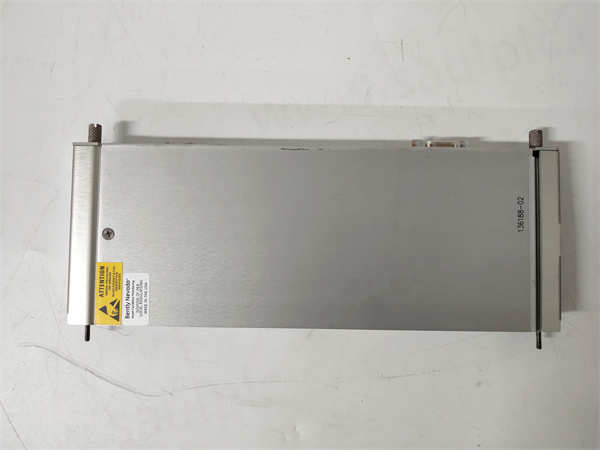
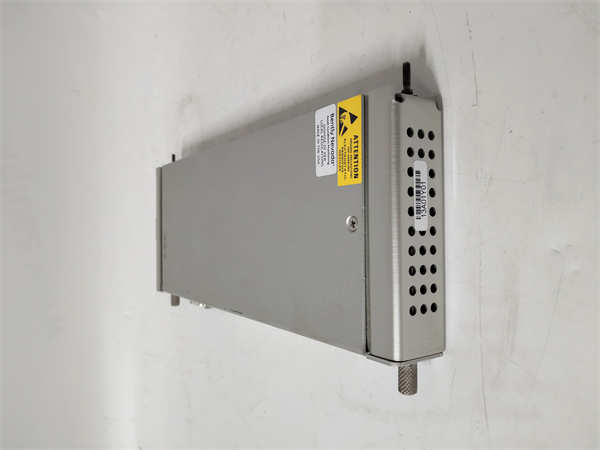
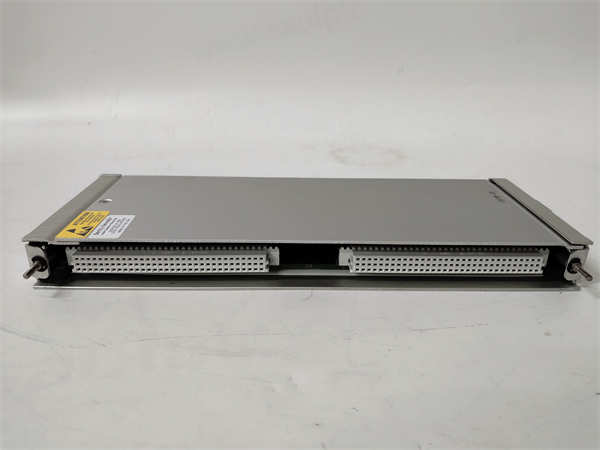
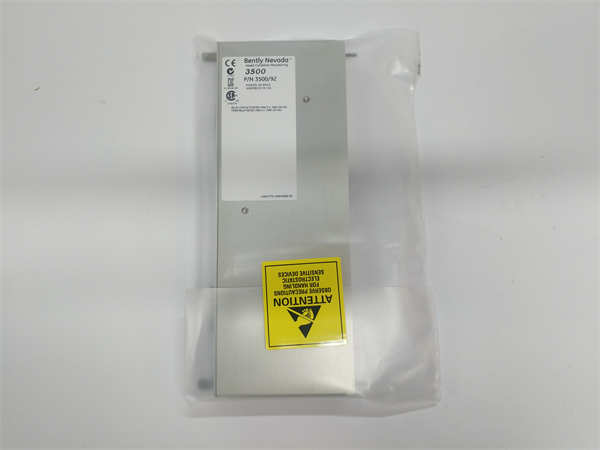
- Product Model: 136188-02
- Manufacturer: Bently Nevada
- Sensor Type: Eddy-current proximity probe
- Measurement Range: 5.0 mm (0.20 inch) linear range
- Output Sensitivity: –8.0 mV/µm (–200 mV/mil) nominal
- Probe Diameter: 8 mm (standard M10 threaded body)
- Cable Length: Typically integrated with fixed-length extension cable (commonly 5 m or 8 m; verify full assembly P/N)
- Connector: MS3112E8-4S (MIL-SPEC circular connector)
- Operating Temperature: –50°C to +177°C (probe tip); cable rating may vary
- Thread Type: M10 × 1.0 metric (standard for Bently 3300/3500 probes)
- Compatibility: Designed for use with 3300, 3500, and legacy driver modules (e.g., 3300/80, 3500/42)
BENTLY 136188-02
System Role and Downtime Impact
The 136188-02 is a frontline sensor in machinery health monitoring systems, typically installed on steam turbines, compressors, or large pumps to measure radial shaft vibration or axial thrust position. Its analog output feeds directly into protection relays (e.g., 3500/53) or monitoring controllers. Because it operates on the principle of precise electromagnetic coupling, any deviation in probe characteristics—due to aging, mechanical damage, or calibration drift—directly impacts measurement accuracy. A degraded probe may under-report vibration during a developing fault (e.g., bearing wear), delaying intervention, or over-report noise as a trip-level event, causing unnecessary downtime. In safety-critical applications compliant with API 670, probe integrity is essential to system validity.
Reliability Analysis and Common Failure Modes
Despite rugged construction, these probes are exposed to extreme conditions: high temperatures, oil contamination, mechanical impact during installation, and electromagnetic interference. Common failure modes include:
- Tip damage or denting: Even minor deformation alters the magnetic field, shifting sensitivity or linearity.
- Internal coil fracture: Thermal cycling or vibration fatigue can break fine windings, causing open-circuit or intermittent signal.
- Cable-to-probe joint failure: Stress at the strain relief leads to conductor breakage or shield discontinuity.
- Contamination ingress: Oil or moisture inside the connector causes signal noise or ground loops.
A key design vulnerability is the lack of self-diagnostics—unlike modern digital sensors, the 136188-02 provides no health status, so degradation is only detectable through external validation.
Preventive maintenance recommendations:
- Perform annual calibration checks using a micrometer calibration stand to verify sensitivity and linearity.
- Inspect probe tips for dents, scratches, or discoloration before reinstallation.
- Ensure proper mounting torque (typically 2.7–3.4 N·m for M10) to avoid thread galling or misalignment.
- Verify gap setting during outages using a feeler gauge; record baseline values for trend comparison.
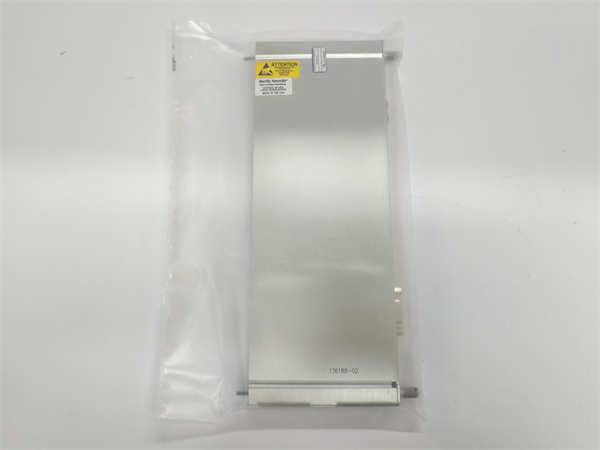
BENTLY 136188-02
Lifecycle Status and Migration Strategy
Bently Nevada has discontinued the 136188-02 and superseded it with updated probe models (e.g., in the 3300 XL or 8200 series) featuring improved temperature tolerance and tighter manufacturing tolerances. Original calibration certificates are no longer issued, and used units often lack traceability. Continuing to deploy unverified probes risks non-compliance with machinery protection standards.
As interim measures:
- Secure new-old-stock (NOS) units with original calibration data if available.
- Validate any replacement probe—new or used—on a calibration bench before installation in protection circuits.
- Avoid mixing probes from different production lots on the same machine to prevent sensitivity mismatches.
For long-term reliability, migrate to current-generation Bently Nevada probes (e.g., 3300 XL 8200 series), which maintain backward compatibility with existing extension cables and drivers while offering enhanced performance. Note that while mechanical and electrical interfaces are often preserved, full system validation—including alarm and trip testing—is required after any sensor replacement in a safety-related application.