 Tel:
Tel:  Email:
  WhatsApp:
 Description
Key Technical Specifications (For Spare Part Verification)
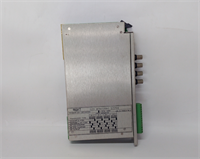
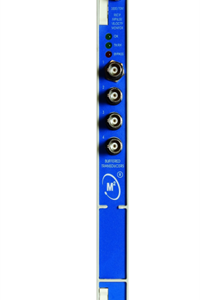
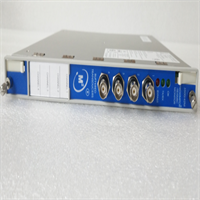
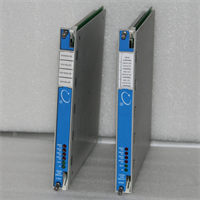
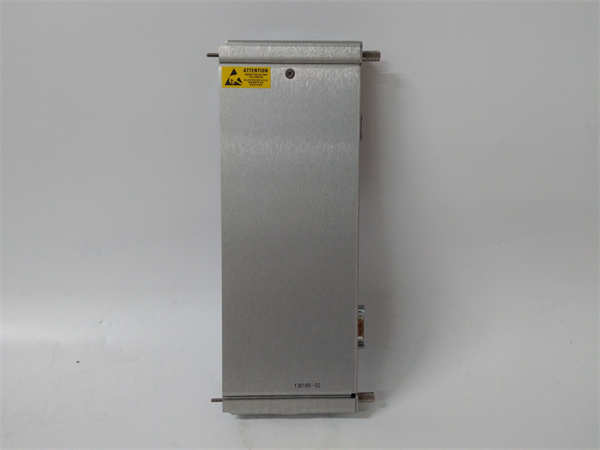
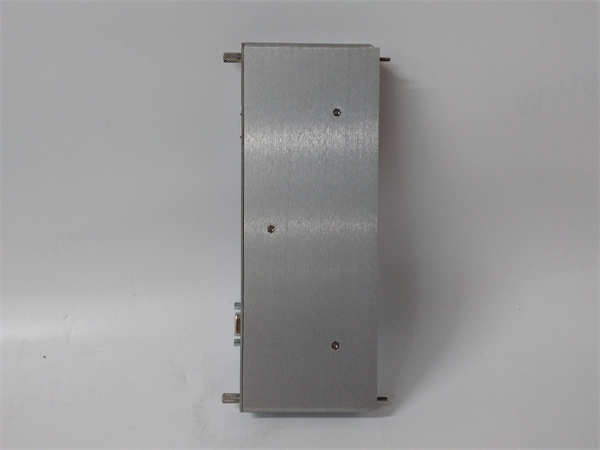
- Product Model: 136188-02
- Manufacturer: Bently Nevada (now part of Baker Hughes)
- System Platform: 3500 Machinery Protection System
- Module Type: Transient Data Interface (TDI)
- Function: Captures high-resolution dynamic (AC) and static (DC) vibration waveforms during transient events (startup, shutdown, trips)
- Communication Interface: RS-232/RS-422 serial link to host computer or ADRE analyzer
- Sampling Rate: Up to 20 kHz per channel (depending on configuration)
- Supported I/O Modules: Interfaces with 3500/25, /42, /44, /60, and other dynamic signal monitors
- Mounting: Occupies one slot in standard 3500 chassis (requires rear-mounted interface terminal block)
- Power: Supplied via 3500 backplane
- Configuration: Set via DIP switches and/or software (using 3500 Configuration Software)
- Firmware Dependency: Must be compatible with 3500 rack firmware version; mismatch may disable data streaming
-

Bently 136188-02
System Role and Downtime Impact
The 136188-02 TDI module serves as a critical bridge between real-time machinery protection and advanced diagnostics. In power plants, refineries, and compressor stations, it captures high-fidelity vibration waveforms during critical transient events—data essential for root cause analysis, rotor dynamics validation, and avoiding repeat failures. While the 3500 system continues to provide alarm/trip functions without the TDI, loss of the 136188-02 disables predictive insights, increasing the risk of undetected degradation in turbines, pumps, and compressors.
If the module fails and no spare is available, facilities lose the ability to perform detailed post-event analysis, potentially leading to:
- Misdiagnosis of mechanical faults
- Unplanned secondary failures
- Extended outage durations due to lack of diagnostic clarity
- Non-compliance with reliability-centered maintenance (RCM) protocols
Unlike basic I/O modules, the TDI has no functional bypass—its absence creates a blind spot in the asset health strategy.
Reliability Analysis and Common Failure Modes
Though built for industrial environments, the 136188-02 is now well beyond its design life (typically 10–15 years). Common failure modes include:
- Serial communication IC degradation → intermittent or lost data streams
- Backplane connector corrosion → poor power or signal integrity
- Capacitor aging on internal power regulation circuits → erratic behavior or boot failure
- Firmware corruption due to power cycling without proper shutdown
A key vulnerability is its dependency on precise timing synchronization with upstream monitor modules (e.g., 3500/42). Even minor clock drift or configuration mismatches can result in incomplete or misaligned waveform captures.
Preventive maintenance recommendations:
- Verify TDI data stream integrity quarterly using a known test signal
- Archive module configuration files and firmware versions
- Clean and reseat the module annually to prevent contact resistance
- Maintain at least one tested spare matched to the existing 3500 firmware revision
- Ensure backup power (UPS) protects the 3500 rack to avoid abrupt power loss
-
Bently 136188-02
Lifecycle Status and Migration Strategy
Bently Nevada has shifted focus to the System 1 platform, which integrates machinery protection, condition monitoring, and analytics into a unified architecture. The 3500 system is in sustaining support only, and the 136188-02 is not produced under any current product line.
Short-term mitigation:
- Source verified used/refurbished units from trusted obsolescence specialists
- Implement board-level repair services for capacitor or IC replacement
- Use alternative data extraction methods (e.g., analog outputs to external DAQ) as a temporary workaround
Long-term migration path:
- Upgrade to 3500/XXL (if still feasible), which supports modern communication (Ethernet, OPC UA) and integrates with System 1
- Transition directly to Bently Nevada System 1, which includes embedded transient capture in its 3300/XX or 3500/XXL-compatible gateways
- Leverage Baker Hughes’ Obsolescence Management Program for phased migration planning and data continuity
While migration requires capital investment, it restores access to cybersecurity updates, cloud analytics, and remote expert support—critical for maintaining reliability in rotating equipment strategies. Facilities relying on the 136188-02 should initiate migration planning immediately to avoid operational exposure.