 Tel:
Tel:  Email:
  WhatsApp:
 Description
Key Technical Specifications (For Spare Parts Verification)
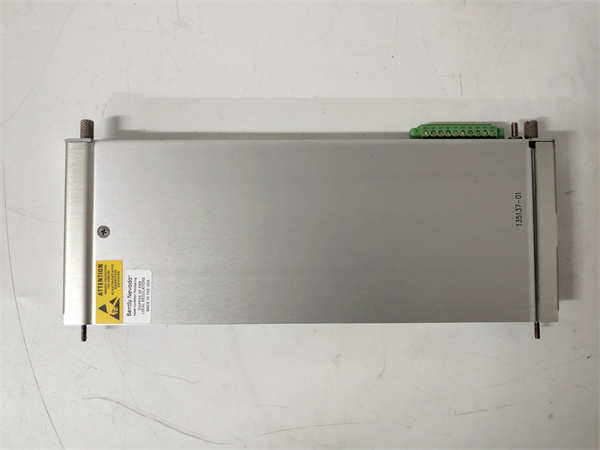
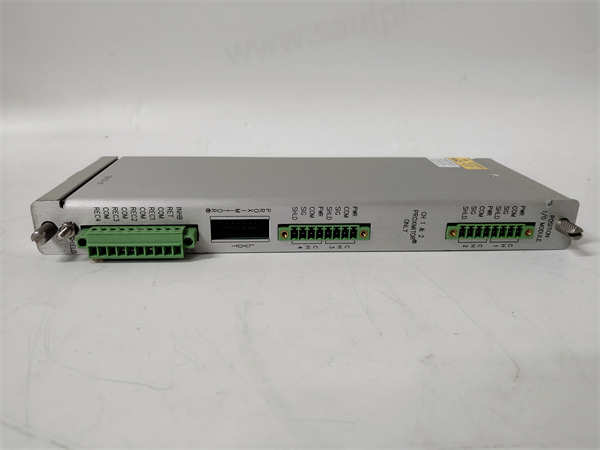
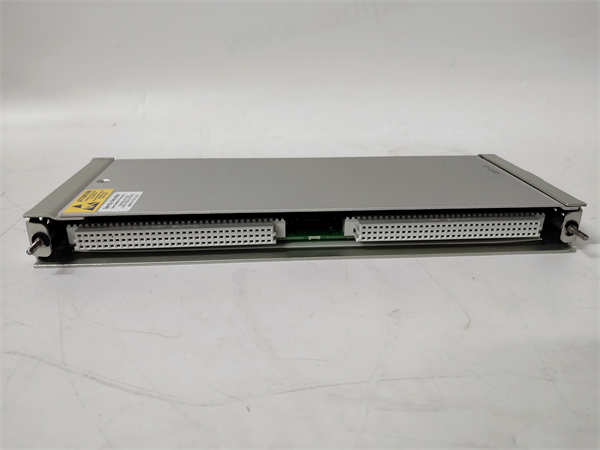
- Product Model: 135137-01
- Manufacturer: Bently Nevada
- Compatible Systems: 3300, 3500, and older 1900/65 series monitoring platforms
- Cable Length: 5.0 meters (16.4 feet)
- Connector Type: MS3112E8-4S (probe end) to MS3102A10-6P (driver end) – MIL-SPEC circular connectors
- Impedance & Shielding: Triaxial construction with dual shields (guard and outer shield), precision impedance matching for signal integrity
- Jacket Material: Polyurethane (oil-, abrasion-, and UV-resistant)
- Operating Temperature: -30°C to +105°C
- Signal Type: Low-level AC voltage (typically <10 Vpp) from eddy-current probe
- Certification: CSA, CE (varies by production batch)
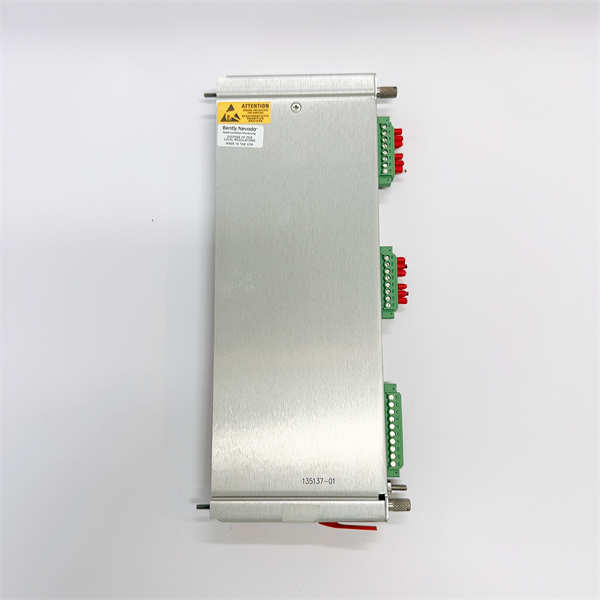
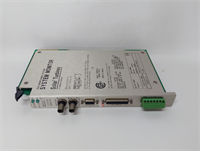
BENTLY 135137-01
System Role and Downtime Impact
The 135137-01 is a passive but mission-critical link in the machinery protection chain. It connects the proximity probe—mounted near a rotating shaft—to the driver module (e.g., 3300/80 or 3500/42) located in the control cabinet. Because the probe outputs a high-impedance analog signal, any degradation in cable integrity (e.g., shield break, dielectric breakdown, or connector corrosion) directly affects measurement accuracy. A faulty cable can cause excessive noise, signal attenuation, or complete dropout, which may either trigger nuisance trips or—more dangerously—mask developing mechanical faults like unbalance, misalignment, or bearing wear. In critical applications such as steam turbines or centrifugal compressors, this compromises the entire early-warning capability of the monitoring system.
Reliability Analysis and Common Failure Modes
Although mechanically robust, these cables are exposed to harsh environments: oil mist, steam leaks, vibration fatigue, and repeated flexing during maintenance. Common failure modes include:
- Shield discontinuity: Broken guard or outer shield leads to ground loops or EMI pickup, manifesting as 50/60 Hz noise on the waveform.
- Connector corrosion: Moisture ingress into MIL-spec connectors causes intermittent contact or increased resistance, especially at the probe end.
- Jacket cracking: UV exposure or chemical degradation exposes inner conductors, risking short circuits.
- Triaxial layer damage: Kinking or crushing alters impedance, distorting the probe’s linear output.
Design weaknesses include reliance on precise triaxial geometry—any deformation degrades performance—and susceptibility to improper grounding practices (e.g., shield grounded at both ends).
Preventive maintenance recommendations:
- Perform annual insulation resistance and continuity tests using a megohmmeter and multimeter.
- Visually inspect connectors for pitting, moisture, or bent pins.
- Ensure cables are strain-relieved and not routed near high-voltage or variable-frequency drive (VFD) cables.
- Verify proper single-point grounding of the guard shield per Bently installation guidelines.
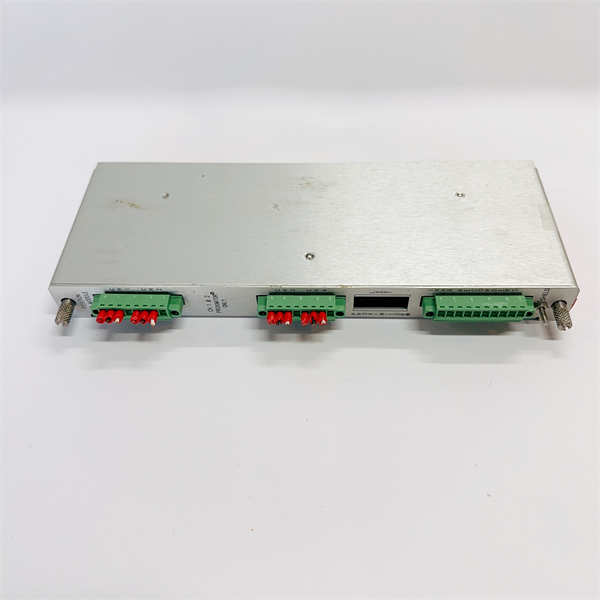
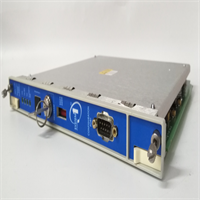
BENTLY 135137-01
Lifecycle Status and Migration Strategy
Bently Nevada has discontinued the 135137-01 and replaced it with newer cable part numbers under updated manufacturing standards (e.g., 176990-series). Original stock is exhausted, and remaining inventory often lacks traceability or certification. Continuing to use aging cables increases the risk of undetected signal degradation, potentially invalidating protection logic.
As interim solutions:
- Source verified-new-old-stock (NOS) units with original packaging and test reports.
- Use third-party cables only if they meet Bently’s triaxial impedance and shielding specifications (not all “compatible” cables do).
- Implement baseline waveform comparisons to detect subtle cable-induced anomalies.
For new installations or major overhauls, migrate to current Bently Nevada probe and cable systems (e.g., 3300 XL 8200 series), which offer improved noise immunity and digital diagnostics. Existing systems can often accept newer cables if connector types and electrical characteristics match—but full validation under operating conditions is essential before relying on them for protection functions.